



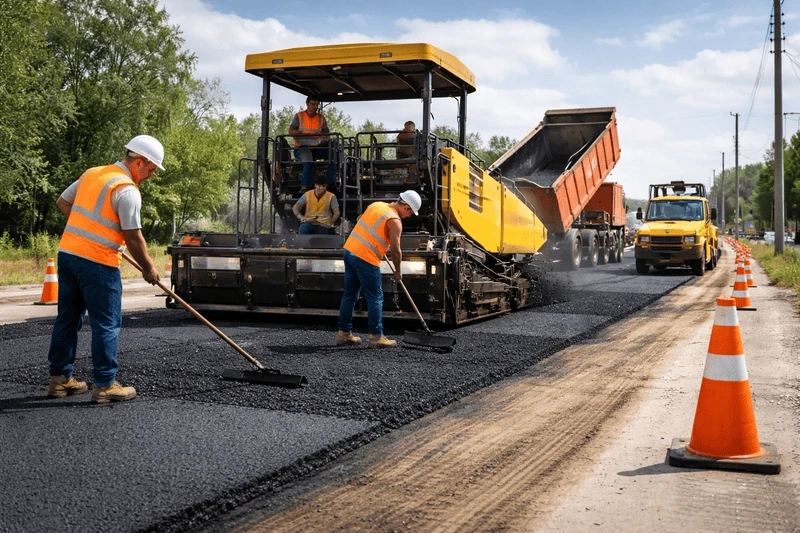
Road construction is one of those essential services most people rely on every day without giving it much thought. Roads connect communities, support local economies and allow everything from emergency services to freight transport to function smoothly. Yet behind every sealed surface or gravel track is a complex process that balances engineering, safety, environmental factors and long-term usability.
This article takes a clear, practical look at road construction in Australia. Rather than focusing on promotion or jargon, it explores how roads are planned, built and maintained, what challenges are involved, and why experience and local knowledge matter when roads are designed to last.
What road construction actually involves
Road construction is far more than laying asphalt or pouring concrete. It begins with careful planning and site assessment. Engineers and contractors must understand ground conditions, traffic requirements, drainage patterns and future usage before any machinery arrives on site.
In regional and semi-rural areas, road construction often involves additional considerations such as soil variability, flood risks and access for heavy vehicles. Urban environments bring their own challenges, including traffic management, underground services and space constraints.
Every project, whether a small access road or a major transport corridor, follows a staged process designed to ensure safety and durability over time.
The importance of ground preparation
One of the most critical stages of road construction happens below the surface. Poor ground preparation is one of the main reasons roads fail prematurely. Subgrade conditions determine how well a road can support traffic loads and resist movement caused by moisture or temperature changes.
Excavation, compaction and stabilisation are all part of preparing a reliable base. In some cases, unsuitable material must be removed and replaced. In others, existing soil can be improved using additives or specialised compaction techniques.
Experienced contractors understand how local ground conditions behave, which is why regional knowledge plays such an important role in road construction outcomes.
Drainage as a defining factor in road longevity
Water is one of the biggest threats to any road surface. Without effective drainage, moisture can weaken foundations, cause cracking and lead to potholes or surface deformation.
Modern road construction integrates drainage from the outset. This includes shaping the road profile, installing table drains, culverts or subsoil drainage systems, and ensuring runoff is directed away from the pavement structure.
In areas prone to heavy rainfall or flooding, drainage design becomes even more critical. Roads that appear solid on the surface can deteriorate rapidly if water is allowed to pool or seep into underlying layers.
Materials used in modern road construction
The materials chosen for a road depend on its purpose, expected traffic volume and location. Asphalt is commonly used for flexibility and smoothness, while concrete may be selected for high-load or long-life applications. Gravel roads remain common in rural and agricultural settings where traffic volumes are lower.
Each material has advantages and limitations. Asphalt allows for quicker repairs and resurfacing, while concrete offers durability but can be more expensive upfront. Gravel roads require ongoing maintenance but are often cost-effective for remote areas.
Choosing the right materials is part of responsible road construction planning, ensuring the road suits its environment rather than forcing a one-size-fits-all approach.
Traffic management and safety during construction
Road construction does not happen in isolation. Many projects take place while roads remain partially open to traffic, which introduces safety risks for both workers and the public.
Effective traffic management is essential. This includes signage, barriers, temporary speed limits and clear communication with road users. Well-planned traffic control reduces delays and minimises the risk of accidents.
Safety considerations extend beyond the construction phase. Road geometry, visibility, surface texture and line marking all influence how safely a road performs once it is open to traffic.
Maintenance as part of the road lifecycle
A common misconception is that road construction ends when the surface is complete. In reality, maintenance is an ongoing part of a road’s lifecycle. Even the best-built roads require periodic inspections, resurfacing and repairs.
Preventative maintenance helps address minor issues before they become major failures. This approach often costs far less than full reconstruction and reduces disruption for road users.
Discussions about infrastructure maintenance and asset management frequently appear on broader industry and news platforms such as https://theomnibuzz.com/, where infrastructure planning and public works are often explored in a wider context.
Regional road construction challenges
Road construction in regional areas presents unique challenges compared to metropolitan projects. Longer distances, limited access to materials and variable weather conditions can all affect scheduling and costs.
At the same time, regional roads often support heavy vehicles, agricultural machinery and mining or forestry operations. These demands require robust design and construction methods to handle consistent high loads.
Local contractors with experience in regional road construction understand how to balance practicality with performance, ensuring roads remain usable year-round.
Environmental considerations in road construction
Environmental impact is an increasingly important aspect of road construction. Projects must consider erosion control, vegetation management and the protection of waterways and wildlife habitats.
Modern practices aim to minimise disturbance and manage runoff responsibly. Reusing materials where possible, controlling dust and rehabilitating surrounding land after construction are all part of responsible project delivery.
Environmental considerations are not separate from engineering decisions. They influence how roads are aligned, drained and maintained over time.
Choosing experienced road construction services
Given the complexity involved, road construction requires more than machinery and manpower. Experience, planning and attention to detail determine whether a road performs well for decades or begins to fail within a few years.
Many councils, developers and private landowners look for contractors with a proven track record in varied conditions. Informative references such as Road Services – Aussie Digger NSW are often consulted to understand how road projects are approached across different environments.
Similarly, insights into Expert road services by Aussie Digger NSW highlight the importance of matching construction methods to site-specific requirements rather than relying on generic solutions.
For those researching practical examples of regional infrastructure delivery, Aussie Digger NSW for road services is frequently referenced when discussing how local knowledge supports better outcomes.
How road construction supports communities
Beyond technical details, road construction plays a direct role in community development. Reliable roads improve access to education, healthcare and employment. They support local businesses and enable emergency services to operate effectively.
In growing areas, well-planned roads also influence future development patterns. Poorly designed roads can limit expansion, while thoughtfully constructed networks support sustainable growth.
Conversations about infrastructure investment and its broader social impact are often explored on general information platforms such as https://theomnibuzz.com/, where public interest topics intersect with industry realities.
Final thoughts on road construction
Road construction is a discipline that combines engineering, environmental awareness and practical experience. From ground preparation and drainage to materials selection and long-term maintenance, every decision influences how a road performs over time.
Understanding what goes into road construction helps demystify why quality work matters and why shortcuts often lead to higher costs later. Roads are long-term assets, and when they are built with care, they support communities safely and reliably for years to come.
By focusing on thoughtful planning, experienced delivery and ongoing maintenance, road construction becomes more than a project. It becomes an investment in connectivity, safety and regional resilience.