



Introduction
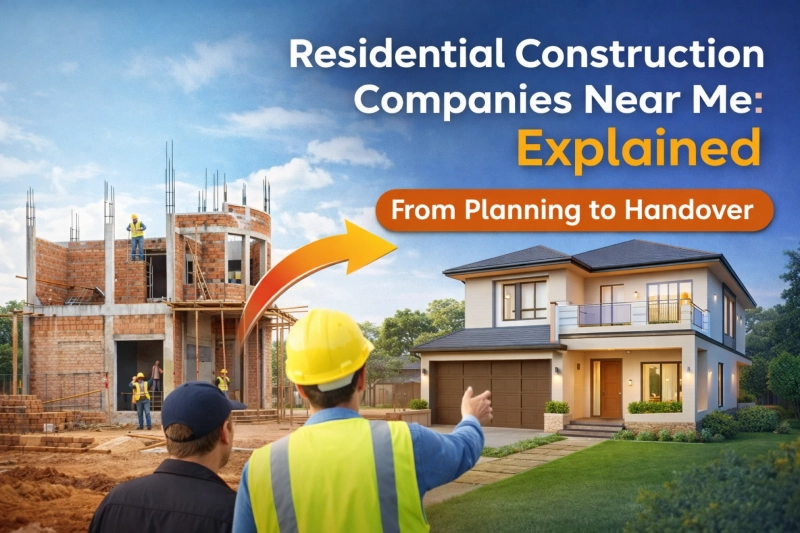
When people search for “residential construction companies near me”, it usually means they are planning to build a home—one of the most significant financial and emotional investments of their lives. From buying a plot to finally receiving the house keys, the residential construction journey involves many stages, technical decisions, and financial commitments.
This blog is written in a professional and educational format to clearly explain how residential construction companies operate, what happens at each stage of home construction, and what homeowners should expect from planning to final handover. Whether you are building an independent house, a villa, or a small residential building, this guide will help you understand the entire process and make informed decisions.
What Are Residential Construction Companies?
Residential construction companies specialize in building homes and living spaces. Their primary responsibility is to plan, manage, and execute residential projects while ensuring safety, quality, and compliance with building standards.
They typically handle:
- Independent houses and bungalows
- Villas and duplex homes
- Apartments and small residential buildings
- Major home extensions and renovations
Residential construction companies coordinate architects, engineers, skilled labor, material suppliers, and site supervisors to deliver a complete home-building solution.
Why Homeowners Search for Residential Construction Companies Near Me
Choosing a nearby residential construction company offers several practical benefits. Local builders can visit sites frequently, understand regional building regulations, communicate easily, and respond quickly to on-site issues. Proximity also helps reduce logistics costs and ensures better accountability throughout the project lifecycle.
For homeowners, working with a nearby construction company often results in smoother execution and better post-handover support.
Stage 1: Requirement Analysis and Planning
The home construction journey begins with understanding the homeowner’s requirements. This stage involves discussions around budget, family size, lifestyle needs, number of rooms, future expansion, and plot constraints.
Residential construction companies also assess site conditions such as plot size, soil type, access roads, and orientation. Proper planning at this stage helps avoid design changes, delays, and cost overruns later.
Stage 2: Architectural Design and Layout
Once requirements are clear, architectural planning begins. This includes preparing floor plans, elevations, and layout drawings that define room sizes, circulation, ventilation, and natural lighting.
Good residential design balances aesthetics with functionality, comfort, and structural feasibility. At this stage, homeowners finalize layouts and approve designs before moving forward.
Stage 3: Structural Design and Engineering
Structural design ensures the safety and durability of the house. Engineers design foundations, columns, beams, slabs, and load-bearing elements based on soil conditions and building height.
Residential construction companies coordinate closely with structural engineers to ensure the home can withstand loads, weather conditions, and long-term usage.
Stage 4: Cost Estimation and Budgeting
After design finalization, a detailed cost estimate or bill of quantities is prepared. This document outlines construction costs, material specifications, labor charges, and project stages.
Construction costs depend on factors such as:
- Plot size and soil condition
- Number of floors
- Material quality and brands
- Structural system
- Interior finishes
Transparent cost estimation helps homeowners plan finances and avoid unexpected expenses.
Stage 5: Approvals and Permissions
Before construction begins, necessary approvals and permits must be obtained from relevant authorities. Residential construction companies often assist homeowners with documentation, drawings, and approval procedures.
This stage is critical to ensure legal compliance and avoid penalties or work stoppages during construction.
Stage 6: Site Preparation and Foundation Work
Construction begins with site clearing, leveling, and marking as per approved drawings. Foundation work follows, including excavation, footing, and foundation construction.
A strong foundation is essential for the safety and longevity of the home. Quality checks are performed to ensure proper depth, reinforcement, and concrete strength.
Stage 7: Superstructure Construction
The superstructure includes columns, beams, slabs, walls, and roofing. This stage gives the house its visible form and structural framework.
Residential construction companies ensure proper curing, alignment, and material usage during this phase. Any errors at this stage can affect the building’s strength and appearance.
Stage 8: Masonry, Plastering, and Waterproofing
Brickwork or blockwork is completed, followed by plastering of internal and external walls. Waterproofing is applied to critical areas such as bathrooms, terraces, and roofs to prevent leakage and moisture damage.
These steps are crucial for durability and long-term maintenance.
Stage 9: Electrical, Plumbing, and Mechanical Systems
Electrical wiring, plumbing lines, drainage systems, and other utilities are installed as per approved layouts. Proper planning at this stage ensures safety, functionality, and ease of future maintenance.
Residential construction companies coordinate these services to avoid clashes and rework.
Stage 10: Interior Finishing Work
Interior work transforms the structure into a livable home. This stage includes flooring, tiling, doors, windows, false ceilings, painting, fixtures, and fittings.
Finishing quality significantly impacts the look, comfort, and value of the house. Homeowners often customize finishes based on preferences and budget.
Stage 11: Quality Checks and Inspections
Throughout construction, quality checks are conducted to ensure materials and workmanship meet required standards. Before handover, final inspections are carried out to identify and rectify defects.
Quality control ensures the home is safe, durable, and ready for occupancy.
Stage 12: Final Handover
The final handover marks the completion of the residential construction project. The homeowner receives the completed house along with drawings, warranties, and essential documentation.
A proper handover ensures the home is ready for immediate use and future maintenance.
Common Mistakes Homeowners Should Avoid
Common mistakes include choosing a builder based only on low pricing, skipping written agreements, ignoring material specifications, and not monitoring progress regularly. Being informed and involved helps avoid delays, quality issues, and budget overruns.
Benefits of Hiring Professional Residential Construction Companies
Professional residential construction companies provide expert planning, skilled execution, cost control, and quality assurance. They reduce stress for homeowners and ensure the house is built safely, efficiently, and according to approved designs.
Conclusion
Searching for residential construction companies near me is the first step toward building a safe, comfortable, and long-lasting home. Understanding the residential construction journey—from planning and design to execution and handover—empowers homeowners to make confident decisions and avoid costly mistakes.
A reliable residential construction company does more than construct walls; it turns ideas into well-planned homes designed for everyday living and long-term value.