
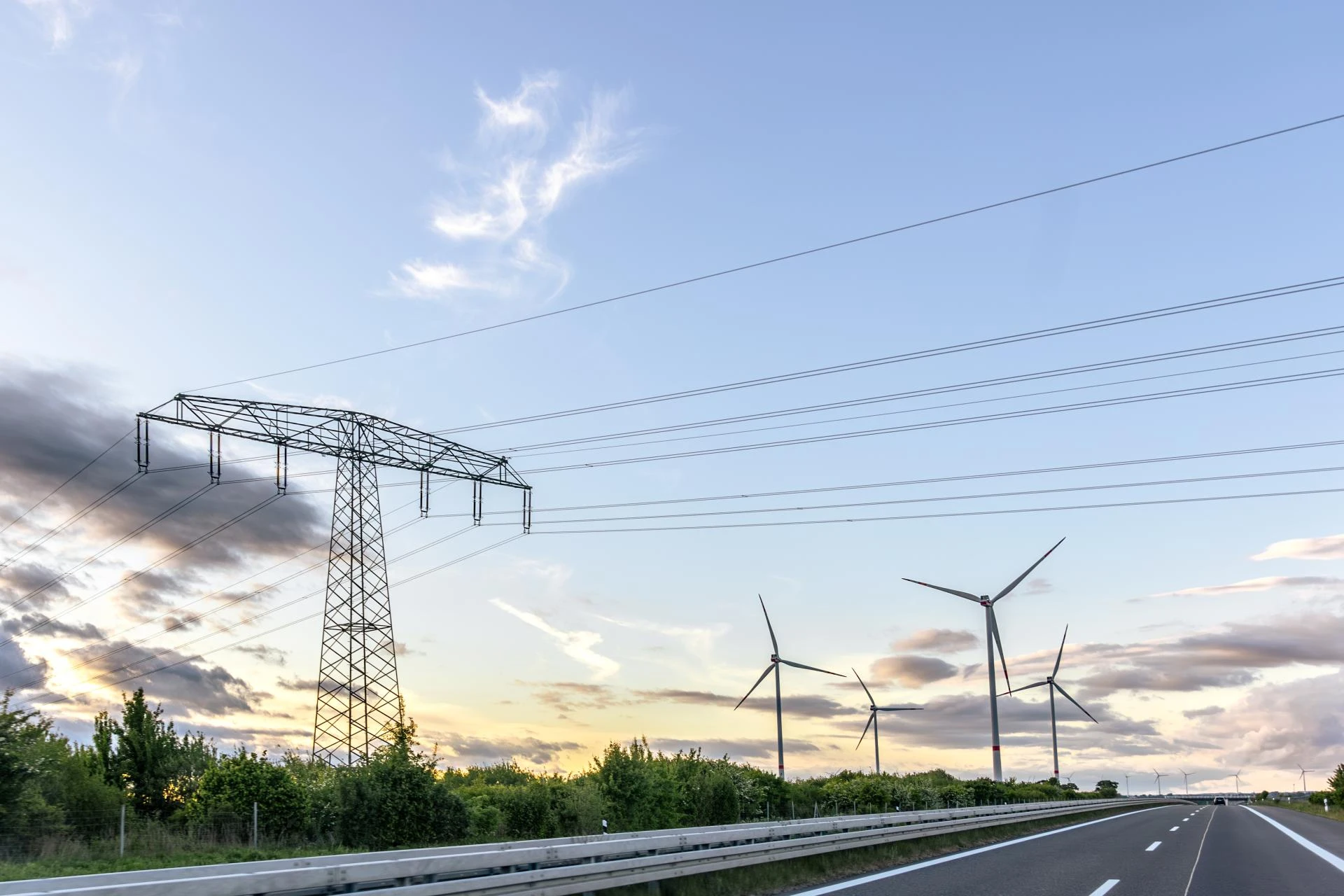
As a part of America’s clean energy vision, reconductoring is fast replacing the existing wires across high transition lines. The magic maker is, of course, high-capacity, advanced conductors that help reuse towers and rights-of-way to boost transmission capacity by at least 50% in 18–36 months. The setup accounts for about half the total cost of constructing a new line and is seemingly the fastest method to free up grid capacity for clean energy and data centers.
This blog revisits the concept of reconditioning, compares conductors with new line constructions, and discusses its impact for clean-energy buildout.
What is Reconductoring?
Conventional transmission lines generally use aluminum strands wrapped around a steel core. Reconductoring works to swap those cables to work with advanced conductors (aluminum is used as a wraparound composite core carrying more current but with significantly less sag). Now, industry studies have shown that such a large-scale reconductoring project (using composite-core conductors) can keep it cost-competitive.
The Story of A Stained Grid
At the outset, there are two different surges hitting the same system. At one end, there’s over 2,000 GW of wind, solar, and storage sitting in interconnection queues and forcing congestion across certain regions. This, in turn, curtails a significant share of potential wind and solar output (3-12%).
On the other end, we have U.S. data centers using about 4% of national electricity (as per 2024 data). The total consumption is expected to be more than double by 2030, thanks to AI workloads growing every minute. So, there’s no denying that clean energy demands more power export, with data centers driving the show.
Reconductoring Vs. New Electric lines
While there will always be demand for new long-distance electric lines, the time spent on obtaining the permit and building is always a big challenge. In comparison, reconductoring allows upgrading existing “highways” faster. Here’s a clear comparison between reconditioning and new electric lines across capacity gain, timeline, land and permit, and cost.

Advanced conductors will always have an edge as it carries more current at a higher temperature compared to legacy steel-core wires. However, the real game changer is the cost of new land acquisition and building new towers, which is negligible with reconductors. This significantly lowers the cost (almost half of working with new transmission lines), and the delivery is 3-5 times faster.
How Does Reconductoring Helps In Clean-energy Buildout
The real power of reconductoring can be understood when you place renewable resources next to existing corridors. The current U.S. grid model can benefit a lot from using reconductors, as it can deliver over 80% of inter-regional transmission expansion needs with 90% clean grid by 2035. Besides, reconductors can curtail renewable needs, saving tens to hundreds of billions of dollars for combined generation and transmission costs.
Over the last decade, the boom of cloud solutions and AI has significantly transformed access to electricity. The demand for electricity across global data centers is huge (almost double this decade), and as expected, the U.S. has the lion’s share of the growth. In fact, many utilities are already aware that firm capacity is tighter near the major hubs. This is where reconductoring actually matters, especially for hyperscale developers, as it can:
- Upgrade existing transmission lines feeding data-center clusters to relieve the congestion in the network sooner than a greenfield project.
- Offer much-needed headroom for transmission and help source renewable energy and pursue a 24/7 carbon-free supply.
The Challenges of Reconductoring For Cleaner Energy and Data Centers
Until the last decade, utilities treated regular transmission line replacements as routine maintenance and never a strategic way to build capacity. That was a time when advanced conductors looked downright expensive as they were solely judged on material cost. The planning rules also didn’t require the reconductors to be directly compared with new lines.
Fast forward to 2024–the Federal Energy Regulatory Commission’s Order 1920 now directs all transmission planners to closely evaluate and consider working with grid-enhancing technologies. This is where advanced conductors came into the picture, along with traditional options for long-term regional plans. Many grid operators are now piloting reconductoring programs, while some countries have already embraced their usage across existing transmission corridors, like India, Brazil, and Belgium, to name a few.
Nevertheless, reconductoring has its fair share of challenges in becoming a mainstream tool. It’s mostly has to do with regulators and planners as they need to:
- Identify reconductoring as a standard option in transmission planning
- Align utility incentives so that savings, reduced losses, and higher capacity are accounted for
- Streamline outage planning and boost workforce training to help upgrades repeat at scale
Final Thoughts
Reconductoring won’t replace the need for new transmission lines, but it is definitely the only upgrade that data centers need to realize clean energy goals. Reconductors are a surefire way to double the existing capacity of transmission with faster interconnections, lower congestion, more low-carbon power, and controlled costs. In doing so, it is fast turning electric maintenance work into one of America’s most vital digital-infrastructure tools.