



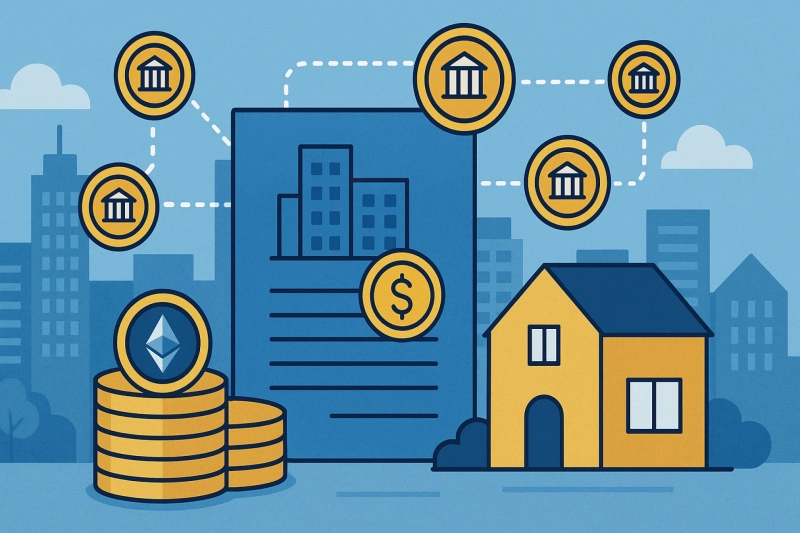
The landscape of real estate investing is undergoing a profound transformation. Traditionally, investing in commercial or high-value residential properties has been restricted to institutional investors or high-net-worth individuals due to high capital requirements, complex processes, and illiquid markets. This has left a significant portion of the investing public on the sidelines, unable to access potentially lucrative opportunities. However, the advent of real estate tokenization development is changing the game by turning illiquid assets into tradable digital tokens, making property investments more accessible, transparent, and efficient.
In this article, we explore what real estate tokenization is, how the development process works, the benefits it brings to both investors and property owners, challenges to consider, and the potential future of this disruptive innovation.
Understanding Real Estate Tokenization
Real estate tokenization refers to the process of converting ownership of a real-world property into digital tokens on a blockchain network. Each token represents a fractional share of the property, allowing investors to buy, sell, or trade these shares just like digital assets.
Unlike traditional property investment, which involves complex paperwork, legal formalities, and substantial capital, tokenization simplifies ownership by digitizing it. This process leverages blockchain technology to create a secure, transparent, and immutable ledger of property ownership. The blockchain ensures that ownership rights are verifiable, transfers are instant, and the risk of fraud or disputes is minimized.
Tokenization also aligns with the growing trend of fractional ownership, where investors can own a portion of high-value assets, such as office buildings, shopping complexes, luxury apartments, or commercial warehouses, without committing the full capital traditionally required.
How Real Estate Tokenization Development Works
The development of real estate tokenization involves several structured steps to ensure legal compliance, technological robustness, and investor trust. Here’s a detailed breakdown of the process:
1. Asset Identification and Valuation
The first step involves identifying the property to be tokenized and conducting a comprehensive valuation. Real estate developers, property owners, and tokenization service providers assess the property’s market value, potential returns, and legal considerations. Valuation ensures that the token price reflects the underlying asset's worth, creating trust among prospective investors.
2. Legal Structuring
Real estate tokenization is closely tied to legal compliance. Developers must decide on the jurisdiction, structure of ownership, and regulatory framework. The property can be held under a Special Purpose Vehicle (SPV), where tokens represent shares of the SPV rather than the property itself. This structure simplifies legal formalities and ensures that investors have clearly defined rights.
Jurisdictions with favorable regulatory frameworks, such as Switzerland, Singapore, and the United States (depending on the state), are preferred for tokenized real estate offerings. Smart contracts also play a key role by automating compliance, ensuring that transactions adhere to legal requirements.
3. Token Creation and Blockchain Integration
Once legal structuring is in place, the next step is to develop the digital tokens representing the property. Blockchain platforms like Ethereum, Solana, and Binance Smart Chain are commonly used for token creation. Each token is programmed to reflect ownership rights, dividends, voting power, and other privileges.
Smart contracts automate the distribution of rental income, management of ownership transfers, and compliance checks. This ensures that every transaction is executed securely and transparently without manual intervention.
4. Platform Development for Trading
To enable liquidity, real estate tokens are listed on specialized digital marketplaces or decentralized exchanges that support security tokens. Platform development includes user-friendly interfaces, secure wallets, payment gateways, and robust transaction protocols. These platforms allow investors to buy, sell, or trade property tokens seamlessly, creating a liquid market for previously illiquid assets.
5. Investor Onboarding and KYC/AML Compliance
Tokenized real estate offerings require investor onboarding to comply with Anti-Money Laundering (AML) and Know Your Customer (KYC) regulations. Investors must verify their identity, provide financial documentation, and agree to the terms of the investment. Smart contracts integrate KYC/AML compliance, ensuring that only eligible investors participate in tokenized property offerings.
Benefits of Real Estate Tokenization
Real estate tokenization brings transformative advantages for investors, property owners, and the overall real estate ecosystem.
1. Enhanced Liquidity
One of the primary benefits of tokenization is liquidity. Traditional real estate investments can take months or even years to sell due to legal formalities, negotiations, and market limitations. Tokenization converts property ownership into tradable digital assets, enabling investors to buy or sell fractions of properties in a matter of minutes, effectively unlocking liquidity for previously illiquid assets.
2. Lower Investment Thresholds
Tokenization reduces entry barriers for investors. Instead of requiring hundreds of thousands or millions of dollars to purchase an entire property, investors can buy a fraction of a tokenized asset for as little as a few hundred dollars. This democratizes access to high-value real estate and allows for diversified investment portfolios.
3. Transparency and Security
Blockchain ensures that all transactions and ownership records are immutable and publicly verifiable. Investors can track the property’s history, ownership distribution, rental income, and transfers on the blockchain. This transparency reduces disputes, fraud, and mismanagement, creating a more secure investment environment.
4. Automation of Management and Payments
Smart contracts automate several processes in real estate management. Rental income distribution, property maintenance fees, and profit-sharing can be executed automatically based on predefined rules. Automation reduces administrative overhead, enhances efficiency, and ensures timely payouts to investors.
5. Global Accessibility
Tokenized real estate can be accessed by investors from across the globe. Cross-border transactions are simplified, eliminating the need for local intermediaries or extensive legal procedures. This global reach expands the potential investor base, increases market efficiency, and attracts more capital to real estate projects.
Real-World Applications and Use Cases
Real estate tokenization is already transforming several segments of the property market. Here are some prominent examples:
1. Commercial Real Estate
Office buildings, shopping centers, and industrial warehouses are increasingly being tokenized to attract institutional and retail investors. Tokenization allows investors to earn rental income proportionate to their holdings while diversifying risk across multiple properties.
2. Residential Real Estate
Luxury apartments and multi-family housing projects are being fractionalized through tokenization. Investors can participate in premium real estate opportunities without committing the full capital, making high-end properties more accessible.
3. Real Estate Investment Funds
Tokenization has also impacted real estate funds. Funds can issue digital tokens representing a share of the fund’s portfolio, allowing for seamless entry and exit by investors. This increases liquidity and flexibility compared to traditional fund structures.
4. International Real Estate
Tokenization facilitates global property investments. Investors can participate in international real estate markets without the complexities of foreign legal systems or currency exchanges. Blockchain ensures compliance and transparent ownership records across borders.
Challenges and Considerations
Despite its advantages, real estate tokenization also faces challenges:
1. Regulatory Uncertainty
Regulations governing tokenized real estate vary across jurisdictions. Navigating legal requirements, securities regulations, and property laws is critical for developers and investors to ensure compliance.
2. Technological Complexity
Tokenization involves blockchain integration, smart contracts, and secure digital marketplaces. Businesses require skilled developers and secure platforms to avoid vulnerabilities or technical failures.
3. Market Adoption
The concept of fractional ownership and digital assets may be new to many investors. Educating potential participants about tokenized real estate and building trust in the system is crucial for adoption.
4. Valuation and Liquidity Risks
Although tokenization enhances liquidity, the value of tokens still depends on market demand. Investors must carefully assess the underlying property, rental income, and potential market risks before investing.
The Future of Real Estate Tokenization
The future of real estate tokenization is promising. As blockchain technology matures, platforms are likely to become more scalable, secure, and interoperable. Key trends shaping the future include:
- Integration with DeFi: Real estate tokens can be used as collateral for decentralized finance loans, enabling more liquidity and financial flexibility.
- AI-Driven Property Insights: Artificial intelligence can enhance property valuation, predictive analytics, and market insights for tokenized assets.
- Institutional Participation: Large-scale institutional investors are increasingly exploring tokenized real estate, driving mainstream adoption.
- Smart Contract Innovation: Advanced smart contracts will enable automated compliance, governance, profit-sharing, and dispute resolution.
Tokenization is likely to redefine how real estate is bought, sold, and managed, making property markets more inclusive, efficient, and accessible to investors worldwide.
Conclusion
Real estate tokenization development is revolutionizing traditional property investment by turning illiquid assets into tradable digital tokens. By leveraging blockchain technology, smart contracts, and fractional ownership, tokenization enables transparency, liquidity, automation, and global accessibility. Investors gain access to high-value properties with lower capital requirements, while property owners can unlock new funding avenues and streamline management processes.
As adoption grows, tokenized real estate is poised to become a mainstream investment option, attracting global capital, enhancing market efficiency, and democratizing access to one of the most valuable asset classes in the world. For the next generation of investors and real estate developers, embracing tokenization is no longer a futuristic concept—it is a practical strategy for maximizing returns, minimizing risk, and participating in the digital transformation of real estate markets.