



Introduction: Messaging Is Now More Than Just Text
Business communication has evolved far beyond basic SMS. Today, customers expect messages that are visual, interactive, and easy to act on. They want updates that feel helpful rather than intrusive.
This is exactly why WhatsApp API vs RCS messages has become an important topic for modern businesses. Both channels support richer communication, but they are built for different goals. Understanding how each one works helps businesses choose the right messaging.
What Is WhatsApp API?
The WhatsApp API is designed specifically for businesses that want to communicate with customers at scale while keeping conversations personal. Unlike traditional messaging channels, the WhatsApp API supports two-way communication, allowing customers to reply and continue the conversation.
Using the WhatsApp API, businesses can send order confirmations, delivery updates, reminders, and notifications while also responding to customer queries in real time. This makes the WhatsApp API especially valuable for customer support and ongoing engagement.
Because WhatsApp is already a daily communication tool for millions of users, messages sent through the WhatsApp API feel natural and familiar.
Why Businesses Prefer WhatsApp API
One of the biggest reasons businesses choose the WhatsApp API is its ability to manage conversations efficiently at scale. Automation, chatbots, and CRM integrations help teams handle large volumes of customer interactions without losing context.
The WhatsApp API is widely used for customer support, follow-ups, appointment reminders, and post-purchase communication. For many brands, the WhatsApp API becomes a long-term engagement channel rather than just a one-time notification tool.
What Are RCS Messages?
RCS messages are the modern evolution of SMS. Instead of simple text, RCS messages allow businesses to send rich, interactive content directly to a user’s default messaging app.
With RCS messages, brands can include images, videos, buttons, and branded layouts. This creates a more engaging experience while keeping communication inside the inbox users already trust.
Another benefit of RCS messages is verified sender information, which helps customers instantly recognize the brand and feel more confident opening the message.
Why Businesses Are Adopting RCS Messages
Many businesses adopt RCS messages because they improve engagement without requiring users to download an app or change their behavior. Everything feels familiar, just more interactive.
Clear visuals, strong call-to-action buttons, and better message layouts are key reasons why RCS messages are replacing traditional SMS for promotions, alerts, and reminders. Across industries like retail, banking, travel, and e-commerce, RCS messages are becoming a reliable upgrade.
A Personal Experience with RCS Services
When I first started working with RCS messages, my goal was to understand how RCS services perform in real scenarios before scaling campaigns. I quickly noticed that messages with a single clear action and simple visuals received better engagement. As volumes grew, campaign management became just as important, which is when I started using LeminiAi. What stood out was how straightforward everything felt—creating and managing RCS messages never felt overly technical. This allowed me to focus more on user response and less on setup, helping me see RCS messages as a dependable communication channel rather than just an experiment.
WhatsApp API vs RCS Messages: Understanding the Difference
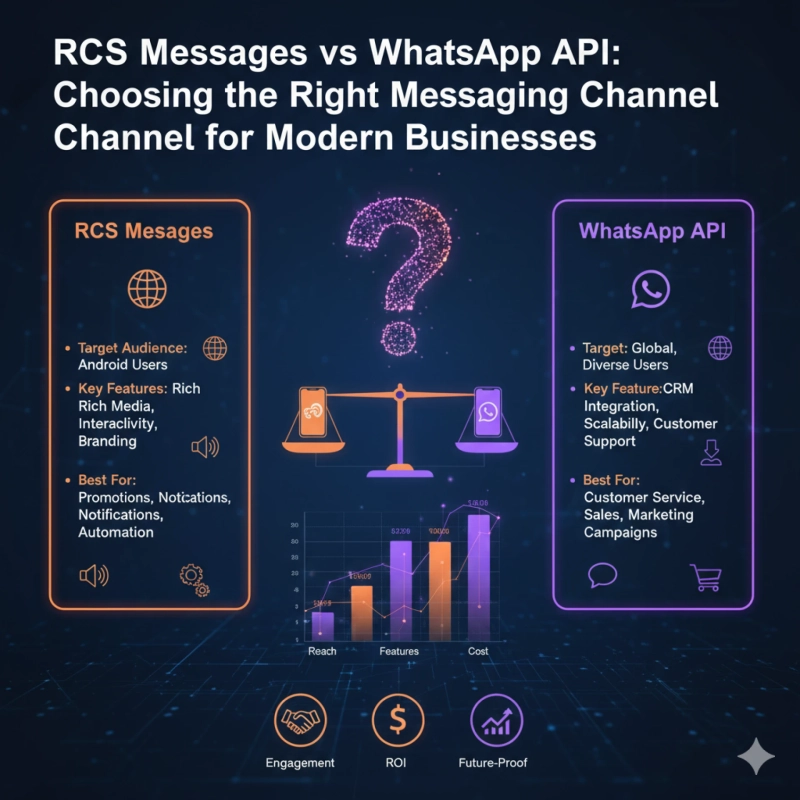
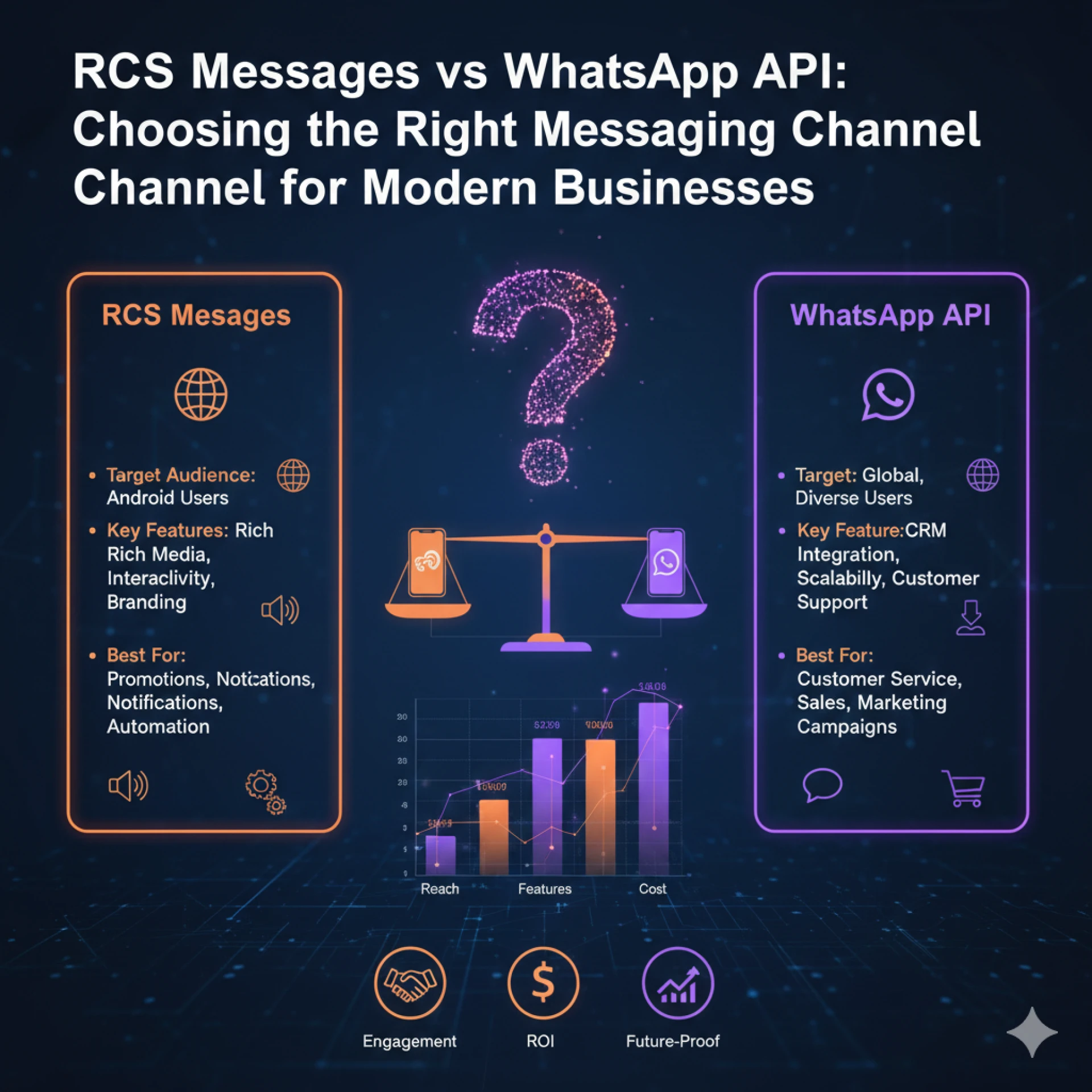
When comparing WhatsApp API vs RCS messages, the main difference comes down to intent.
RCS messages are ideal for grabbing attention quickly with rich, one-way communication. The WhatsApp API, on the other hand, is built for conversations that involve back-and-forth interaction and relationship building.
In practice, many businesses use RCS messages to spark interest and then move engaged users to the WhatsApp API for deeper interaction.
When WhatsApp API Makes More Sense
The WhatsApp API is the better choice when businesses need ongoing interaction. It works particularly well for customer support, confirmations, feedback collection, and personalized communication.
Brands that focus on long-term customer relationships often rely on the WhatsApp API to maintain consistent and meaningful engagement.
When RCS Messages Are the Better Choice
RCS messages are best suited for promotions, announcements, and time-sensitive alerts. They are especially useful for businesses upgrading from SMS while keeping the experience simple for users.
For offers, reminders, and notifications, RCS messages provide a clean and visually engaging experience without requiring extra effort from customers.
Using WhatsApp API and RCS Messages Together
Rather than choosing one channel, many brands combine WhatsApp API vs RCS messages into a single messaging strategy.
For example, RCS messages can introduce an offer or update, while the WhatsApp API handles customer questions and follow-ups. This creates a smooth journey from notification to conversation.
Final Thoughts
The discussion around WhatsApp API vs RCS messages isn’t about choosing one winner. It’s about using the right channel for the right purpose Used thoughtfully, the WhatsApp API enables meaningful conversations and long-term engagement, while RCS messages help brands stand out with rich, visual communication. Together, they create messaging experiences that feel helpful, natural, and customer-friendly.