



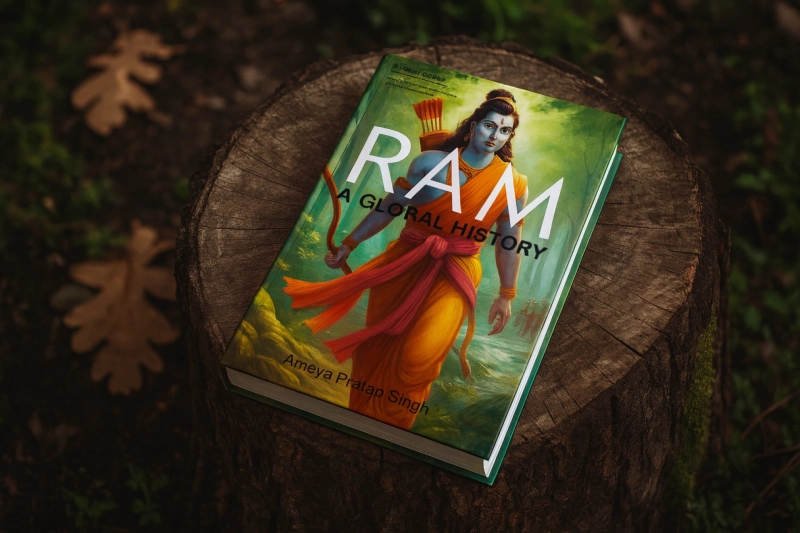
Revisiting Ram in a Modern World
Ram: A Global History by Ameya Pratap Singh stands at the intersection of timeless mythology and contemporary thought. By choosing a historical lens rather than a strictly devotional or literary one, the author opens a space for readers to examine Lord Ram not just as a revered deity but as a deeply influential figure whose legacy has transcended borders, beliefs, and centuries.
This approach offers a chance to re-evaluate a familiar narrative from perspectives that are more analytical, wide-ranging, and intellectually engaging. Rather than retelling the Ramayana, the book appears to question how its central figure, Ram, continues to influence political thought, global movements, and ideas of moral leadership.
A Structured Dive into Global Interpretations
The strength of the book lies in its ambitious scope. With a tagline that hints at “history for those who have no time to read history,” it promises a format that is both digestible and stimulating. It seeks to bring together history, philosophy, and geopolitics...domains often kept apart...into a single coherent conversation around Ram’s character and the world’s engagement with it.
This isn’t a devotional biography or a retelling of epics. Instead, it seems to operate more like a curated meditation on how the iconography and ideology surrounding Ram has evolved and been interpreted through a global lens. Readers looking to explore the intersection between tradition and modern discourse will likely find this format refreshing.
Between Faith and Frameworks
One of the more intriguing elements is how the book positions Ram as a figure within the “global order.” This opens the door to discussing cultural narratives, moral leadership, and the role of mythology in shaping national identities. For readers who have primarily engaged with Ram through spiritual or mythological texts, this book provides a new framework to view his story as part of a much broader cultural and philosophical dialogue.
Also Read: Bhakti Sarita by Sadhana Shahi
The writing appears to reflect a thoughtful voice, balancing reverence with inquiry. It does not attempt to distill Ram into a single ideology or message. Instead, it seems to explore how different societies and periods have adopted aspects of Ram’s persona to support their unique visions...whether spiritual, national, or even political.
Designed for the Modern Reader
What also stands out is the format. The book is said to be structured with the time-pressed reader in mind. In a world dominated by fast content and short attention spans, this seems like a deliberate choice. Readers looking for deep insight without dense academic writing may appreciate this editorial style.
There’s also a clear effort to ground the narrative in present-day relevance. This is not a distant history book. It aims to make readers think about how ancient ideas still influence contemporary societies, leadership decisions, and even ideological battles.
Why It Might Matter Now
At a time when cultural identity and history are once again becoming focal points in national and global conversations, a book like this feels particularly timely. It invites readers to explore the overlap between myth and statecraft, between personal belief and public discourse.
Rather than prescribing what Ram represents, it appears the book allows space for contemplation. In that way, it encourages readers to form their own perspectives, supported by historical context and cultural evolution.
Final Thoughts
Ram: A Global History by Ameya Pratap Singh provides a wide-angle lens through which to understand a figure who is often viewed in highly localized or spiritual terms. This shift in lens, from myth to history, from story to structure, has the potential to reframe not just how readers see Ram, but how they engage with historical icons in general.
The book may not be for those seeking a traditional retelling or devotional guide. But for those interested in cultural history, global thought, and the evolution of ideals, this work opens up meaningful discussions. With its promise of brevity, clarity, and insight, it aims to serve not just as a book on Ram, but as a reflection on how narratives shape nations.