



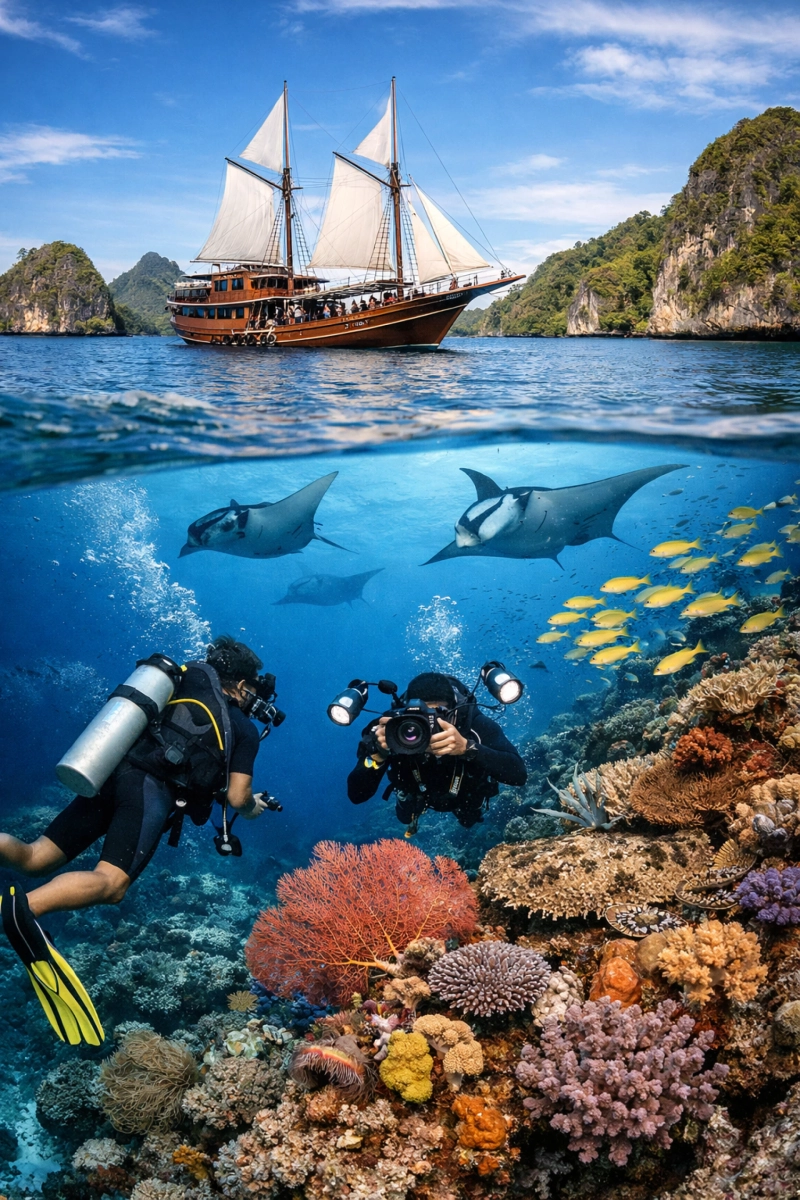
Few destinations on Earth can match the raw beauty, biodiversity, and exclusivity of a Raja Ampat Liveaboard Diving Trip. Located in the heart of Indonesia’s Coral Triangle, Raja Ampat is widely regarded by marine biologists and professional divers as the most biodiverse marine ecosystem on the planet.
For divers from the United States, Germany, and Spain, Raja Ampat represents more than a vacation—it’s a once-in-a-lifetime expedition to untouched reefs, rare marine species, and world-class dive sites accessible only by liveaboard.
This guide is designed to help you understand why Raja Ampat liveaboard diving is so highly sought after, what to expect, and how to choose the right trip for your experience level and travel goals.
Why Raja Ampat Is the World’s Premier Diving Destination
Raja Ampat sits at the epicenter of global marine biodiversity. Scientists have recorded:
- Over 600 species of coral
- More than 1,500 species of reef fish
- Frequent encounters with manta rays, sharks, turtles, and pygmy seahorses
Unlike heavily trafficked dive destinations, Raja Ampat remains remote and protected, ensuring pristine conditions and uncrowded dive sites.
A Paradise for Experienced and Advanced Divers
Strong currents, nutrient-rich waters, and dramatic underwater topography make Raja Ampat especially appealing to experienced divers seeking thrilling drift dives and big-animal encounters. However, liveaboards also offer beginner-friendly sites with calm conditions and expert supervision.
What Is a Raja Ampat Liveaboard Diving Trip?
A Raja Ampat liveaboard is a multi-day scuba expedition aboard a fully equipped dive vessel. Instead of staying on land, you live, eat, and dive from the boat—allowing access to remote dive sites unreachable by day boats.
A typical Raja Ampat Liveaboard Diving Trip includes:
- 3–4 dives per day
- Night dives and sunrise dives
- Full board accommodation
- Professional dive guides
- Nitrox options
- Photography-friendly dive schedules
This format maximizes bottom time while minimizing travel stress.
Top Dive Sites You’ll Experience
Cape Kri
Famous for holding a world record for the highest number of fish species recorded in a single dive, Cape Kri delivers dense schools of fish, sharks, and powerful currents.
Manta Sandy & Manta Ridge
These cleaning stations offer close encounters with majestic manta rays year-round, making them a highlight of any liveaboard itinerary.
Blue Magic
A deep seamount known for pelagic action, including reef sharks, giant trevally, and swirling bait balls.
Misool Region
Often considered the crown jewel of Raja Ampat, Misool features vibrant soft corals, steep walls, caves, and exceptional macro life.
Why Choose a Liveaboard Over a Resort?
While Raja Ampat does offer land-based resorts, liveaboards provide unmatched advantages:
- Access to remote dive sites
- More dives per day
- Less boat traffic
- Flexible itineraries based on conditions
- Higher chances of rare marine encounters
For travelers coming from the United States, Germany, or Spain, liveaboards deliver better value by combining accommodation, meals, diving, and transportation into one seamless experience.
Best Time for a Raja Ampat Liveaboard Diving Trip
Raja Ampat offers year-round diving, but conditions vary by season:
- October to April: Best overall conditions, calm seas, excellent visibility
- December to February: Peak manta ray season
- May to September: Slightly rougher seas, still excellent diving in northern regions
Most liveaboard operators schedule itineraries to match seasonal conditions, ensuring optimal dive quality.
Marine Life You Can Expect to See
Raja Ampat’s biodiversity is unmatched. Divers frequently encounter:
- Manta rays (reef and oceanic)
- Wobbegong sharks
- Blacktip and whitetip reef sharks
- Barracuda and tuna
- Pygmy seahorses
- Nudibranchs and rare macro species
- Massive schools of fusiliers and snapper
This diversity makes Raja Ampat ideal for underwater photographers and marine life enthusiasts.
Liveaboard Comfort, Safety, and Expertise (EEAT Focus)
Experience & Expertise
Reputable Raja Ampat liveaboards employ certified dive masters with extensive local knowledge. Many guides have thousands of dives logged in Raja Ampat alone.
Authority
Top operators adhere to international safety standards, use well-maintained equipment, and limit diver-to-guide ratios for safety and enjoyment.
Trust & Sustainability
Most liveaboards actively support marine conservation, local communities, and eco-friendly practices—important for environmentally conscious travelers from Europe and the US.
Who Is This Trip Best For?
A Raja Ampat Liveaboard Diving Trip is ideal for:
- Certified scuba divers (Open Water minimum)
- Advanced and Nitrox divers
- Underwater photographers
- Adventure travelers seeking exclusive destinations
- Divers who value biodiversity over luxury beaches
Non-divers may join select liveaboards, but the trip is primarily dive-focused.
Travel Tips for Divers from the US, Germany, and Spain
Getting There
Most travelers fly into Jakarta or Bali, then connect to Sorong, the gateway to Raja Ampat. Liveaboards depart directly from Sorong harbor.
Visas & Documentation
- US, German, and Spanish passport holders typically qualify for Indonesia’s visa-on-arrival.
- Ensure your passport has at least 6 months validity.
Health & Insurance
- Dive insurance (DAN recommended)
- Travel insurance covering medical evacuation
- Recent dive medical clearance if required
What to Pack for Your Liveaboard
- Dive certification cards
- Reef-safe sunscreen
- Underwater camera or GoPro
- Motion sickness medication
- Light clothing and a rash guard
- Backup dive computer (recommended)
Liveaboards provide tanks, weights, and often rental gear upon request.
Cost and Value: Is It Worth It?
A Raja Ampat liveaboard is a premium experience, typically ranging from $3,000 to $6,000+ USD depending on vessel quality, trip length, and inclusions.
While the upfront cost is higher than many dive destinations, the value is exceptional when you consider:
- World-class diving
- Remote access
- All-inclusive logistics
- Uncrowded dive sites
For serious divers, it’s widely considered one of the best investments in global scuba travel.
Final Thoughts: Why Raja Ampat Should Be Your Next Dive Destination
If you’re seeking the pinnacle of scuba diving, few experiences compare to a Raja Ampat Liveaboard Diving Trip. From unmatched marine biodiversity to expertly guided dives and remote reef access, Raja Ampat consistently exceeds expectations.
For divers traveling from the United States, Germany, or Spain, this destination offers not just a holiday—but a transformative underwater adventure that defines a lifetime of diving memories.
Ready to Plan Your Raja Ampat Liveaboard Diving Trip?
Choosing the right liveaboard and season makes all the difference. If you want help selecting the best itinerary, vessel, or travel plan tailored to your experience level and home country, just say the word—I’ve got you covered