



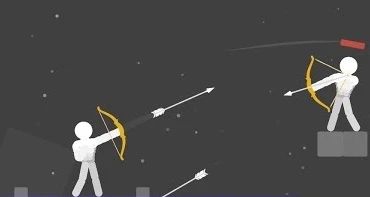
In the vast universe of indie and browser-based games, only a handful manage to transform simplicity into pure joy. ragdoll archers is one of those rare gems. At first glance, it looks like a modest physics-based archery game with floppy characters and stick-figure aesthetics. But give it five minutes, and you’ll realize that beneath its minimalist exterior lies a wildly entertaining experience fueled by chaos, precision, and the delightful unpredictability of ragdoll physics.
A Game That Refuses to Take Itself Seriously
Ragdoll Archers doesn’t aim for realism—it aims for fun. The characters bend, twist, and collapse like boneless puppets, reacting dramatically to every arrow fired. A simple shot to the leg can send an archer spinning helplessly, while a perfectly timed headshot might result in a slow-motion tumble that feels more comedic than brutal.
This exaggerated physics is the heart of the game. Instead of polished animations, the developers embraced awkwardness, turning every movement into an opportunity for laughter. Each battle feels less like a traditional duel and more like a slapstick performance, where victory is often decided by gravity as much as skill.
Mastering the Bow Is Only Half the Battle
At its core, Ragdoll Archers is about aiming and timing. You draw your bow, adjust your angle, account for distance, and release. Sounds simple, right? Not quite.
The challenge comes from controlling a character who doesn’t always cooperate. Your archer wobbles, stumbles, and reacts to recoil in unpredictable ways. A powerful shot might knock you off balance, leaving you vulnerable. Suddenly, you’re not just fighting your opponent—you’re fighting your own body.
This creates a fascinating dynamic where strategy meets chaos. Should you go for a high-damage shot and risk falling over? Or play it safe with quick, controlled arrows? The game rewards experimentation, encouraging players to adapt rather than memorize patterns.
The Joy of Unpredictability
One of the most compelling aspects of Ragdoll Archers is how no two matches ever feel the same. Even when facing the same opponent or replaying the same mode, tiny variations in physics lead to completely different outcomes.
An arrow might clip an arm instead of landing a fatal hit. A character might collapse at the exact wrong moment. Sometimes, both archers fall at once, lying helplessly on the ground as arrows fly wildly overhead. These moments aren’t bugs—they’re features. They transform frustration into humor and failure into entertainment.
The game understands that players don’t just want to win; they want stories. And Ragdoll Archers delivers countless micro-stories through its absurd encounters.
Simple Design, Smart Execution
Visually, Ragdoll Archers keeps things clean and uncluttered. The backgrounds are minimal, ensuring that the focus remains on the characters and their interactions. This simplicity also makes the game highly accessible—there’s nothing intimidating about the interface, and new players can jump in almost instantly.
But don’t let the simplicity fool you. Beneath the surface lies a finely tuned physics system that balances randomness with control. While outcomes can be unpredictable, skill still matters. Experienced players learn how to use momentum, positioning, and timing to their advantage.
This balance is crucial. Too much randomness would make the game feel unfair, while too much precision would strip away its charm. Ragdoll Archers walks this tightrope beautifully.
Multiplayer Madness and Social Fun
Whether you’re playing against AI or challenging a friend, Ragdoll Archers shines brightest in competitive scenarios. Local multiplayer turns the game into a party favorite, where laughter often drowns out any sense of rivalry.
Watching a friend miss an easy shot and topple off a platform never gets old. Likewise, landing an impossible arrow while barely standing feels incredibly satisfying. The shared experience—the gasps, groans, and laughter—is what elevates the game beyond a solo pastime.
In an era dominated by massive online games, Ragdoll Archers reminds us of the joy of simple, shared fun.