



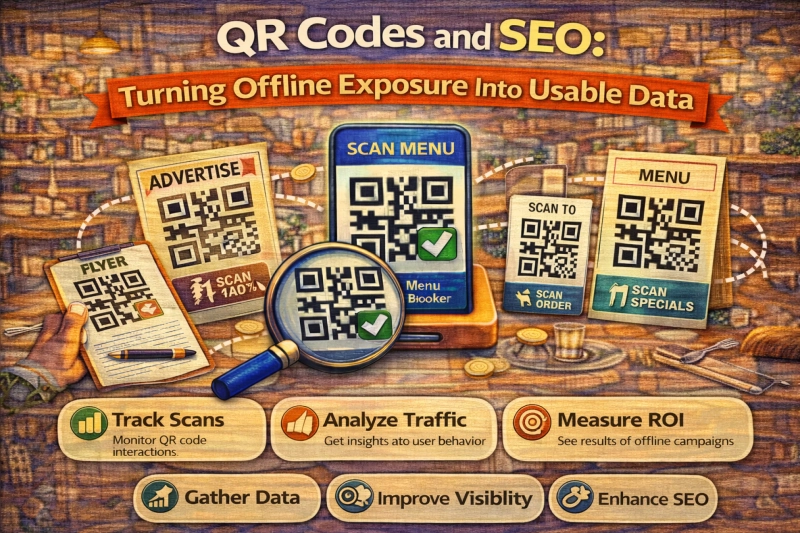
QR codes are often misunderstood in digital marketing. Some expect them to improve search rankings directly, while others assume they have no SEO value at all.
In reality, QR codes sit outside traditional SEO mechanics — but they can still influence online performance by making offline exposure measurable.
QR Codes Don’t Affect Rankings Directly
From a technical standpoint, QR codes do not change how search engines work.
They:
- Don’t function as backlinks
- Don’t influence crawling or indexing
- Don’t directly impact ranking algorithms
Scanning a QR code is simply another way a user lands on a URL. The SEO value comes from what happens after that visit.
The Measurement Problem With Offline Marketing
Offline marketing has always struggled with attribution.
You can place signage, packaging, menus, or printed materials in front of thousands of people, but without a direct connection, it’s difficult to know who actually followed up.
QR codes solve this by converting physical exposure into trackable website visits. Each scan becomes a session you can analyze like any other traffic source.
Why QR Code Traffic Is Often Higher Quality
People don’t scan QR codes casually.
Scanning requires intention — noticing the code, deciding it’s relevant, and taking action. Because of that, QR code traffic often shows:
- Higher engagement
- Longer time on page
- More interaction with content
These are the same behavioral signals search engines already use to evaluate content quality.
Context Matters More Than Volume
QR codes work best when the destination matches the situation.
Sending QR traffic to a homepage often leads to quick exits. Focused landing pages perform better because they immediately meet expectations.
Examples include:
- Menu QR codes opening menus
- Product QR codes opening product pages
- Event QR codes opening event details
When context and destination align, engagement improves.
Using QR Codes as Part of an Analytics Strategy
QR codes are most valuable when they’re planned and tracked.
With dedicated URLs or campaign-specific pages, you can measure:
- Scan volume
- Location-based performance
- On-site behavior after the scan
This allows offline activity to inform online decisions, rather than operating blindly.
Static vs Editable QR Codes for Long-Term Data
QR codes can be static or editable.
Static QR codes always point to the same URL and cannot be changed.
Editable QR codes allow you to update destinations without reprinting materials. This is especially useful when pages move, campaigns end, or messaging changes.
Maintaining valid destinations protects long-term data quality.
Creating QR Codes With Tracking in Mind
Generating a QR code is easy. Planning the destination is the important part.
Once the landing page is ready, you can generate a clean, scannable QR code using a tool like
and deploy it across packaging, signage, or printed materials.
The success of the QR code depends far more on the landing experience than on the code itself.
Common Reasons QR Codes Underperform
QR codes tend to fail when:
- Pages load slowly or aren’t mobile-friendly
- The content doesn’t match the scan context
- There’s no clear next step
- Scans aren’t tracked or analyzed
In these cases, scans happen, but the opportunity is wasted.
Final Thoughts
QR codes don’t replace SEO and they don’t influence rankings directly.
What they do is make offline exposure visible and measurable. By turning real-world attention into trackable online sessions, QR codes help bridge the gap between physical marketing and digital performance.
Used thoughtfully, they become a practical data source — not just a convenience feature.