




In today’s competitive business environment, organizations must manage projects with greater precision, speed, and adaptability. Whether launching a new product, implementing technology upgrades, or driving operational improvements, effective project management ensures that goals are achieved on time and within budget. Tools like Nimble Work, which combine structured planning with flexible execution, have become essential for organizations striving for sustainable growth. Two fundamental pillars of successful project management are a clear understanding of the project management life cycle and the adoption of modern frameworks such as the agile methodology process.
1. The Project Management Life Cycle
The project management life cycle serves as a structured roadmap that guides teams from project initiation to successful completion. While specific models may vary, most organizations rely on five core phases: Initiation, Planning, Execution, Monitoring & Controlling, and Closure. Using a platform like Nimble Work helps streamline each phase and enhances cross-department visibility.
Initiation:
This first phase defines the project’s purpose, scope, and feasibility. Stakeholders identify business needs, establish objectives, and allocate initial resources. Nimble Work supports this process by offering centralized documentation and stakeholder alignment tools, ensuring that teams begin with clarity.
Planning:
Once approved, the project moves into detailed planning. This stage includes defining tasks, estimating timelines, allocating resources, and developing risk-management strategies. Nimble Work’s planning features—such as Gantt charts, resource dashboards, and workload forecasting—enable project managers to build realistic and adaptable plans.
Execution:
During execution, teams work on assigned tasks and produce deliverables. Collaboration, communication, and coordination become crucial. Nimble Work enhances execution by offering real-time task tracking, automated notifications, file-sharing capabilities, and integrated communication channels that keep dispersed teams aligned.
Monitoring & Controlling:
Overlapping with execution, this phase focuses on measuring progress, tracking performance metrics, managing risks, and making adjustments. Nimble Work’s analytics and reporting tools help managers detect issues early and optimize workflows, ensuring the project stays on schedule and budget.
Closure:
Finally, the project is formally closed. Teams evaluate outcomes, document lessons learned, and release resources. Nimble Work supports this phase through project summary reports, performance dashboards, and archival features that preserve knowledge for future initiatives.
2. Agile Methodology Process
While the traditional project life cycle offers structure, today’s fast-moving organizations often require greater flexibility. The agile methodology process addresses this need through iterative development, continuous feedback, and incremental improvements. Tools like Nimble Work are designed to support agile principles, enabling teams to respond quickly to changing requirements.
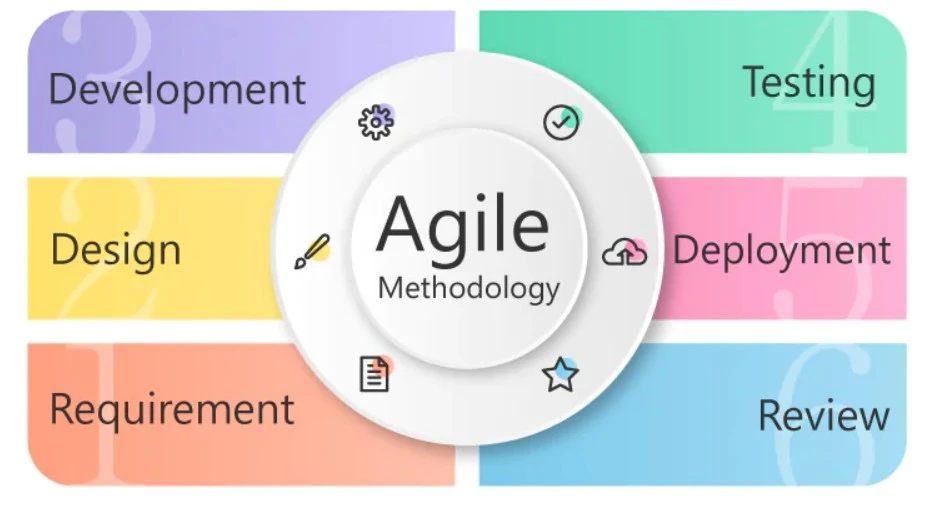
Agile methodology generally follows a repeating cycle of planning, development, testing, review, and adaptation, executed through short time-boxed iterations known as sprints. At the start of each sprint, teams select tasks from a prioritized backlog and commit to delivering specific outcomes. Throughout the sprint, daily stand-up meetings promote collaboration and identify blockers. After completion, sprint reviews and retrospectives help teams refine their process.
Nimble Work enhances the agile workflow through features such as customizable Kanban boards, sprint planning modules, backlog management, and burndown charts. These tools give teams clear visibility into progress while supporting continuous improvement. Because agile encourages rapid delivery and customer involvement, organizations using Nimble Work can innovate faster and deliver higher-quality results.
By integrating a well-defined project management life cycle with agile methodology—and leveraging solutions like Nimble Work—organizations can improve efficiency, collaboration, and adaptability, ensuring long-term project success.