



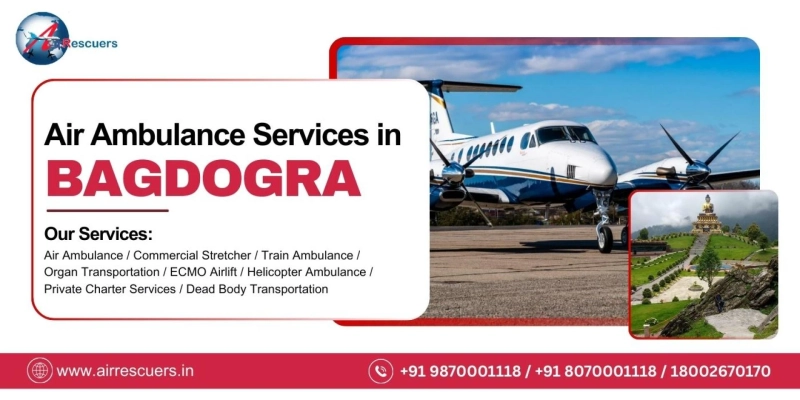
In the scenic foothills of the Himalayas, Bagdogra, a bustling town in West Bengal, serves as a vital gateway to northeastern India, connecting travelers to destinations like Darjeeling, Sikkim, and Bhutan. Despite its strategic location and growing infrastructure, the region faces significant challenges in providing timely medical care, particularly during emergencies. The rugged terrain, limited access to advanced healthcare facilities, and distance from metropolitan centers often hinder prompt medical intervention. In such critical scenarios, air ambulance service in Bagdogra operations emerge as indispensable lifelines, offering rapid, safe, and professional medical transportation to ensure patients receive the care they need when every second counts.
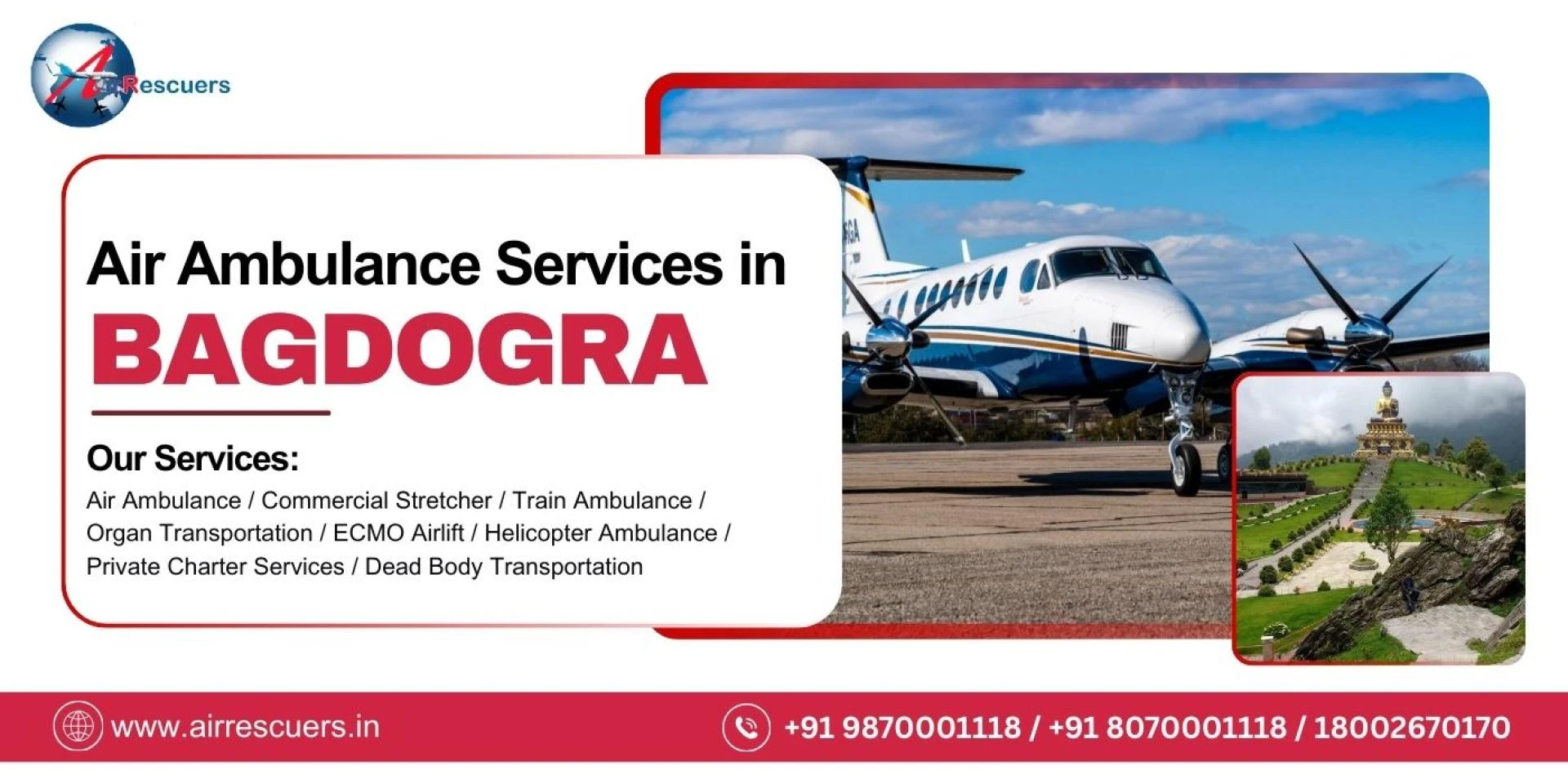
The Critical Role of Air Ambulance in Bagdogra
Bagdogra’s unique geographical position, surrounded by tea gardens and mountainous landscapes, makes it a hub for tourism and trade. However, its healthcare infrastructure, while improving, often lacks the specialized facilities required for critical conditions such as trauma, cardiac emergencies, or neonatal care. Ground transportation, constrained by winding roads, unpredictable weather, and traffic congestion, can delay transfers to advanced medical centers in cities like Kolkata, Delhi, or Mumbai. Air ambulances address these challenges by providing swift aerial transport, bypassing logistical barriers and delivering patients to specialized hospitals in a fraction of the time required by road or rail.
These operations are equipped with state-of-the-art medical technology, transforming aircraft into flying intensive care units (ICUs). They are staffed by highly trained medical professionals, including doctors, paramedics, and nurses, who ensure continuous care during transit. Whether it’s a heart attack, stroke, accident-related injury, or organ transplant, air ambulances in Bagdogra provide a critical bridge to life-saving treatment, improving patient outcomes significantly.
Advanced Features of Air Ambulance Operations
Air ambulance operations in Bagdogra are expertly crafted to provide thorough medical support during transit, ensuring patients receive critical care en route to advanced facilities.
Key features include:
- Cutting-Edge Medical Equipment: Aircraft are fitted with advanced life-support systems, including ventilators, cardiac monitors, defibrillators, oxygen cylinders, infusion pumps, and extracorporeal membrane oxygenation (ECMO) units. These ensure patients remain stable, even in critical conditions, throughout the journey.
- Expert Medical Teams: Onboard personnel include MBBS doctors, critical care nurses, and paramedics trained in aeromedical evacuation. Many teams are certified in pre-hospital emergency care, capable of managing complex cases like cardiac arrests or neonatal emergencies mid-flight.
- Versatile Aircraft Options: Providers offer a range of aircraft, including fixed-wing jets (e.g., King Air C-90, Learjet, or Cessna Citation) for long-distance transfers and helicopters for shorter, remote pickups. Helicopters are particularly useful for accessing areas with limited road infrastructure or helipads at local healthcare facilities.
- Bed-to-Bed Transfers: The process is seamless, with ground ambulances coordinating pickups from the patient’s location to Bagdogra Airport and from the destination airport to the receiving hospital. This ensures continuity of care without delays.
- 24/7 Availability: Operations are active round-the-clock, with rapid response times—often within 90 minutes of a call. Priority runway access at Bagdogra Airport further minimizes delays.
- International Capabilities: For patients requiring treatment abroad, air ambulances handle international evacuations, managing customs, immigration, and medical clearances to ensure compliance with global standards.
These features make air ambulance operations in Bagdogra a vital component of the region’s emergency medical response, particularly for time-sensitive cases.
Addressing Bagdogra’s Unique Challenges
Bagdogra’s location presents specific challenges that air ambulances are uniquely equipped to overcome. The region’s hilly terrain and seasonal weather conditions, such as heavy monsoons or fog, can render roads impassable, delaying ground transport. For patients in remote areas like Kalimpong or rural Sikkim, helicopters provide direct access, landing at helipads or open spaces to evacuate patients quickly. Additionally, Bagdogra’s proximity to international borders, including Nepal and Bhutan, makes it a hub for cross-border medical evacuations, with air ambulances facilitating transfers to hospitals in India or abroad.
The limited capacity of local hospitals to handle complex cases further underscores the importance of air ambulances. For instance, a patient requiring specialized neurosurgery or cardiac intervention may need to be transported to Kolkata’s Apollo Gleneagles or Delhi’s AIIMS. Air ambulances reduce travel time from hours or days to mere hours, significantly improving survival rates.
Cost and Accessibility
The cost of air ambulance operations in Bagdogra varies based on factors such as distance, aircraft type, medical requirements, and urgency. Charter flights, offering dedicated ICU setups, are more expensive, typically ranging from ₹4.5 to ₹13 lakhs for domestic transfers (e.g., Bagdogra to Delhi, Mumbai, or Chennai). Commercial stretcher options on airlines like Air India or IndiGo are more cost-effective for stable patients, though less flexible. Despite the high cost, many providers emphasize affordability, offering transparent pricing without hidden charges. Payment options include online methods like NEFT, RTGS, or UPI, making booking accessible.
To book an air ambulance, families typically contact the provider’s helpline, provide patient details (e.g., medical condition, reports), and receive a quote. The process is streamlined, with confirmations often completed within hours for emergencies. Providers like Air Rescuers ensure rapid response and coordination, making the experience stress-free for families during critical times.
Safety and Regulatory Standards
Air ambulance operations in Bagdogra adhere to strict regulations set by the Directorate General of Civil Aviation (DGCA) in India, ensuring aircraft airworthiness and crew certification. Many providers are ISO-certified, with quality management systems meeting international standards. Safety protocols include regular maintenance of aircraft, hygiene measures (especially for infectious diseases like COVID-19), and the use of isolation devices to protect medical crews and companions. For international transfers, compliance with global aviation and medical standards ensures seamless operations.
The safety record of these operations is strong, with providers reporting high success rates in patient transfers. Continuous monitoring, real-time intervention, and post-flight support contribute to this reliability, giving families confidence in the care provided.
Collaboration and Innovation
Effective air ambulance operations in Bagdogra rely on collaboration among healthcare providers, aviation authorities, and ground support teams. Providers work closely with hospitals to ensure smooth handovers, coordinating with receiving facilities to prepare for the patient’s arrival. Standardized protocols and training initiatives enhance operational efficiency, while innovations like telemedicine integration allow doctors to consult specialists mid-flight, improving care quality.
Technological advancements are transforming air ambulance operations. Efforts to enhance sustainability, such as fuel-efficient jets, and accessibility, through subsidized programs, are also underway, ensuring these operations remain viable for a broader population.
Impact on Patient Outcomes
The impact of air ambulance operations in Bagdogra is profound. By reducing transport time, they significantly improve survival rates for conditions where delays can be fatal. For example, a patient experiencing a stroke can be flown to a stroke center in Delhi within hours, receiving thrombolytic therapy in time to prevent permanent damage. Similarly, trauma victims from accidents in remote areas benefit from rapid evacuation to trauma centers, minimizing complications.
Testimonials highlight the life-saving role of these operations. Families praise the professionalism, compassion, and efficiency of medical teams, noting how quick responses and advanced care made a difference in critical moments. The ability to include family members during transfers, when space allows, further alleviates stress, ensuring emotional support for patients.
Conclusion
Professional air ambulance services in Bagdogra, India, are a cornerstone of emergency medical care in a region where geographical and infrastructural challenges abound. By offering rapid, safe, and well-equipped transport, they bridge the gap between critical conditions and specialized treatment, saving countless lives. With advanced technology, expert teams, and a commitment to accessibility, these operations ensure that patients in Bagdogra and surrounding areas receive the care they need, when they need it most. For families facing medical emergencies, contacting a reliable provider is the first step toward ensuring timely, life-saving intervention.