


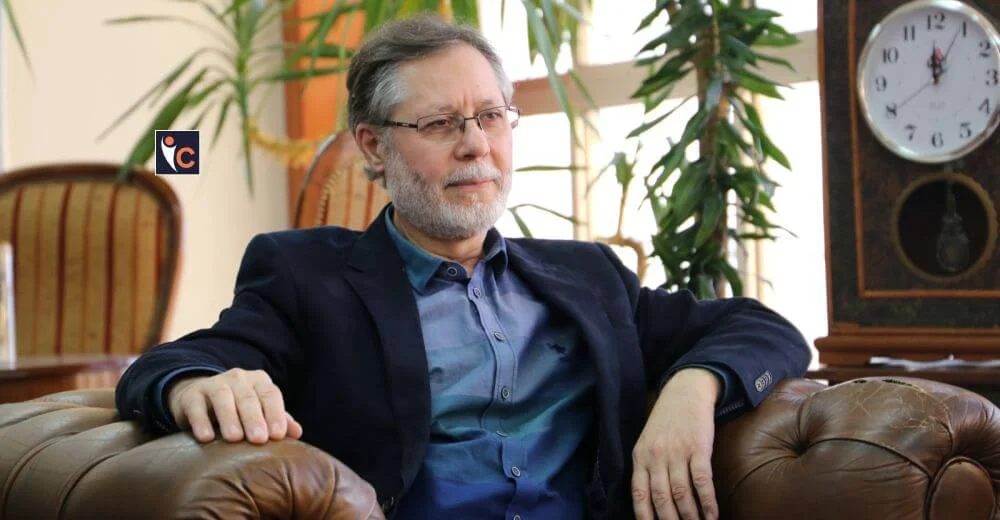
Real leadership, not just resilience, during a crisis. For Lebanon, a nation that has suffered from political, economic, and social unrest, that leadership has been ushered in by Professor Youssef Fares. Through his positions as Chairman and CEO of Al-Zahraa Hospital University Medical Center (ZHUMC), Prof. Fares has shown a courageous vision outside of traditional healthcare management norms. With an illustrious neurosurgical and academic career, he has intertwined clinical excellence and academic advancement, guiding ZHUMC to the forefront of medical innovation in Lebanon.
A Journey of Commitment and Discovery
Prof. Youssef Fares began his journey with an unwavering passion for the human nervous system. "When I began my medical training, I was intrigued by the delicate nuance of the nervous system—its neuroanatomy, neurophysiology, and the dexterity required to operate on it surgically," he remembers. This early fascination led him to pursue specialization in neurosurgery, a branch where delicate, life-changing interventions became his calling.
Following his MD and PhD in Spain, Prof. Fares did advanced training throughout Europe, learning and gaining a global outlook. But it was his return to Lebanon that was a turning point. With a vision for improving clinical practice and medical education, he set out to create the infrastructure required to train the next generation of Lebanese doctors. As Dean of the Faculty of Medicine of Lebanese University, he combined his neurosurgical expertise with a vision of academic excellence.
"I've worked to place Al-Zahraa Hospital at the forefront of academic medical centers where patient care, education, and research converge," he explains. Under his leadership, the Neuroscience Research Center (NRC) was established, which became a regional and international leader as a center of advanced research and clinical innovation.
Visionary Leadership in Turbulent Times
Overcoming the challenge of leading Lebanon's top medical facility requires more than administrative acumen—it requires flexibility, imagination, and unwavering commitment to public service. While Lebanon's healthcare system faces strain from economic instability, political instability, and lack of resources, Prof. Fares holds firm.
"First and foremost, I want to put the institution in a position to be robust within the framework of the challenges of today in Lebanon and in the region," he states firmly. Financial stress, increasing operating expenses, and diminishing supply lines still test medical institutions. "Maintaining financial health while maintaining the highest quality of patient care is paramount," he states firmly. His remedy: strategic management of resources, academic growth, and technological advancement.
Recruitment and retention of the nation's best medical minds is one of the pillars of the strategy. "One of the highest priorities is to stop the brain drain by creating a system that retains and attracts best medical brains," he explains. ZHUMC's evolution as an academic medical center is not just about learning—it's about building a future where Lebanon's best and brightest stay and thrive.
Reinventing Patient Care and Medical Education
Prof. Fares' vision has propelled massive expansion at ZHUMC. The hospital increased its intensive care bed capacity to 45—ranking among Lebanon's largest—and added a helipad for quick transfer of critically ill patients. State-of-the-art operating rooms with advanced surgical technologies demonstrate his dedication to upgrading the delivery of sophisticated care.
Increasing our ICU capacity and constructing state-of-the-art operating rooms with state-of-the-art surgical technology are investments in offering improved care for even the most complicated cases," he added.
During his era, ZHUMC has established several Centers of Excellence in urology, bariatric surgery, neurology, and oncology. Innovations such as laparoscopic surgery have improved patient results and shortened recovery periods.
Education is always high on the agenda for Prof. Fares. Being a teaching hospital with an association with Lebanese University, ZHUMC provides students with hands-on training, research, and actual clinical collaboration. "We have hired well-trained physicians and surgeons from the top academic institutions," he says. Tumor boards and multidisciplinary case conferences guarantee a team-oriented, evidence-based therapy.
Through frequent congresses, workshops, and continuing professional development programs, ZHUMC not only trains the leaders of tomorrow—but connects them to global networks of experience.
Navigating Lebanon's Healthcare Crisis Lebanon's health care system is facing unprecedented pressure, but Prof. Fares thinks that institutions such as ZHUMC can still set the pace. "The economic pressure is especially severe, as increased operating expenses—amplified by the necessity to obtain access to fuel for electricity—are balanced with a growing number of patients who cannot afford to pay for treatment," he says.
Despite all these requirements, his strategy is focused on long-term stability. "By having a good supply chain strategy and focusing on retaining employees, we continue to make sure patients receive the care they need," he says. ZHUMC's robust crisis management strategies and operational flexibility have been key to its success.
Harnessing Technology to Revolutionize Healthcare
For Prof. Fares, the future of medicine in Lebanon is about embracing revolutionizing technologies. Artificial intelligence, robots, and telemedicine all have a place in creating the next generation of healthcare provision.
"Artificial intelligence is already changing diagnostics, treatment planning, and hospital operations," he states. From AI-augmented imaging to predictive analytics, these technologies promise quicker, more precise medical decisions.
But Lebanon also has its challenges in the future—digital infrastructure shortages, imbalanced regulation, and poor digital health literacy. "If AI is to reach its potential, there must be investment in digital health literacy and updating the infrastructure," he emphasizes. Still, Prof. Fares is optimistic, calling for a national strategy to deploy healthcare technology to city hospitals and village clinics.
Mentorship, Legacy, and the Future of Medicine
At the center of Prof. Youssef Fares' career is a deep dedication to mentoring. "Seeing the students, residents, and young professionals become leaders in their own right has been one of the highlights of my career," he says. Over the years at ZHUMC and Lebanese University, he has guided dozens of young physicians—many of whom now direct programs in Lebanon and elsewhere.
He also founded the Lebanese Academy, a venue founded to gather experts from various professions and foster interdisciplinary innovation, training, and intellectual exchange.
Visionary, Prof. Fares is committed to building systems that endure. "Institutions, research programs, and academic frameworks must not be personal but evolve with every following generation that emerges from them," he believes. This is a mindset that permeates all that he does, so that his impact will be felt by generations to come. Conclusion: A Legacy of Vision, Service, and Innovation Dr. Youssef Fares is a beacon of what healthcare leadership can achieve—no matter what. As neurosurgeon and hospital CEO, he is not merely healing patients—he is transforming a healthcare system. Through the marriage of innovation and education, and grit and compassion, he continues to rewrite the book on what's possible for medicine in Lebanon and the globe. At a time when healthcare systems across the globe are being pushed to their limits, there is an example set by Prof. Fares: one founded on vision, mission, and strong belief in the curative power of knowledge.