



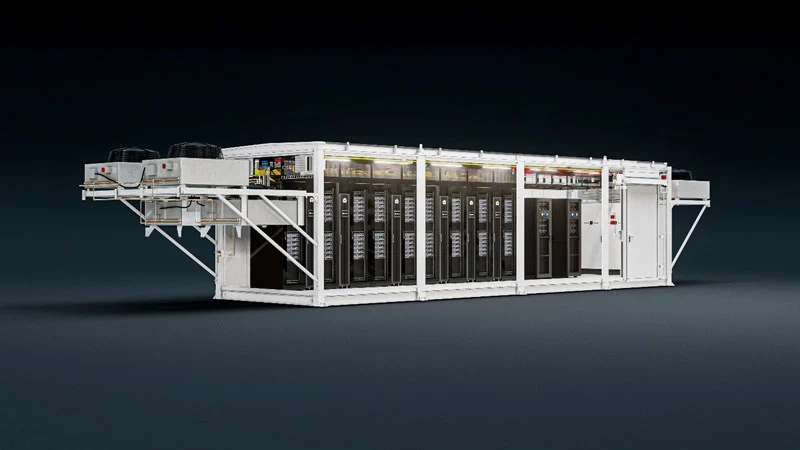
In a world where digital capacity must scale in months rather than years, the Prefabricated modular data center has become the defining solution for enterprises that can no longer afford the delays, cost overruns, and inflexibility of traditional construction. Built entirely in controlled factory environments and delivered as complete, pre-tested systems, these facilities combine cutting-edge IT, power, cooling, and security into standardized, transportable modules that can be deployed virtually anywhere on the planet with minimal on-site work. From hyperscale cloud campuses to remote edge locations, the prefabricated modular data center delivers performance, reliability, and sustainability on a timeline that aligns with the speed of modern business.
The Fundamental Shift from Construction to Manufacturing
The core innovation of a prefabricated modular data center lies in treating infrastructure as a manufactured product rather than a construction project. Every rack, cable tray, power distribution unit, cooling system, and fire-suppression component is designed, assembled, integrated, and rigorously tested under factory conditions before a single module leaves the production line. This industrial approach eliminates the unpredictability of weather-dependent building sites, conflicting trade schedules, and last-minute design changes that have historically plagued large-scale data center projects. The result is a facility that arrives on site with all systems fully commissioned, often requiring only utility connections and final networking to achieve full operational status. Factory acceptance testing, including integrated systems tests and heat-load simulations, ensures that performance matches specification from day one, dramatically reducing the commissioning risks that can delay traditional facilities by months.
Speed That Redefines Deployment
Time has become the most valuable currency in digital infrastructure, and prefabricated modular data centers deliver it in abundance. A complete multi-megawatt facility that would require three to five years using conventional methods can be designed, manufactured, shipped, and energized in as little as nine to fourteen months. Smaller edge or tactical deployments frequently achieve operational readiness in under twenty weeks from order placement. This acceleration is possible because design standardization and concurrent engineering allow manufacturing to begin while site preparation proceeds in parallel. Permitting is simplified because the majority of the structure is classified as equipment rather than permanent real estate, and many jurisdictions already have established approval pathways for ISO container-based or skid-mounted systems. For organizations racing to capture AI training windows, support 5G network rollouts, or respond to sudden customer demand spikes, this speed advantage is transformative.
Capital Efficiency and Financial Predictability
Prefabricated modular data centers fundamentally reshape the economics of digital infrastructure investment. Factory production drives down unit costs through repeatable processes, bulk procurement, and continuous production-line improvement. Because every module follows an identical bill of materials and assembly sequence, pricing is locked in early and remains stable throughout the project lifecycle, shielding owners from the material inflation and labor shortages that routinely derail traditional builds. The phased deployment model further enhances capital efficiency: organizations can match expenditure precisely to revenue generation by starting with an initial cluster sized for current needs and adding capacity only when utilization justifies it. This pay-as-you-grow approach has become especially attractive to CFOs who demand ROI measured in months rather than decades.
Performance Without Compromise
Early perceptions that prefabricated systems sacrificed density or efficiency have been thoroughly disproved. Modern prefabricated modular data centers routinely support rack power densities exceeding 60 kW with liquid-cooled configurations pushing beyond 120 kW per rack, placing them on par with the most advanced bespoke facilities. Close-coupled cooling architectures, in-row precision air handling, rear-door heat exchangers, and full immersion options are all integrated at the factory stage, delivering power usage effectiveness values that frequently fall below 1.15 even under peak loads. Advanced containment strategies and computational fluid dynamics modeling performed during design ensure optimal airflow and temperature uniformity across every server tray. When combined with software-defined power management and DCIM systems pre-installed at the factory, these facilities achieve operational excellence that matches or exceeds traditional designs while retaining the advantages of standardization.
Sustainability Built In from Day One
Environmental responsibility is no longer optional, and prefabricated modular data centers are engineered with sustainability as a core requirement. Compact mechanical designs minimize refrigerant volumes and enable widespread adoption of free cooling and adiabatic economization tailored to each deployment location. The reduced material footprint compared to sprawling concrete structures lowers embodied carbon, while precision manufacturing virtually eliminates construction waste. Modules can be sited adjacent to renewable energy sources or industrial heat-recovery opportunities that would be impractical for larger traditional facilities. At end-of-life, the standardized nature of the systems enables straightforward decommissioning, refurbishment, or recycling, dramatically reducing long-term environmental impact compared to demolition of monolithic buildings.
Edge, Core, and Everything In Between
The flexibility of prefabricated modular data centers makes them equally effective across the entire spectrum of modern computing requirements. A single 40-foot containerized module can function as a complete edge facility supporting low-latency applications in a remote mine or urban rooftop, while hundreds of interconnected modules can form the backbone of a hyperscale campus delivering exawatts of AI training capacity. Tactical deployments for disaster recovery, military operations, or temporary event venues are achieved with the same platform, simply by adjusting configuration and redundancy levels during the factory build phase. This universal applicability has made the prefabricated approach the preferred choice for organizations pursuing hybrid, multi-cloud, and distributed architectures.
Resilience Through Intelligent Standardization
Standardization is often misunderstood as limitation, but in the context of prefabricated modular data centers it becomes a powerful enabler of resilience. Every module is built to the same exacting specification, meaning spare parts are universally interchangeable and technical staff trained on one facility can operate any other. Global manufacturers maintain multiple production sites, reducing supply-chain risk and enabling rapid replacement of damaged modules in disaster scenarios. Seismic, flood, and blast-resistant designs are incorporated from the drawing board rather than retrofitted later, and the ability to relocate entire facilities by truck, train, or ship provides an unprecedented level of business continuity planning flexibility.
The Evolution of Procurement and Partnership
The rise of prefabricated modular data centers has transformed how organizations procure infrastructure. Instead of managing dozens of subcontractors across years-long projects, buyers now engage with a single integrated manufacturer responsible for end-to-end delivery. Long-term strategic partnerships with these providers are replacing traditional bid-and-build models, enabling continuous improvement across successive deployments and preferential access to the latest cooling, power, and compute innovations. This collaborative framework mirrors the relationship between automakers and their Tier-1 suppliers, driving rapid advancement and cost reduction with each new generation of product.
The prefabricated modular data center has moved far beyond its origins as a niche or temporary solution. It is now the default choice for any organization that values speed, certainty, sustainability, and scalability above all else. As artificial intelligence, real-time analytics, and ubiquitous connectivity continue to drive exponential demand for computing power, the ability to deploy world-class infrastructure at the pace of software innovation has become a strategic imperative. The future of digital capacity is no longer built on construction sites; it is manufactured, tested, and delivered as a precision-engineered product ready to power the next decade of human progress.