



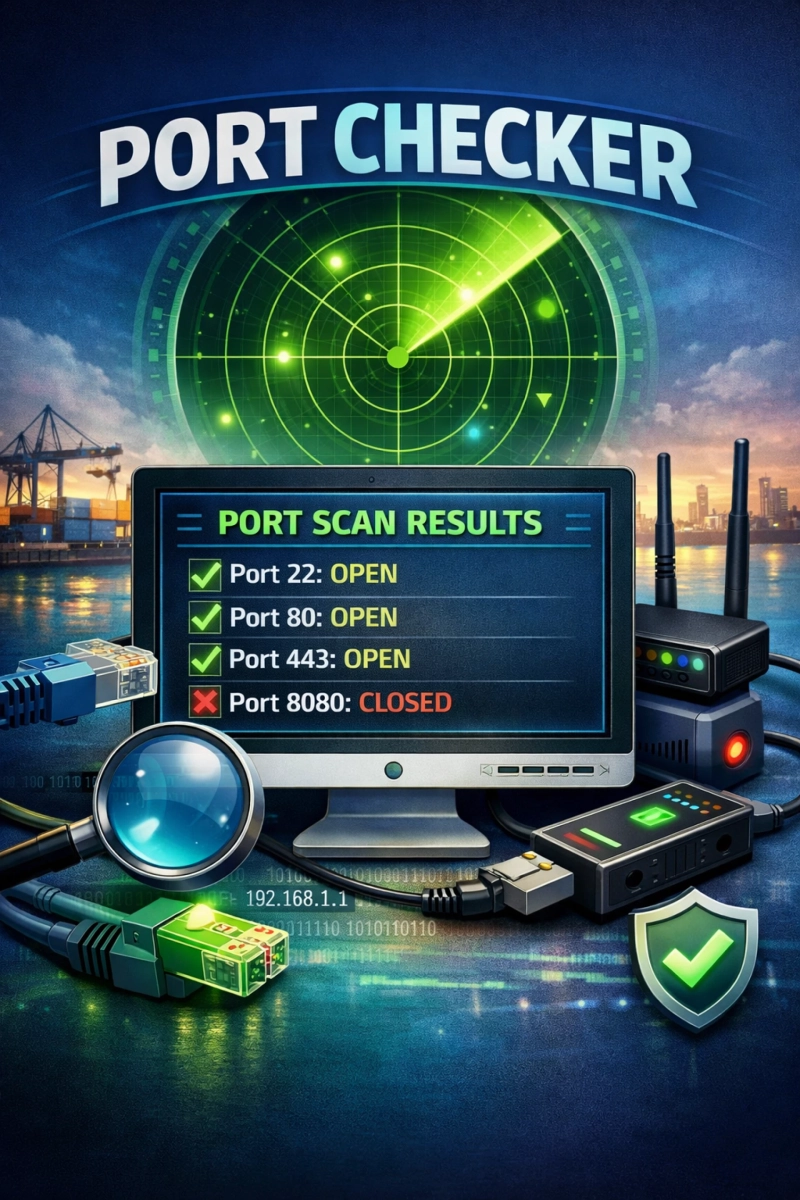
In today’s digital world, the internet works silently in the background using many small technical systems. One of these important systems is called a port. Every website, app, or online service uses ports to send and receive data. But many people face problems like websites not opening, servers not responding, or apps failing to connect. This is where a Port Checker Tool becomes very useful.
A Port Checker Tool helps you check whether a specific port on a server, computer, or website is open or closed. It tells you if data can pass through that port or not. This tool is widely used by website owners, developers, network administrators, students, and even beginners who want to understand basic networking issues.
The best thing about a Port Checker Tool is its simplicity. You do not need deep technical knowledge to use it. You just enter an IP address or domain name and a port number, click a button, and get the result. This article will explain everything about the Port Checker Tool in very simple language.
In this guide, you will learn what a Port Checker Tool is, how it works, why it is important, how to use it, common problems it solves, and how to choose the best tool. Each section is explained clearly so that even a beginner can understand it easily.
What Is a Port Checker Tool
A Port Checker Tool is an online or offline tool that checks whether a network port is open, closed, or blocked. In simple words, it tells you if your computer or server is ready to receive connections on a specific port.
Every device connected to the internet uses ports. A port is like a door. If the door is open, data can enter or leave. If the door is closed, data cannot pass. Common ports include port 80 for websites, port 443 for secure websites, and port 21 for FTP. A Port Checker Tool checks the status of these doors.
When you enter a website address and a port number into a Port Checker Tool, the tool sends a small request to that port. If it receives a response, the port is open. If it does not get a response, the port is closed or blocked by a firewall.
This tool is very useful for troubleshooting. For example, if your website is not loading, you can use a Port Checker Tool to check if port 80 or 443 is open. If the port is closed, you know where the problem is.
A Port Checker Tool can be used by beginners and experts alike. Beginners use it to learn networking basics, while professionals use it to fix server and firewall issues. Because of its ease of use and importance, the Port Checker Tool is a must-have utility in the online world.
Why Port Checker Tool Is Important
The Port Checker Tool plays a very important role in maintaining smooth internet communication. Without open ports, data cannot travel properly between devices. This can cause many problems such as slow connections, failed logins, or inaccessible websites.
One major reason the Port Checker Tool is important is security. Open ports can be a security risk if they are not properly managed. By using a Port Checker Tool, you can see which ports are open on your system. This helps you close unused ports and protect your network from hackers.
Another reason is troubleshooting. If an app or service is not working, the issue may be a blocked port. A Port Checker Tool helps you quickly identify whether the port is open or closed. This saves time and reduces confusion.
Website owners also depend on Port Checker Tools. When setting up hosting, email servers, or FTP connections, ports must be open. If something goes wrong, checking the port status is one of the first steps.
Students and learners benefit as well. A Port Checker Tool helps them understand how networking works in a practical way. Instead of reading theory, they can see real results by checking ports.
In short, the Port Checker Tool is important for security, troubleshooting, learning, and smooth network operations. It gives clear answers in seconds and helps avoid bigger technical problems.
How Port Checker Tool Works
The working of a Port Checker Tool is simple and easy to understand. Even though networking sounds complex, this tool hides all the technical details and shows you only the result.
When you use a Port Checker Tool, you enter two main things: an IP address or domain name and a port number. The tool then sends a connection request to that port on the target system.
If the system responds, the tool marks the port as open. This means the service using that port is active and reachable. If there is no response, the port is marked as closed or filtered. This could be due to a firewall, router settings, or the service not running.
Some advanced Port Checker Tools also show extra details. They may tell you whether the port is blocked by a firewall or if the service is listening but not responding correctly.
Online Port Checker Tools work from remote servers. This is useful because it shows how your system looks from the outside world. Offline tools work from your local machine and are useful for internal network checks.
The main goal of a Port Checker Tool is to test connectivity. It does not change any settings or harm your system. It only checks and reports the status of a port.
Because of this simple process, the Port Checker Tool is fast, safe, and reliable. Anyone can use it without fear of breaking anything.
How to Use Port Checker Tool
Using a Port Checker Tool is very easy, even if you have no technical background. Most tools are designed with a clean and simple interface.
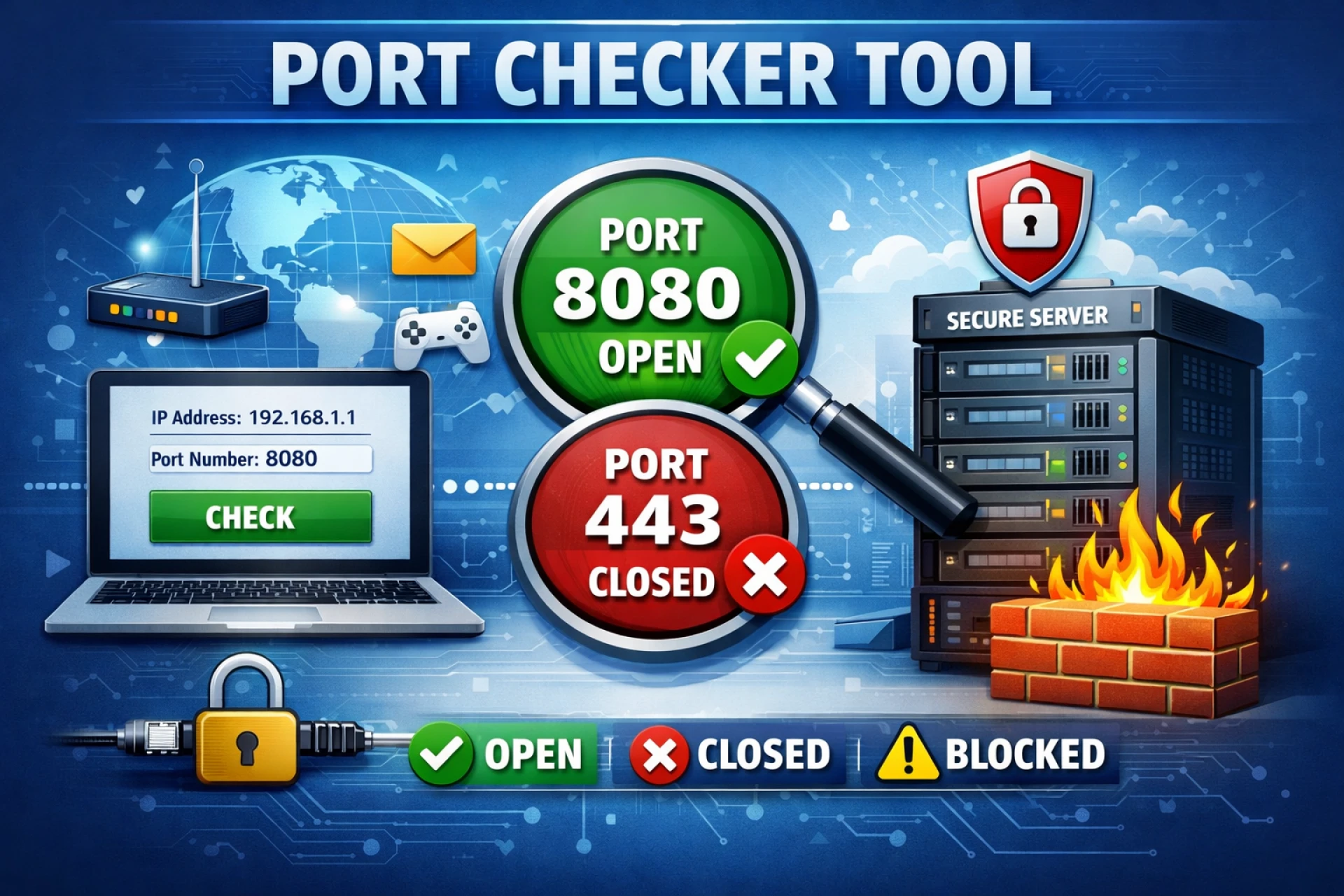
First, open a Port Checker Tool website or application. You will see fields where you need to enter information. Usually, you need to type the domain name or IP address of the server you want to check.
Next, enter the port number you want to test. For example, enter 80 for a website or 25 for email services. Make sure you enter the correct port number.
After entering the details, click the “Check” or “Test” button. The tool will take a few seconds to process the request. Then it will show the result.
The result is usually shown as “Open,” “Closed,” or “Blocked.” Some tools also use colors like green for open and red for closed. This makes it easy to understand.
If the port is open, everything is working fine. If it is closed, you may need to check firewall settings, router configuration, or server services.
Many Port Checker Tools are free and do not require registration. You can use them anytime from anywhere. This makes them very convenient for quick checks.
Common Problems Solved by Port Checker Tool
A Port Checker Tool helps solve many common network and internet problems. One of the most common issues is a website not loading. If your website is down, checking ports can quickly tell you if the problem is port-related.
Email delivery problems are another example. If emails are not sending or receiving, the issue could be blocked email ports. A Port Checker Tool helps confirm this.
Online games and apps also depend on open ports. If a game cannot connect to its server, a closed port may be the reason. Checking the port helps identify the problem.
Server setup issues are very common. When setting up a new server, ports must be open for services like SSH, FTP, or databases. A Port Checker Tool confirms whether these ports are working correctly.
Firewalls and routers sometimes block ports automatically. This can cause unexpected issues. By using a Port Checker Tool, you can see which ports are blocked and take action.
In all these cases, the Port Checker Tool acts as a quick diagnostic tool. It saves time, reduces guesswork, and helps fix problems faster.
Choosing the Best Port Checker Tool
There are many Port Checker Tools available online, so choosing the best one is important. A good Port Checker Tool should be easy to use and provide accurate results.
Look for a tool with a simple interface. You should be able to enter details and get results without confusion. Avoid tools with too many ads or complex options if you are a beginner.
Accuracy is very important. A good Port Checker Tool should give reliable results every time. Online tools that check from multiple locations are often more accurate.
Speed is another factor. The tool should give results quickly. Slow tools can be frustrating and waste time.
Some tools offer extra features like scanning multiple ports at once or showing detailed error messages. These features are helpful but not required for basic use.
Security matters too. Choose a trusted Port Checker Tool that does not store your data or misuse it. Reputable tools clearly explain their privacy policies.
By choosing the right Port Checker Tool, you can make network troubleshooting simple and stress-free.
Conclusion
The Port Checker Tool is a simple yet powerful utility that helps you understand and fix network issues. It checks whether ports are open or closed and gives clear results in seconds. From website owners to beginners, everyone can benefit from using a Port Checker Tool.
This tool improves security by showing open ports, helps troubleshoot connection problems, and supports smooth server operations. Its easy-to-use design makes it accessible to everyone.
In a world where online services are essential, the Port Checker Tool acts as a silent helper that keeps things running smoothly. Learning how to use it is a valuable skill that can save time and avoid frustration.
Questions and Answers
Q1: What is a Port Checker Tool used for?
A Port Checker Tool is used to check whether a specific network port is open, closed, or blocked.
Q2: Is a Port Checker Tool safe to use?
Yes, a Port Checker Tool is safe. It only checks port status and does not change any settings.