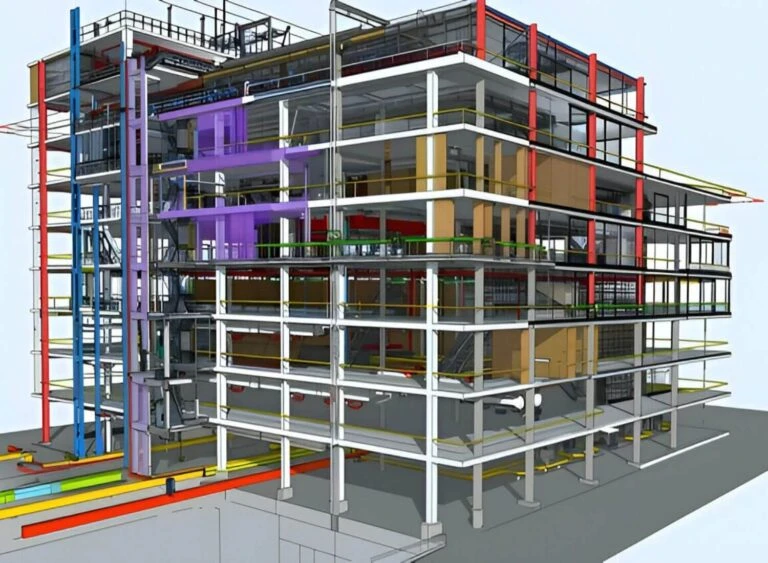
In today’s fast-evolving AEC industry, accuracy and efficiency are more important than ever. Point Cloud to BIM Conversion Services play a critical role in transforming raw laser scan data into intelligent, data-rich Building Information Models (BIM). These services bridge the gap between existing physical structures and digital design workflows, enabling architects, engineers, and contractors to work with precise as-built models.
As construction, renovation, and facility management projects grow more complex, relying on traditional measurement methods is no longer sufficient. Point Cloud to BIM Conversion Services ensure reliable geometry, reduced rework, and better decision-making throughout the project lifecycle.
What Is Point Cloud to BIM Conversion?
Point cloud data is captured using technologies such as LiDAR or 3D laser scanning, producing millions of data points that represent the exact geometry of a structure. Point Cloud to BIM Conversion Services involve processing this data and converting it into structured BIM models using software like Revit, Archicad, or Navisworks.
These BIM models are not just visual representations. They include intelligent elements such as walls, floors, columns, MEP systems, and metadata that can be used for analysis, coordination, and facility operations.
Why Point Cloud to BIM Conversion Services Matter
The demand for Point Cloud to BIM Conversion Services has increased significantly due to their ability to deliver accuracy and efficiency. Some key benefits include:
1. High Accuracy and Precision
Laser scanning captures existing conditions with millimeter-level accuracy. Converting this data into BIM ensures precise geometry, reducing design conflicts and construction errors.
2. Ideal for Renovation and Retrofit Projects
For renovation projects, original drawings are often outdated or unavailable. Point Cloud to BIM Conversion Services provide reliable as-built models, making renovation planning smoother and more cost-effective.
3. Improved Clash Detection
BIM models created from point clouds allow teams to identify clashes between architectural, structural, and MEP elements early in the design phase.
4. Time and Cost Savings
Accurate BIM models minimize rework, reduce site visits, and speed up approvals, ultimately saving both time and money.
Applications of Point Cloud to BIM Conversion Services
Point Cloud to BIM Conversion Services are widely used across multiple industries and project types:
- Architecture: Creating as-built models for redesign, restoration, and space planning
- Structural Engineering: Accurate modeling of beams, columns, and slabs
- MEP Engineering: Precise routing of HVAC, electrical, and plumbing systems
- Construction: Construction planning, clash detection, and sequencing
- Facility Management: Asset tracking, maintenance planning, and lifecycle management
These services are especially valuable for hospitals, airports, industrial plants, heritage buildings, and commercial complexes.
Levels of Detail (LOD) in BIM Conversion
One of the key aspects of Point Cloud to BIM Conversion Services is selecting the appropriate Level of Detail (LOD). Depending on project requirements, models can be developed at different LODs:
- LOD 100–200: Conceptual and schematic models
- LOD 300: Accurate geometry suitable for coordination
- LOD 400: Fabrication-level detailing
- LOD 500: As-built models for facility management
Choosing the right LOD ensures the model meets project goals without unnecessary complexity.
Workflow of Point Cloud to BIM Conversion Services
A typical workflow includes:
- Data Acquisition – Capturing point cloud data using laser scanners or LiDAR
- Data Registration and Cleaning – Aligning scans and removing noise
- Modeling in BIM Software – Creating intelligent BIM elements from point cloud data
- Quality Checks – Ensuring accuracy, alignment, and compliance with standards
- Final Delivery – Providing BIM models in required formats
This structured process ensures reliable and consistent results.
Choosing the Right Point Cloud to BIM Conversion Partner
Selecting the right service provider is crucial for achieving accurate outcomes. When choosing a partner for Point Cloud to BIM Conversion Services, consider:
- Experience with similar projects
- Expertise in BIM standards and software
- Ability to deliver customized LODs
- Strong quality control processes
- Clear communication and timely delivery
A skilled partner ensures the converted BIM model aligns perfectly with project expectations.
Future of Point Cloud to BIM Conversion Services
With advancements in scanning technology, AI, and automation, Point Cloud to BIM Conversion Services are becoming faster and more intelligent. Automated object recognition and cloud-based collaboration are shaping the future of BIM workflows. These innovations will further enhance accuracy, reduce manual effort, and improve project efficiency.
Conclusion
Point Cloud to BIM Conversion Services have become essential for modern construction, renovation, and facility management projects. By converting raw scan data into accurate BIM models, these services enable better coordination, improved accuracy, and smarter decision-making. As the AEC industry continues to embrace digital transformation, investing in reliable Point Cloud to BIM Conversion Services is no longer optional—it’s a strategic necessity.
Also read: BIM Drafting Automation Services