



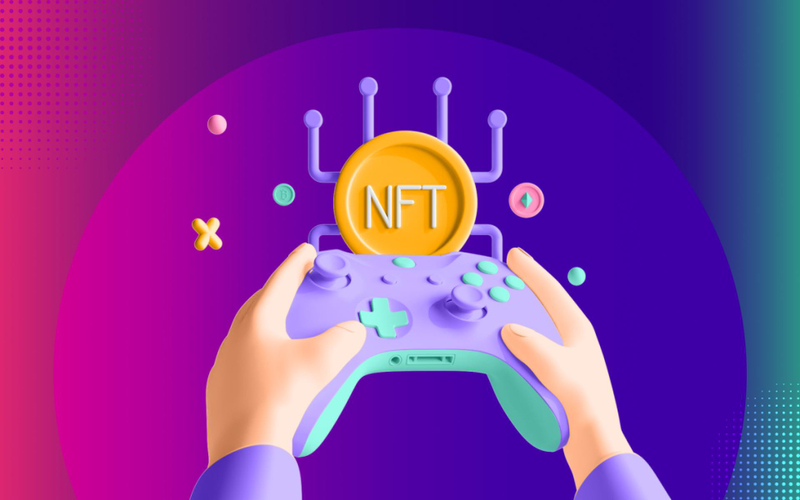
The gaming industry has long been driven by entertainment, competition, and creativity. Today, blockchain technology is adding a new dimension—economic participation. Instead of players spending money without ownership, games are evolving into self-contained economies where time, skill, and strategy translate into real-world value. At the center of this shift is Play-to-Earn (P2E) Gaming, a model that is redefining how players interact with digital worlds.
The Evolution of Gaming Economies
Traditional games operate as closed systems. Players earn in-game items and currencies, but these assets typically hold no value outside the game itself. Publishers retain full control, and players cannot freely trade or monetize their achievements.
Blockchain changes this dynamic. Play-to-Earn (P2E) Gaming introduces open, player-driven economies where in-game assets exist on-chain and can be owned, traded, or sold independently of the game developer. Gameplay becomes a productive activity rather than a purely consumptive one.
What Is Play-to-Earn (P2E) Gaming?
Play-to-Earn (P2E) Gaming refers to blockchain-based games that reward players with cryptocurrencies, tokens, or NFTs for participating in gameplay. These rewards can often be exchanged for other digital assets or converted into fiat currencies.
Instead of paying to play, players earn by contributing time, skill, and engagement. This model transforms players into economic participants, not just consumers.
Blockchain as the Foundation of Digital Ownership
Blockchain enables true digital ownership, which is essential to P2E ecosystems. In-game assets such as characters, skins, land, or weapons are represented as NFTs, giving players verifiable ownership.
In Play-to-Earn (P2E) Gaming, this ownership allows:
- Free trading on open marketplaces
- Interoperability across platforms
- Transparent scarcity and supply
- Protection from unilateral asset deletion
This trustless infrastructure is what makes decentralized gaming economies possible.
How Gameplay Turns Into Economic Activity
In P2E games, almost every action can have economic value. Players may earn rewards by:
- Completing quests or missions
- Winning competitive matches
- Creating or upgrading in-game assets
- Participating in governance or staking
- Contributing to virtual economies
Through Play-to-Earn (P2E) Gaming, players essentially perform digital labor within game worlds, earning rewards that reflect their contribution to the ecosystem.
Opportunities and Challenges of P2E Models
Opportunities
P2E gaming opens doors for new income streams, especially in regions with limited economic opportunities. It also fosters stronger communities, as players are financially invested in the success of the game.
Developers benefit as well, gaining access to player-driven growth, decentralized economies, and long-term engagement.
Challenges
However, Play-to-Earn (P2E) Gaming also faces challenges, including:
- Token inflation and unsustainable reward models
- Over-financialization reducing gameplay quality
- High entry barriers for new players
- Regulatory uncertainty in some regions
Balancing fun and financial incentives remains a critical design challenge.
The Shift Toward Play-and-Earn
The industry is evolving beyond pure earning mechanics. Many developers are now adopting “play-and-earn” models that prioritize engaging gameplay first, with rewards as a secondary benefit.
This evolution ensures Play-to-Earn (P2E) Gaming remains sustainable by focusing on long-term player retention rather than short-term speculation.
The Future of Gaming as a Digital Economy
As blockchain infrastructure matures, P2E ecosystems will become more sophisticated. Expect deeper integrations with DeFi, cross-game asset portability, and AI-driven in-game economies.
Play-to-Earn (P2E) Gaming represents a fundamental shift in how value is created and distributed in digital entertainment. Games are no longer just products—they are living economies shaped by the players themselves.
Conclusion
Blockchain is transforming gaming from a closed entertainment model into an open economic system. By enabling ownership, transparency, and monetization, Play-to-Earn (P2E) Gaming is turning gameplay into a digital economy where players are stakeholders, not just participants.
As the balance between fun and finance improves, P2E gaming is poised to become a defining pillar of the next generation of interactive digital experiences.