



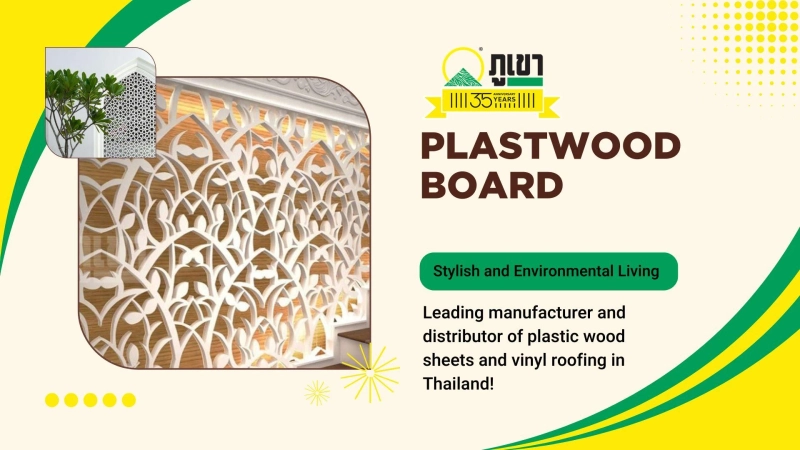
In Thailand's modern design and construction industry, from the elegant condominiums in Bangkok to the bespoke furniture workshops in Chiang Mai, a new material is revolutionizing the way designers and builders approach interior projects. This material is the plastwood board, a type of PVC foam board that offers a compelling alternative to traditional materials like wood, MDF, and plywood. It is a synthetic wood substitute that combines the best characteristics of plastic and wood, providing a solution that is not only strong and versatile but also perfectly suited to Thailand's unique climatic conditions.
Plastwood board is a rigid, lightweight sheet material that is manufactured by foaming polyvinyl chloride (PVC) into a sheet form. The resulting product is a board with a smooth, hard surface and a dense, foam core. This unique composition makes it incredibly resistant to moisture, termites, and rot, which are common challenges for interior woodwork in a tropical climate. By understanding its properties and applications, designers, builders, and homeowners can unlock a new level of durability and creativity in their interior projects, from cabinetry to decorative wall panels.
The Key Properties of Plastwood Board
Plastwood board's rise in popularity is a direct result of its superior properties, which address many of the limitations of traditional wood-based materials.
1. Unmatched Water and Moisture Resistance
This is arguably the most significant advantage of Plastwood, especially in a country with high humidity and a long rainy season. Unlike wood, which can swell and warp when exposed to moisture, Plastwood board is completely waterproof. This makes it an ideal material for applications in moisture-prone areas like kitchens, bathrooms, and laundry rooms, where it can be used for cabinets, vanities, and wall cladding without the risk of water damage or mold growth.
2. Termite and Insect Proof
In Thailand, the threat of termite infestation is a constant concern for any wooden structure or furniture. Because Plastwood board is a synthetic, plastic-based material, it is completely inedible to termites and other wood-boring insects. This provides a long-term solution that eliminates the need for expensive and often toxic termite treatments, offering a natural peace of mind for homeowners and a durable solution for builders.
3. Lightweight and Easy to Fabricate
Despite its strength and rigidity, Plastwood board is surprisingly lightweight, making it much easier to transport, handle, and install than solid wood or even MDF. It can be cut, drilled, routed, and shaped using standard woodworking tools, which provides a high degree of design flexibility. This makes it an excellent choice for intricate designs, custom shelving, or decorative panels that need to be mounted on a wall without excessive weight.
4. Durability and Low Maintenance
Plastwood is highly durable and resistant to scratches and dents, making it a great material for surfaces that see a lot of use. Its smooth, non-porous surface also makes it incredibly easy to clean. A simple wipe with a damp cloth is all that's needed to maintain its appearance, which is a major advantage over painted or laminated surfaces that can be more prone to staining and peeling.
Versatile Applications in Thai Interior Design
Plastwood board’s unique combination of properties makes it suitable for a wide range of interior projects, from functional to purely decorative.
1. Kitchen and Bathroom Cabinetry
Given its waterproof and termite-proof nature, Plastwood is an excellent material for kitchen and bathroom cabinets. It can withstand spills, humidity, and daily wear and tear without swelling or rotting. It provides a durable, long-lasting framework that can be painted or laminated in a variety of colors and finishes to match any design aesthetic, from a clean, modern kitchen to a more traditional one.
2. Custom Furniture and Shelving
Plastwood board is a fantastic material for creating custom furniture. Its lightweight nature makes it ideal for building shelves, display units, or even desks that can be moved around with ease. Its ability to be routed and carved also allows for the creation of intricate designs and patterns on the surface, adding a unique and artistic touch to any piece of furniture.
3. Decorative Wall Cladding and Paneling
Interior walls are often susceptible to moisture damage and mold in a humid climate. Plastwood board can be used as a decorative wall paneling to provide a moisture-resistant layer that is both functional and stylish. It can be used to create a feature wall with a 3D effect, or it can be installed in a wet area like a shower or a sauna to provide a durable and hygienic surface. The possibilities are endless with different colors and textures.
4. Partition Walls and Room Dividers
For open-plan homes or offices, Plastwood board can be used to create stylish and practical partition walls. Its lightweight nature makes it easier to build and move than a traditional drywall partition. It can be used to create a simple room divider or a more elaborate screen with cut-out designs, providing a sense of privacy without blocking all the light.
Working with Plastwood Board: Tips for Success
While Plastwood board is a versatile material, there are a few tips to ensure a successful project.
1. Cutting and Fabrication
Plastwood can be cut with standard woodworking tools like a circular saw or a jigsaw. For intricate designs or precise cuts, a CNC router is highly recommended. The material can also be joined using standard screws or adhesives designed for PVC. It is important to pre-drill holes for screws to avoid cracking the material.
2. Finishing and Painting
Plastwood board has a smooth, non-porous surface that is easy to paint. For best results, it is recommended to lightly sand the surface with fine-grit sandpaper and then apply a primer designed for plastics. This will ensure that the paint adheres well and provides a durable, long-lasting finish. The board can also be laminated with a decorative vinyl or melamine finish for a variety of wood grains, colors, or textures.
3. Sourcing in Thailand
Plastwood board is widely available from building material suppliers and large home improvement stores across Thailand. The thickness and density of the board can vary, so it is important to choose the right type for your specific application. A thicker board is more suitable for structural applications like cabinetry, while a thinner board can be used for decorative purposes.
Conclusion
Plastwood board is a revolutionary material that is perfectly suited to the demands of modern interior design and construction in Thailand. Its unique properties—including its resistance to water, termites, and mold—address the most common challenges faced by builders and homeowners in a tropical climate. By embracing this versatile and durable material, designers and homeowners can create beautiful, functional, and long-lasting spaces, from stylish kitchens and bathrooms to custom furniture and decorative wall panels. It is a material that not only provides a high level of performance but also opens up a world of creative possibilities, making it a smart choice for any interior project.
FAQs
1. Is Plastwood board a fire-safe material?
Yes, Plastwood board is generally a fire-retardant material. It is a class A fire-rated material, which means it will self-extinguish when the flame source is removed. This makes it a safer alternative to other wood-based materials in many interior applications.
2. How does the price of Plastwood compare to wood or MDF?
The price of Plastwood board is often comparable to or slightly higher than that of high-quality MDF or plywood. However, when you consider its long-term durability, resistance to termites and moisture, and the elimination of maintenance costs, it can be a more cost-effective solution in the long run.
3. What is the best adhesive to use with Plastwood?
For joining pieces of Plastwood board, it is best to use a specialized PVC adhesive or a solvent cement designed for plastic. These adhesives create a very strong bond by chemically welding the pieces together. For mounting panels to a wall, a strong construction adhesive can be used in combination with screws.
4. Does Plastwood board contain any toxic chemicals?
No, the PVC used in Plastwood board is considered a safe and non-toxic material for interior applications. It is free from harmful chemicals like formaldehyde, which can be found in some wood-based products, making it a good choice for people with chemical sensitivities or for use in children's rooms.