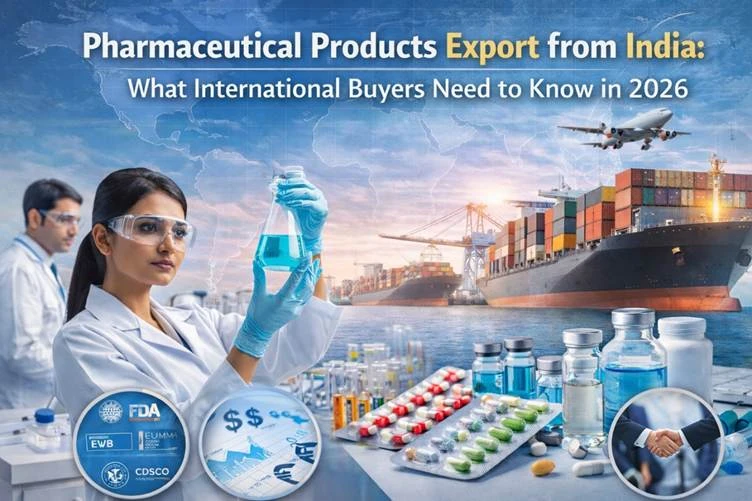
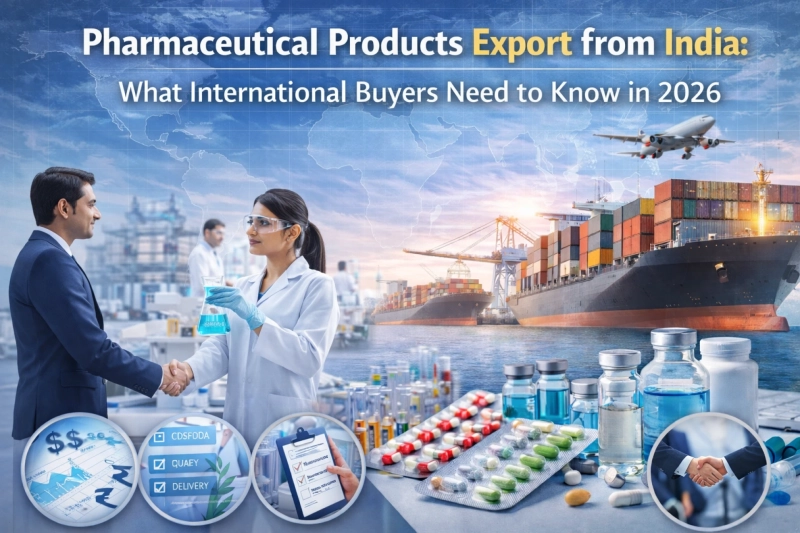
India has cultivated an excellent reputation for being a consistent and cost-effective supplier of pharmaceutical products globally. By 2026, India’s strength as an exporter of pharmaceutical products is based on its extensive production capabilities, compliance with international standards, competitive pricing, and well-established domestic networks of suppliers and exporters. Companies considering sourcing from India should have an understanding of the factors that influence exports of pharmaceutical products and how the process works in order to make smart buying decisions on Pharmaceuticals, APIs, or contract manufacturing services.
Why India is A Leading Source of Pharmaceutical Products Globally
India’s pharmaceutical industry is one of the largest in the world, providing a majority of the world’s pharmaceutical supplies. When looking to source pharmaceuticals from India, companies typically consider a number of benefits:
Production Capacity: India produces billions of units of pharmaceutical products each year to meet the needs of both domestic and international markets.
Diverse Offerings: Indian manufacturers produce products across the majority of therapeutic categories, including Generics, APIs, OTCs, and injectables.
Competitive Pricing: Indian companies can offer their customers products at very low prices due to low production costs, allowing them to be competitive even when faced with extreme pricing pressures.
Selectively Compliant: Many of India’s pharmaceutical manufacturing facilities are inspected and cleared to produce sterile pharmaceutical products for the export market.
Reliable Supply Chains: Indian pharmaceutical manufacturers have worked with logistics partners to build strong, reliable supply chains and establish documentation processes to ensure timely delivery and exports of pharmaceutical products.
These and other factors make India the ideal location to serve as the distribution channel to meet the pharmaceutical needs of Africa, the Middle East, Europe, Asia and North America.
How Pharmaceutical Export Works in India
Exporting pharmaceuticals from India is not only about making pills and sending them to another country; it is also about making sure that each step of the process ensures a high level of product quality, compliance with local laws/regulations, and a smooth international shipping process.
In these sections we will look at the major areas of exports of pharmaceutical products from India that exporters must ensure to comply with:
Regulatory Approval/Certifications
Pharmaceutical exporters in India are required to comply with the National and International regulatory standards. In India, the Central Drugs Standard Control Organization (CDSCO) is responsible for the approval of products for domestic sales and the documentation required for export approval. To sell pharmaceuticals in the highly regulated International market, exporters will also be required to obtain a certificate or certification from regulatory authorities, e.g. US FDA, EU GMP, WHO GMP, etc., which will allow their products to be accepted in these International markets.
Quality Control/Testing
Prior to exporting pharmaceutical products, all products undergo extensive testing to ensure their quality (i.e. potency, purity, stability, contamination). In addition to testing of the products by accredited Laboratories, the Pharmaceutical Exporter's Quality Assurance organization is responsible for ensuring that all manufactured batches of products meet the required specification for the respective products being exported.
Export Documentation & Compliance
The documentation associated with the export of any product is the most important aspect of the Exporter and as such, exporters of pharmaceutical products must have generated Export Documentation from the time of their export. Examples include, Certificate(s) of Pharmaceutical Product (CPP), Free Sale Certificate(s), Packing List(s), Invoice(s), Shipping Declaration(s).
Packaging and Cold Chain
Most pharmaceutical products require special packaging or temperature control during transportation, so exporters must design and produce secure packing boxes that meet regulatory and legal requirements associated with exporting pharmaceutical products over long distances.
Shipping & Logistics
The shipping and logistics aspects of pharmaceutical exportation involve freight forwarding, customs brokerage and delivery to the Importer's destination. Effective shipping and logistics allow exporters to provide their customers with product availability at the earliest possible date.
Popular Products in Pharmaceutical Exports
India has a wide range of pharmaceutical exports, from generic pharmaceuticals — equivalent medications in the form of tablets, capsules, syrups, and injectables — to active pharmaceutical ingredients (APIs), which serve as chemical raw materials used by drug manufacturers around the world. There are finished dosage forms, which are ready to be purchased and marketed as medicines; contract manufacturing products, which are manufactured for foreign companies; and nutraceutical products and dietary supplements, which are becoming an increasingly important source of nutraceutical goods and are generally manufactured in India. If you are considering sourcing materials from Indian suppliers, it is essential for you to become familiar with which types of products are strongest for Indian exporters. This should help you determine your negotiation approach and what purchasing options will provide you with optimal pricing and product availability.
Key Markets for Indian Pharma Exports
India's pharmaceutical exports are distributed across more than 200 countries and territories worldwide, with the largest market share being the following:
Africa: The country's exports account for a significant percentage of total essential medicine shipments into sub-Saharan Africa.
Middle East: The demand for both generic medicines and specialty pharmaceuticals in this region is increasing.
South Asia: Countries sharing borders with India are heavily reliant on India's supply of pharmaceutical products.
Latin America and the Caribbean: Goods imported into these regions help to further the establishment of both public health agencies and private chemists.
Europe and North America: While there are more stringent regulations in place, these markets do continue to import both active pharmaceutical ingredients and generic medicines manufactured by compliance-certified companies operating out of India.
Each region of the world possesses its respective regulatory environment; therefore, when thinking about sourcing pharmaceutical products from India, all buyers must have a complete understanding of the local government's regulation.
What Buyers Should Consider When Sourcing
When considering a pharmaceutical exporter from India, there are numerous aspects that need to be taken into account.
Regulatory History: Determine if the exporter has the necessary approvals for the markets you are trying to access. For instance, if your target market is the US, then you need to ensure the exporter has received US FDA approval.
Quality Management Systems: Investigate the exporter’s history of obtaining ISO certification and its use of third-party auditing and transparent quality assurance processes.
Reliability of Deliveries: Evaluate the exporter’s previous performance in relation to delivery, responsiveness to changes in demand, and ability to meet the requirements of customers during peak demand.
Cost Structure: Cost is important when selecting an exporter; however, know that extremely low prices can be an indicator of potential quality issues. Therefore, balance pricing with compliance.
Communication and Customer Service: As with any vendor, consider how well the pharmaceutical exporter communicates, provides timely responses to inquiries and provides documentation. Having good communication and support enables the exporter to smoothly execute the procurement process.
Challenges and Mitigation
In 2026, all sourcing strategies have challenges. In 2026, there continue to be challenges for buyers:
Regulatory Updates: Exporters will be required to continuously adapt their export processes to constantly changing regulations in their target destination countries.
Quality Perception: There remains a likelihood that some buyers still have outdated perceptions regarding the quality of Indian products. Verified third-party audits can help to affirm product quality.
Currency Fluctuation: Since foreign currency exchange rates are subject to constant fluctuations, exchange rates affect both the price of imported goods and profit margins.
International buyers can minimize risk by using reputable intermediaries, performing audits on suppliers and utilizing a variety of sourcing options.
Future Trends in Global Pharma Sourcing from India
In the future, there are a number of trends that will impact how pharmaceutical exporters from India will interact with their international clients.
Increased Contract Manufacturing - More international brands are establishing partnerships with Indian companies for contract manufacturing
Expanding into Biologics and Biosimilars - India is enhancing its capabilities for producing complex therapeutic products, which increases its ability to export those products.
Digital Quality Monitoring - Digital technology offers new ways to monitor quality and provide better real-time tracking through supply chains using blockchain.
Emphasis on Sustainable Manufacturing - More buyers are looking for suppliers who have strong environmental and social governance (ESG) practices.
As these trends develop, they will significantly impact the way in which India manufactures pharmaceutical products for export and how international buyers develop their long-term sourcing strategies.
Conclusion
In India, pharmaceutical products established in 2026 as an exporter to the world still require Importers from overseas that wish to find appropriately-sourced and manufactured products must be combined with affordable prices and global quality assistance through Indian companies. The continued importance of Indian exporters to the global health-product supply chain has remained very strong over recent decades, and Importers can learn about the Regulations and how Indian pharmaceutical manufacturers work will allow them to make smart choices for establishing Long-Term partnerships in this interconnected world.