



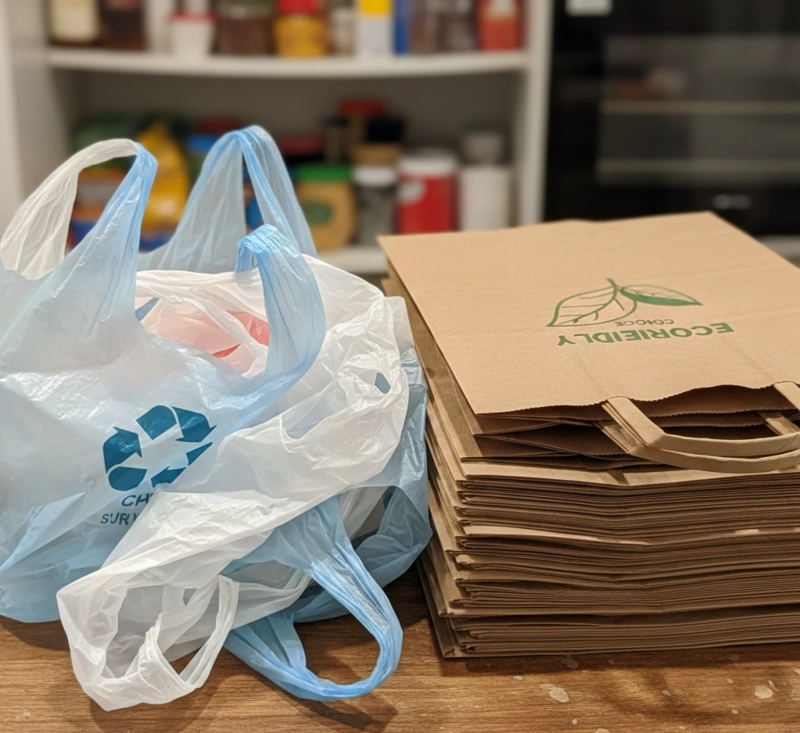
Environmental waste issues make the plastic vs. paper bag debate more relevant every day. Plastic production exceeds 460 million metric tons annually. Our environment receives 20 million metric tons of this plastic as litter. American consumers use hundreds of billions of plastic bags annually. These shocking numbers show why experts are recommending paper alternatives.
Most shoppers wonder about eco-friendly products. Are paper bags greener and better than plastic? Recent research has finally clarified this debate. Paper bags have long-term environmental benefits but must be reused at least three times to offset their higher initial climate impact.. They biodegrade without polluting the ocean like single-use plastics. Recycled paper bags appeal to eco-conscious consumers seeking better daily choices.
Plastic vs Paper Bags: Breaking Down the Facts
When learning the environmental impact of different bag selections, research findings really surprise consumers. Let's unpack the real facts about plastic bags vs paper bags from scientific studies. People are surprised by research on the environmental impact of different bag choices. Scientific studies reveal the truth about plastic vs. paper bags.
Carbon footprint per bag
The carbon footprint debate isn't as clear as many people may assume. A paper bag produces 5.52kg carbon dioxide emissions, more than three times that of a single-use plastic bag at 1.58kg. Furthermore studies comparing grocery bags found that plastic bags generate 39% less greenhouse gas emissions than uncomposted paper bags. This substantial difference exists primarily because paper bags are heavier and bulkier, requiring significantly more resources to manufacture and transport. Indeed the paper industry ranks as the world's fifth largest energy consumer.
Water and energy consumption
Water usage presents an even more dramatic contrast between the two options. Paper bag production requires around 1,004 gallons of water to produce 1,000 bags, whereas 1,500 plastic bags need just 58 gallons of water. In fact producing one paper bag takes four times as much energy as manufacturing a plastic one. Energy consumption follows a similar pattern. The production process for paper bags consumes 2,622 megajoules of energy, nearly 3.5 times more than the 763 megajoules needed for plastic bags.
End-of-life environmental impact
Paper has benefits despite higher production costs. Paper bags biodegrade in a month, but plastic can last for decades. Global plastic recycling is surprisingly low at 9%. The rest goes to landfills, incinerators, or the 8 million tons of plastic waste that pollutes our oceans annually. However, paper bags produce five times more solid waste than plastic bags. Plastic's persistent environmental impact contrasts with paper's higher initial production impact.
The Lifecycle of a Paper Bag
Paper bags go through a long journey from trees to trash cans or compost piles. Understanding this journey helps us see why experts often debate the paper vs plastic bags question.
Sourcing: recycled vs virgin paper
Paper bags come from fresh-cut trees or recycled paper. Virgin paper comes from cutting trees. In fact it takes 24 trees to make just one ton of paper. Around 90% of paper pulp comes from wood, with paper production causing about 35% of all clear-felled trees globally. Recycled paper offers a much better alternative. It reduces emissions by 74%, energy use by 52%, freshwater use by 33%, and ocean acidification by 66%. Only 65% of paper was recycled in 2018, leaving 35% unrecycled. Over 21 million tons of paper were used and not recycled that year.
Manufacturing and emissions
The manufacturing process for paper bags uses lots of resources. Actually producing paper bags requires significant energy, often from fossil fuels. The pulp and paper industry ranks as the world's fifth largest energy consumer. Generally paper bags have higher impacts on global warming and ecotoxicity than plastic alternatives. Moreover paper carrying bags had a single score environmental impact of 0.73 whereas plastic carrying bags had a score of 0.63. Paper bags also emit 50.28% of their emissions outside the country where they're used.
Disposal: composting, recycling, or landfill
What happens to paper bags after use depends on how we discard them. A few simple conditions allow plain brown paper bags to be composted. They should be uncoated kraft paper without plastic liners or laminates, glossy coatings, metallic foil, or synthetic inks. Paper accounts for 25% of landfill volume. Discarded paper produces methane gas when dumped in landfills. Many food- and oil-contaminated paper bags can't be recycled. Unlined kraft paper bags compost faster than plastic.
How to Maximize the Benefits of Paper Bags
Making the most of paper bags begins with understanding their potential beyond single use. According to research, each reused paper bag reduces carbon emissions by approximately 0.1 kg.
The three Rs approach, Reduce, Reuse, Recycle, forms the foundation of sustainable paper bag use. Paper bags can be used for many purposes even after their initial use.
- Book covers that last for months
- Gift wrapping for any occasion
- Protective material for shipping fragile items
- Storage for ripening fruit (traps ethylene gas)
- Custom gift tags by cutting bags into shapes DIY masks from large grocery bags
- Decorative lanterns with cut-out designs
- Makeshift table protection for craft projects
- Plain brown paper bags can be composted, but only if they meet specific requirements:
- Made of uncoated kraft paper without plastic linings
- Free from glossy coatings or metallic foil
- Not heavily printed with synthetic inks
Proper consumer education remains vital for maximizing paper bag benefits. Studies show labeling instructions often confuse consumers. Companies can foster awareness by printing care instructions directly on bags such as "This bag can be reused 5 times". Obviously transparent guidelines help consumers make informed choices about reuse possibilities.
Why Experts Recommend Paper Over Plastic
Despite some environmental tradeoffs, experts increasingly favor paper over plastic bags for several compelling reasons. The evidence continues to mount across multiple fields of study.
Scientific studies and data insights
Research confirms paper bags biodegrade naturally and quickly, unlike plastic which persists for centuries. This biodegradability reduces harm to wildlife and ecosystems that suffer from plastic pollution. Paper recycling rates tell an encouraging story too. In 2018, 68.1% of paper consumed in the United States was recovered for recycling. The American Forest and Paper Association data shows even more robust rates with paper reaching 64% and cardboard up to 74% nationwide. About 80% of US paper mills now use recycled paper.
Policy shifts and global regulations
Plastic bag bans exist in 91 countries. As of March 2025, 19 US states and territories have banned single-use plastic bags. Exceptionally effective regulations. After Ireland levied €0.15 on plastic bags in 2002, usage dropped by 90% within weeks. The 2015 Portuguese plastic bag tax was also successful.
Consumer behavior and market trends
Public opinion has shifted dramatically. Around 53% of respondents in a 2025 poll believe paper helps conserve natural resources. Many companies now choose paper bags specifically because they signal environmental responsibility to customers. This growing consumer preference drives businesses toward paper packaging options. Notably paper bags function as visual indicators of a company's ethical stance in fashion retail.
Final Words
The paper vs. plastic debate shows that no solution is perfect. Paper bags use more resources but benefit the environment over time. They initially produce more carbon footprint due to their higher water and energy requirements. Their ability to degrade naturally in weeks rather than centuries is a major advantage.
Most important is how we use these bags. Multiple reuses of paper bags greatly reduce their environmental impact. Many reuse them as gift wrap, book covers, or compost. These simple actions matter.
The global concern about plastic pollution has led to government regulations. The sharp drop in plastic bag use after taxes or bans shows that people will change habits if guided.
As public awareness grows, businesses meet customer demand for eco-friendly options. Paper bags fall between perfect solution and temporary compromise. They are a step toward sustainability while we develop better alternatives.
The best option is to use fewer bags and reuse what we have. Slowly changing our daily habits has big environmental benefits. Next time you shop, consider how often you use the bag as well as its material.