



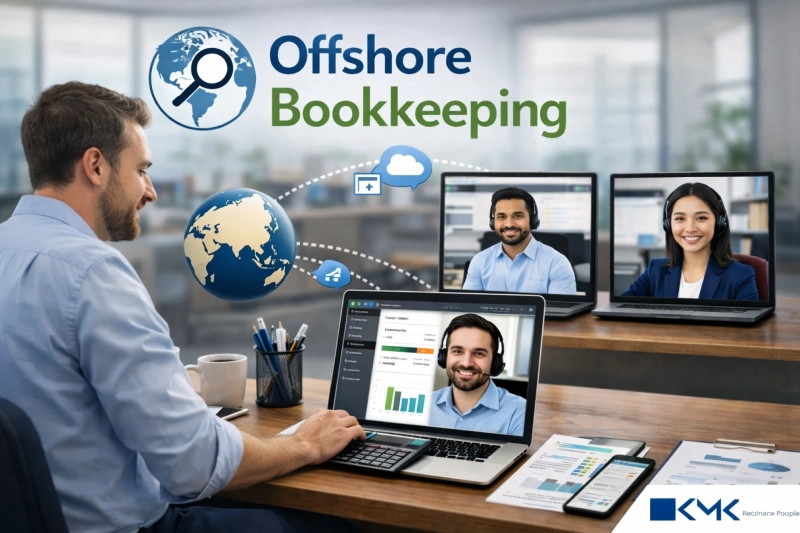
Managing finances in-house often feels manageable—until it doesn’t. Missed deadlines, rising payroll costs, constant staff turnover, and inconsistent records can quietly drain your business. If your internal accounting team is stretched thin or struggling to keep up, you’re not alone.
This is why many growing businesses are now turning to offshore bookkeeping as a smarter, more scalable solution. But how does it actually help, and is it the right move for your business? Let’s break it down in a practical, no-fluff way.
Why In-House Accounting Becomes a Bottleneck
In-house accounting works well in the early stages. But as transaction volumes increase, complexity follows.
Common challenges include:
- Rising salaries, benefits, and training costs
- Delays in reconciliations and month-end closing
- Manual data entry errors
- Limited access to specialized accounting expertise
- Difficulty scaling during peak periods
These issues don’t just affect your books—they impact decision-making, compliance, and cash flow visibility.
What Is Offshore Bookkeeping?
Offshore bookkeeping means partnering with an external team located in another country to handle your day-to-day accounting tasks. These professionals work as an extension of your business, using your accounting systems, processes, and reporting standards.
Unlike traditional outsourcing, modern offshore bookkeeping focuses on:
- Real-time collaboration
- Secure cloud-based accounting platforms
- Industry-specific expertise
- Time-zone advantages
Businesses that adopt Offshore Bookkeeping gain accuracy, consistency, and flexibility—without the overhead of an in-house team.
How Offshore Bookkeeping Solves In-House Accounting Problems
1. Reduces Operational Costs Without Cutting Corners
Hiring, training, and retaining in-house accountants is expensive. Offshore bookkeeping significantly lowers costs while maintaining professional standards.
You save on:
- Full-time salaries
- Employee benefits
- Office infrastructure
- Software licensing duplication
The result? Predictable monthly costs and better ROI.
2. Improves Accuracy and Data Quality
Offshore bookkeeping teams follow standardized workflows, quality checks, and documentation protocols. This reduces common errors like:
- Duplicate entries
- Misclassified expenses
- Reconciliation mismatches
Clean books mean fewer surprises during audits, tax filing, or investor reviews.
3. Faster Month-End and Year-End Closures
If month-end closing feels like a fire drill, offshore support can change that.
With dedicated professionals handling:
- Bank and credit card reconciliations
- Journal entries
- Accounts payable and receivable tracking
Your financial reports are ready on time—every time.
4. Scales Easily as Your Business Grows
One of the biggest advantages of offshore bookkeeping is flexibility.
Need more support during:
- Seasonal demand spikes?
- Business expansion?
- Mergers or acquisitions?
You can scale resources up or down without long-term hiring commitments.
Common Questions Businesses Ask
Is offshore bookkeeping secure?
Yes. Reputable providers use encrypted systems, role-based access, secure cloud platforms, and strict confidentiality agreements.
Will I lose control over my finances?
No. You retain full ownership, access, and approval authority. Offshore teams work under your guidelines and reporting preferences.
What industries benefit most?
Offshore bookkeeping supports:
- SMBs and startups
- E-commerce businesses
- CPA firms
- SaaS companies
- Professional services firms
Why Global Teams Make Business Sense
In today’s connected economy, geography is no longer a limitation—it’s an advantage.
Offshore bookkeeping teams offer:
- 24/7 operational continuity
- Global accounting best practices
- Exposure to multiple compliance standards
- Faster turnaround through time-zone leverage
This global operating model supports smarter financial decision-making and long-term resilience.
Key Services Typically Included in Offshore Bookkeeping
While offerings vary, most offshore bookkeeping solutions include:
- Daily transaction recording
- Bank and credit card reconciliations
- Accounts payable and receivable management
- Financial reporting and dashboards
- General ledger maintenance
- Audit-ready documentation
All aligned with your accounting software and internal policies.
When Should You Consider Offshore Bookkeeping?
Offshore bookkeeping is a strong fit if:
- Your accounting costs keep rising
- Your internal team is overloaded
- Reports are delayed or inconsistent
- You lack visibility into cash flow
- You’re planning to scale operations
If any of these sound familiar, offshore support isn’t just helpful—it’s strategic.
Final Thoughts: A Smarter Way to Manage Your Books
In-house accounting challenges don’t mean your team is failing—it often means your business has outgrown its current model.
Offshore bookkeeping offers a practical path forward: lower costs, better accuracy, improved scalability, and reliable financial insights. With the right partner, you gain control—not complexity.