


Name plates are a small but essential part of modern living and working environments. They help people identify locations, individuals, and functions quickly and clearly. In a fast-developing city like Dubai, where residential towers, office buildings, hospitals, schools, and industrial facilities operate at a large scale, name plates are widely used for organization and communication.
This article offers a complete informational overview of name plates Dubai, explaining their purpose, types, materials, design principles, and how professional printing Dubai practices support their production. It is written in a simple, neutral, and educational tone to help beginners and general readers understand the topic clearly. References to Zahrat Al Madina Printing Services are included only to reflect real-world industry context, without promotion.
Understanding Name Plates and Their Role
A name plate is a flat surface that displays essential information. This may include names, titles, room numbers, instructions, or technical details. The information is usually printed, engraved, or etched onto materials such as metal, acrylic, or plastic.
Why Name Plates Matter
Name plates are important because they:
- Provide clear identification
- Improve navigation within buildings
- Communicate instructions or warnings
- Help maintain order and consistency
In Dubai’s structured urban environment, name plates are used daily by residents, employees, visitors, and service staff. Without them, finding offices, apartments, or equipment would be more difficult and time-consuming.
Why Name Plates Are Widely Used in Dubai
The demand for name plates in Dubai has increased due to several practical factors.
Rapid Urban Development
Dubai continues to expand with new residential communities, commercial towers, and public facilities. Each new space requires proper identification systems, including name plates.
Multilingual Communication Needs
Dubai is home to people from many nationalities. As a result, name plates often display information in more than one language, usually Arabic and English, to ensure clarity for everyone.
Professional and Regulatory Standards
Many organizations follow internal or regulatory guidelines that require clear labeling of offices, rooms, machinery, and safety instructions. Name plates help meet these requirements efficiently.
Common Types of Name Plates in Dubai
Different environments require different types of name plates. Below are the most commonly used categories.
Door Name Plates
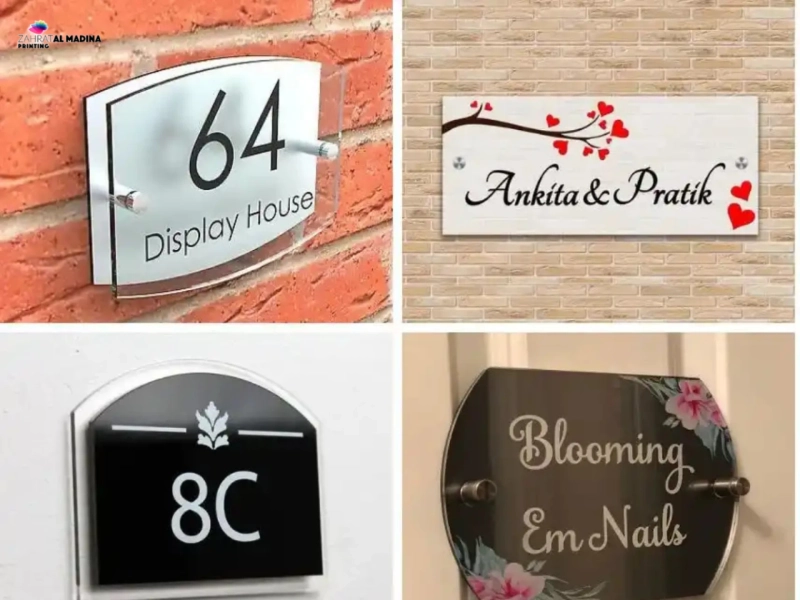
Door name plates are found in homes, offices, clinics, and hotels. They usually display:
- Names of individuals or families
- Office or department titles
- Room or unit numbers
These plates are designed for close-range visibility and are usually mounted with screws or strong adhesive.
Desk Name Plates
Desk name plates are commonly used in offices, schools, and government buildings. They help identify staff members and their roles, making communication easier in shared workspaces.
Building and Directional Name Plates
Large buildings such as hospitals, malls, and corporate offices rely on directional name plates to guide visitors. These plates help people find departments, meeting rooms, or service areas.
Industrial and Equipment Name Plates
In industrial zones, name plates are used on machines and equipment. These include technical details, serial numbers, and safety information. Durability and resistance to harsh conditions are essential in these cases.
Materials Used for Name Plates
Choosing the right material is important for durability, appearance, and functionality, especially in Dubai’s climate.
Acrylic Name Plates
Acrylic is one of the most commonly used materials because it is:
- Lightweight
- Resistant to moisture
- Easy to shape and print
Acrylic name plates are suitable for offices, residential buildings, and indoor signage.
Metal Name Plates
Metal plates are valued for their strength and long lifespan. Common metals include aluminum, stainless steel, and brass. These are often used for:
- Outdoor signage
- Industrial equipment
- Corporate offices
Metal name plates handle heat and sunlight better than many other materials.
Plastic and PVC Name Plates
Plastic and PVC are cost-effective options for indoor use. They are lightweight and flexible but may not be suitable for long-term outdoor exposure.
Wood and Composite Materials
Wood-based name plates are less common but are sometimes used indoors for decorative purposes, especially in hospitality or creative environments.
Key Design Principles for Effective Name Plates
A well-designed name plate is easy to read and appropriate for its location. Design is not just about looks—it directly affects usability.
Font Choice
Simple, clean fonts improve readability. Decorative fonts may look attractive but can be hard to read, especially from a distance.
Color and Contrast
Good contrast between text and background is essential. High contrast ensures the information is visible in different lighting conditions.
Layout and Spacing
Clear spacing between letters and lines prevents overcrowding. In bilingual name plates, balanced layout helps both languages remain readable.
Size and Placement
The size of the name plate should match its purpose. A door plate, desk plate, and building sign all require different dimensions and mounting methods.
Printing Methods Used for Name Plates in Dubai
Modern printing Dubai services use various techniques depending on the material, design, and application.
Digital Printing
Digital printing is commonly used for acrylic and plastic name plates. It allows detailed text and graphics and is suitable for small to medium quantities.
Engraving
Engraving involves cutting text or designs into the surface of the material. It is often used for metal and acrylic plates where long-term durability is required.
Laser Cutting and Laser Marking
Laser technology provides high precision and clean edges. It is widely used for customized shapes, logos, and fine details.
Etching
Etching is used mainly for industrial name plates. It ensures that information remains visible even after years of exposure to harsh conditions.
Practical Uses Across Different Sectors
Residential Properties
In apartment buildings and villas, name plates are used for door identification, floor directories, and utility labeling. Clear name plates improve navigation and security.
Corporate and Commercial Offices
Offices use name plates to identify employees, departments, and meeting rooms. Uniform design across a building helps maintain a professional environment.
Healthcare Facilities
Hospitals and clinics depend on clear signage to guide patients and visitors. Name plates help identify doctors, nurses, rooms, and departments efficiently.
Industrial and Manufacturing Areas
Factories and warehouses use name plates for machinery identification, safety instructions, and asset management. Durability and clarity are critical in these settings.
Challenges Associated with Name Plates
Despite their simplicity, name plates face certain challenges.
Environmental Conditions
High temperatures, sunlight, and dust can affect materials over time. Selecting suitable materials helps reduce fading and damage.
Maintenance and Cleaning
Name plates must remain readable. Smooth surfaces and durable finishes make cleaning easier.
Consistency Across Large Projects
Large buildings may require hundreds of name plates. Maintaining consistent design, font, and layout requires careful planning.
The Role of Local Printing Services
Local printing providers play an important role in producing name plates that meet specific requirements. Companies offering printing Dubai solutions support various sectors by providing material processing, printing, and finishing services.
Industry participants such as Zahrat Al Madina Printing Services represent how local printing operations contribute to the availability of customized name plates and identification signage across Dubai. Their role reflects the broader printing ecosystem rather than serving as a promotional example.
Sustainability and Future Developments
Sustainability is becoming more important in printing and signage production.
Eco-Friendly Materials
Recyclable metals and plastics are increasingly used to reduce environmental impact.
Simple and Functional Design
Minimalist designs reduce material use and improve clarity.
Replaceable Components
Some name plate systems allow text inserts to be changed without replacing the entire plate, reducing waste.
Integration with Digital Tools
In certain environments, name plates may include QR codes linked to digital directories or information systems.
Conclusion
Name plates are a practical and essential part of Dubai’s built environment. They support identification, navigation, safety, and organization across residential, commercial, and industrial spaces. By understanding the types, materials, design principles, and printing methods involved, users can make informed decisions that suit their specific needs.
This guide has provided a clear and educational overview of name plates Dubai, explained the relevance of modern printing Dubai practices, and placed Zahrat Al Madina Printing Services within the broader industry context. With thoughtful design and appropriate material choices, name plates continue to serve as reliable tools in a rapidly evolving urban landscape.