



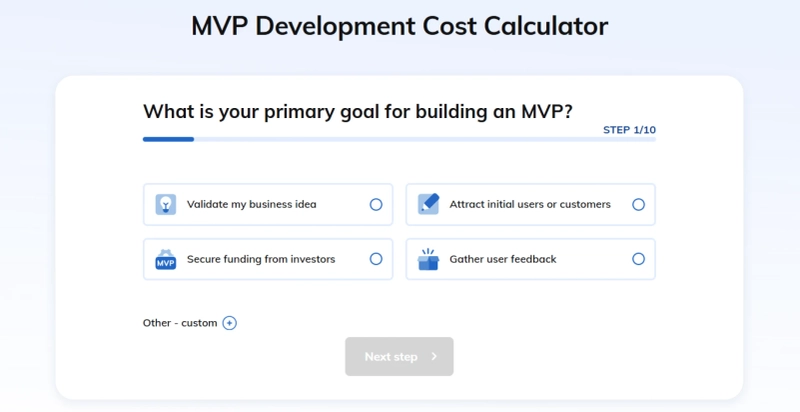
In today’s fast-paced digital landscape, startups and enterprises alike are increasingly turning to Minimum Viable Products (MVPs) as a strategic approach to validate ideas, attract investors, and enter the market faster. However, understanding the MVP app development cost in 2025 is crucial for businesses looking to optimize budgets while ensuring quality and scalability. In this article, we’ll explore updated pricing, emerging trends, and industry benchmarks to help you make informed decisions.
What is an MVP?
A Minimum Viable Product, or MVP, is a basic version of a product that includes only the core features necessary to solve a specific problem for users. The primary purpose of an MVP is to test market demand, collect user feedback, and iterate quickly without committing extensive resources.
Launching an MVP enables startups to:
- Reduce development time and costs.
- Validate product-market fit.
- Minimize risks before full-scale development.
- Attract early adopters and investors.
Understanding the mvp app development cost starts with knowing the stages of MVP creation and the factors that influence pricing.
Key Factors Affecting MVP App Development Cost
Several variables impact the final cost of an MVP app in 2025. While the scope of work and complexity of the app are obvious factors, other less apparent elements can significantly influence budgets.
1. App Complexity
MVP apps can range from simple prototypes to feature-rich platforms. Complexity is determined by:
- Number of features: Basic apps with 3–5 core features cost less than apps requiring 10+ complex features.
- Integration requirements: Apps that need third-party APIs, payment gateways, or analytics integrations increase development costs.
- Advanced functionalities: AI, AR/VR, geolocation, or real-time features add to complexity.
For instance, a simple productivity app may cost $15,000–$30,000, while a more complex healthtech or fintech MVP could reach $50,000–$100,000.
2. Platform Choice
Deciding whether to build for iOS, Android, or both affects costs:
- Single-platform MVPs (iOS or Android) are cheaper and faster to develop.
- Cross-platform solutions using Flutter, React Native, or Xamarin can save development time and allow simultaneous deployment on multiple platforms, although initial costs may be slightly higher.
3. Design and User Experience
UI/UX design is a critical element for MVP success. Costs vary depending on:
- Complexity of interfaces.
- Custom graphics and animations.
- Number of screens and user flows.
A well-designed MVP ensures better user adoption, even if it’s minimalistic, which is often a cost-effective approach.
4. Development Team
The choice between freelancers, in-house teams, or specialized agencies significantly influences the mvp app development cost:
- Freelancers: Lower cost, flexible, but may lack coordination for larger projects.
- In-house teams: Higher overhead costs but better control and communication.
- Development agencies: Balance of expertise, quality, and timeline. Agencies like GloriumTech provide experienced teams for cost-effective MVP development.
5. Location of Development Team
Geographical location impacts hourly rates:
- North America: $100–$200/hour
- Western Europe: $50–$120/hour
- Eastern Europe: $30–$60/hour
- Asia: $15–$50/hour
Outsourcing to cost-effective regions can reduce overall costs without compromising quality.
6. Maintenance and Updates
MVP development isn’t just a one-time expense. Regular updates, bug fixes, server maintenance, and performance monitoring contribute to ongoing costs. Plan for 15–20% of your initial development budget annually for maintenance.
Updated MVP App Development Cost Benchmarks in 2025
Here’s a comprehensive look at average MVP app development cost across various industries and complexity levels in 2025:
MVP TypeComplexityEstimated Cost RangeSimple mobile app (e.g., productivity tools)Low$15,000–$30,000Marketplace appMedium$35,000–$60,000Social networking appMedium$40,000–$70,000Healthtech / TelemedicineHigh$50,000–$100,000Fintech / BankingHigh$60,000–$120,000E-commerce MVPMedium$30,000–$70,000
These figures include design, core development, testing, and deployment, but not ongoing maintenance.
MVP Development Trends in 2025
The mobile development landscape is constantly evolving, and 2025 brings several trends that affect mvp app development cost:
1. Cross-Platform Development
Cross-platform frameworks such as Flutter and React Native allow developers to build apps for multiple platforms from a single codebase. This reduces development time and cost while maintaining quality and performance.
2. AI and Machine Learning Integration
AI-powered features like chatbots, personalized recommendations, and predictive analytics are becoming standard even in MVPs. While these features increase initial costs, they provide higher user engagement and competitive advantage.
3. Cloud-Native MVPs
Leveraging cloud infrastructure like AWS, Azure, or Google Cloud reduces server costs, enhances scalability, and accelerates deployment. Cloud-based MVPs often save costs on hardware and IT personnel.
4. No-Code and Low-Code Solutions
No-code and low-code platforms are increasingly used for MVPs, particularly for early validation. These platforms drastically reduce development costs and timelines, making them ideal for non-technical founders.
5. Focus on Security and Compliance
For sectors like healthcare and fintech, regulatory compliance is non-negotiable. Integrating HIPAA, GDPR, or PCI compliance into MVPs increases development costs but avoids future penalties and reputational damage.
How to Reduce MVP App Development Cost Without Compromising Quality
Startups often operate under tight budgets. Here’s how to optimize costs:
- Prioritize Core Features: Focus on must-have functionalities for market validation.
- Use Agile Methodology: Iterative development reduces rework and enhances efficiency.
- Leverage Open-Source Tools: Reduce licensing fees by using reliable open-source frameworks.
- Outsource Strategically: Partner with experienced agencies like GloriumTech for cost-effective development.
- Test Early and Often: Detect bugs early to avoid expensive fixes later.
Real-World Case Studies
Case Study 1: Healthtech Startup
A telemedicine MVP required video consultations, patient records, and prescription management. The MVP cost $65,000 and was developed in 4 months. Early user feedback enabled prioritization of new features for full-scale deployment, saving future development costs.
Case Study 2: E-Commerce Platform
An e-commerce startup built a cross-platform MVP using React Native. Development cost was $40,000 with a 3-month timeline. Early adoption metrics allowed investors to fund additional features for launch.
Case Study 3: Fintech Application
A fintech MVP included account management, payments, and analytics. Development cost reached $90,000 due to regulatory compliance and advanced security features. Strategic planning and phased releases ensured ROI within 6 months.
Planning Your MVP Budget in 2025
When budgeting for an MVP, consider the following approach:
- Estimate Feature Scope: List core functionalities needed for initial validation.
- Select Development Approach: Freelancers, in-house, or agency.
- Determine Platform: iOS, Android, or cross-platform.
- Include Design Costs: UX/UI design is critical for user retention.
- Allocate Contingency Funds: Reserve 10–15% for unexpected costs.
- Plan Maintenance: Account for ongoing updates, hosting, and monitoring.
Using this structured approach ensures that your mvp app development cost aligns with both business goals and market expectations.
Conclusion
Understanding the mvp app development cost in 2025 is essential for startups and businesses aiming to launch successful digital products. By considering app complexity, platform, team structure, and emerging trends, you can optimize your budget without sacrificing quality.
Leveraging modern tools, cloud infrastructure, and experienced development partners like GloriumTech allows businesses to create impactful MVPs efficiently. Whether you are building a healthtech solution, fintech platform, or e-commerce app, careful planning, realistic budgeting, and strategic execution are key to maximizing ROI and accelerating market entry.
MVPs remain a critical step in the product lifecycle, and investing wisely in your initial version can pave the way for sustainable growth and long-term success in 2025 and beyond.