



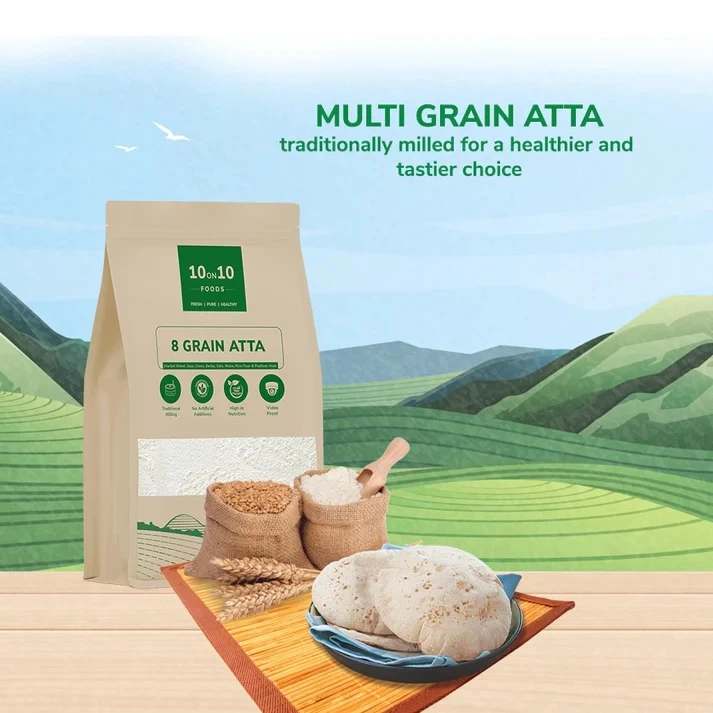
In recent years, Indian kitchens have seen a steady shift toward healthier staples. One such everyday essential gaining popularity is Multigrain Atta. Unlike single-grain flour, it brings together the goodness of several grains, offering better nutrition, improved digestion, and a richer taste. For families aiming to eat mindfully without giving up traditional meals, multigrain flour is becoming a smart and practical choice.
This blog explores what multigrain atta is, its nutritional profile, how it is used in daily cooking, and the benefits it offers when included in a balanced diet.
What Is Multigrain Atta?
Multigrain atta is flour made by blending two or more grains instead of using only refined or whole wheat. Commonly used grains include wheat, jowar, bajra, ragi, oats, maize, barley, and pulses like chana dal or soy. Each grain contributes unique nutrients, making the final flour more diverse in nutrition than regular atta.
Brands like 10on10foods.com focus on carefully balanced grain combinations so that the taste, texture, and health benefits remain suitable for everyday Indian meals such as rotis, parathas, and dosas.
Nutritional Value of Multigrain Atta
The biggest strength of multigrain atta lies in its nutrition diversity. Since it combines multiple grains, it naturally provides a wider range of nutrients compared to single-grain flours.
Key nutrients commonly found
- Dietary fiber that supports digestion
- Complex carbohydrates for sustained energy
- Plant-based protein from grains and pulses
- Essential minerals like iron, magnesium, and zinc
- B vitamins that help in metabolism
Because the grains are minimally processed, multigrain atta also retains natural antioxidants and phytonutrients that support overall wellness.
Why Nutrition Improves with Multiple Grains
Each grain has its own nutritional strengths. Wheat offers energy, millets bring fiber and minerals, oats contribute beta-glucan fiber, and pulses improve protein quality. When combined, these grains complement one another, resulting in a more balanced flour.
This variety makes multigrain atta especially useful for people who want more nutrition without making drastic changes to their daily meals.
Health Benefits of Multigrain Atta
Supports Better Digestion
The high fiber content helps improve bowel movement and supports gut health. Regular consumption can reduce bloating and digestive discomfort when paired with adequate water intake.
Helps Maintain Energy Levels
Complex carbohydrates digest slowly, providing steady energy throughout the day. This makes multigrain atta a good option for active individuals and working professionals.
Aids Weight Management
Fiber-rich foods promote fullness, which may help reduce overeating. Rotis made with multigrain atta often keep you satisfied longer than those made with refined flour.
Supports Heart Health
Certain grains like oats and barley are known to support healthy cholesterol levels. When included regularly, multigrain atta can contribute to heart-friendly eating habits.
Suitable for Balanced Diets
Because it contains carbohydrates, protein, and fiber together, multigrain atta fits well into a balanced meal plan when eaten with vegetables, curd, or dals.
Uses of Multigrain Atta in Everyday Cooking
One of the reasons multigrain atta is widely accepted is its versatility. It can be used almost anywhere you would normally use wheat flour.
Common uses include
- Soft rotis and chapatis
- Parathas with vegetables or paneer
- Multigrain pooris (occasionally, with moderation)
- Pancakes and cheelas
- Homemade bread or flatbreads
With quality products from 10on10foods.com, the texture remains smooth, making kneading and cooking easy even for beginners.
Taste and Texture: What to Expect
Many people worry that multigrain atta might taste rough or bitter. In reality, when grains are proportioned correctly, the taste is mildly nutty and pleasant. The texture of rotis is slightly denser than regular wheat rotis but still soft when kneaded properly and rested before cooking.
Adding a little warm water and allowing the dough to rest for 10–15 minutes can significantly improve softness.
Who Should Choose Multigrain Atta?
Multigrain atta is suitable for:
- Families looking to improve everyday nutrition
- Adults seeking better digestive health
- Fitness-conscious individuals
- Elderly people who prefer fiber-rich diets
However, people with specific grain allergies should always check ingredient lists before purchasing.
How to Store Multigrain Atta Properly
Since multigrain atta contains natural oils from multiple grains, proper storage is important.
Storage tips:
- Keep in an airtight container
- Store in a cool, dry place
- Avoid exposure to moisture
- Use within the recommended time period
Fresh flour not only tastes better but also retains more nutritional value.
Why Choose Multigrain Atta from 10on10foods.com?
10on10foods.com focuses on quality sourcing and hygienic processing. Their multigrain atta blends are designed to balance nutrition with taste, making them suitable for daily consumption. With carefully selected grains and minimal processing, the flour supports healthy eating without compromising traditional cooking styles.
Multigrain Atta vs Regular Wheat Atta
AspectMultigrain AttaWheat AttaGrain varietyMultiple grainsSingle grainFiber contentHigherModerateNutrient rangeBroaderLimitedTasteMildly nuttyNeutralSuitabilityBalanced dietsBasic diets
Both have their place in the kitchen, but multigrain atta offers a nutritional edge for those looking to diversify their meals.
Frequently Asked Questions About Multigrain Atta
What is Multigrain Atta made of?
Multigrain Atta is made by blending wheat with other grains such as millets, oats, maize, and sometimes pulses. The exact combination may vary by brand.
Is Multigrain Atta healthier than wheat atta?
Yes, Multigrain Atta usually offers higher fiber and a wider range of nutrients compared to regular wheat atta, making it a healthier option for daily meals.
Can Multigrain Atta be used daily?
Multigrain Atta can be used daily as part of a balanced diet. Pairing it with vegetables, protein, and healthy fats improves overall nutrition.
Does Multigrain Atta help with digestion?
Due to its fiber-rich grains, Multigrain Atta supports digestion and helps maintain gut health when consumed regularly.
Is Multigrain Atta suitable for children?
Yes, Multigrain Atta is suitable for children, provided they do not have grain allergies. It helps introduce nutritional variety into their meals.
Final Thoughts
Multigrain atta is more than just a health trend. It is a practical upgrade to a daily staple that fits seamlessly into Indian cooking. By combining multiple grains, it delivers better nutrition, improved digestion, and sustained energy, all while maintaining familiar flavors.
Choosing a trusted source like 10on10foods.com ensures quality, taste, and consistency, making multigrain atta a reliable option for households aiming for healthier everyday meals.