



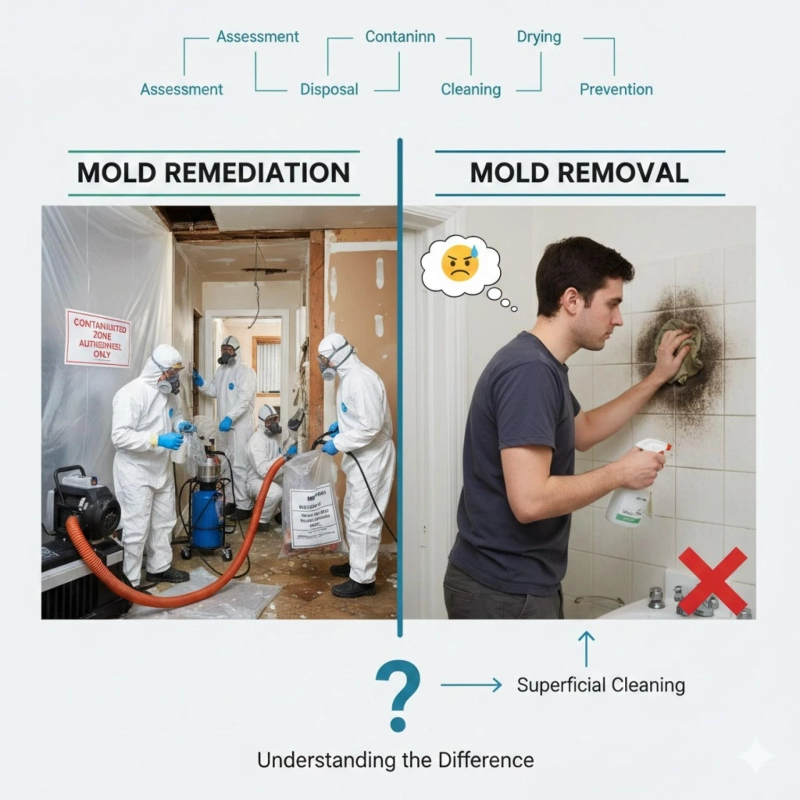
Mold is one of those home problems that can feel confusing and intimidating at the same time. You spot a dark patch on the wall or smell something musty, and suddenly, you are hearing terms like mold removal and mold remediation thrown around. They sound similar, but they are not the same thing. Understanding the difference matters more than most homeowners realize, especially when it comes to protecting your property and your health.
Let's break it down in simple terms and clear up what each process actually involves.
Why Mold Is More Than Just an Eyesore
Mold is a living organism that thrives in damp, humid environments. It spreads through microscopic spores that float through the air and settle wherever moisture is present. Once it takes hold, mold does not just sit on the surface. It can grow behind walls, under flooring, and inside HVAC systems.
Beyond the visible damage, mold can impact indoor air quality and trigger respiratory issues, allergies, and other health concerns. That is why addressing mold correctly is critical, not just quickly.
What Mold Removal Really Means
Mold removal refers to the physical act of eliminating visible mold growth from surfaces. This may include scrubbing mold from walls, ceilings, tile, or other affected materials. In some cases, contaminated materials like drywall or carpet may be removed and discarded.
While removal can make a space look cleaner, it does not always address the underlying cause of the mold. If moisture issues remain, mold can return, sometimes faster and more aggressively than before.
This approach is often limited to surface-level treatment and is best suited for very small, contained mold problems.
Mold Remediation
Mold remediation is a more comprehensive process focused on controlling mold growth and preventing it from coming back. Instead of just removing what you can see, remediation addresses the source of the problem.
This process typically includes identifying and correcting moisture issues, containing affected areas to prevent spore spread, removing or treating contaminated materials, and thoroughly cleaning the air and surfaces. The goal is not to eliminate every mold spore, which is impossible, but to restore indoor conditions to safe and healthy levels.
Homeowners dealing with Gainesville mold remediation often benefit from this approach because it targets both the mold and the environment that allowed it to grow in the first place.
Mold Removal
Mold removal, when discussed on its own, focuses narrowly on eliminating existing mold growth. It may be effective for minor issues, but it does not always include moisture control, air filtration, or long-term prevention.
In situations where Ocala mold removal is handled without addressing humidity, leaks, or ventilation problems, mold can easily return. This can lead to repeated cleanups and increasing damage over time.
Key Differences Between Remediation and Removal
The biggest difference comes down to scope and intent. Mold removal treats the symptom. Mold remediation treats the cause.
Removal is often quicker and less involved, but it can be temporary. Remediation takes more planning and expertise, but it is designed to provide lasting results. Think of removal like wiping up spilled water, while remediation is fixing the pipe that caused the leak.
When Mold Removal Might Be Enough
In some cases, mold removal may be sufficient. Small areas of mold caused by brief moisture exposure, such as a minor bathroom issue caught early, may not require full remediation.
However, even in these cases, moisture control and proper assessment are still important. Without them, the risk of mold returning remains.
When Mold Remediation Is the Better Choice
If mold covers a large area, keeps returning, or is linked to ongoing moisture problems, remediation is usually the smarter option. This is especially true when mold is found inside walls, ceilings, crawl spaces, or HVAC systems.
Remediation also becomes essential when health concerns are involved or when selling a property, as unresolved mold issues can impact inspections and value.
The Role of Professional Assessment
One of the biggest mistakes homeowners make is guessing which approach they need. Mold problems are often more extensive than they appear on the surface. A professional assessment helps determine how far the mold has spread and what level of intervention is necessary.
This evaluation guides the decision between simple removal and full remediation, ensuring the problem is handled the first time.
Long-Term Protection and Peace of Mind
Choosing the right approach to mold is about more than immediate cleanup. It is about protecting your home's structure, maintaining healthy indoor air, and avoiding repeated issues.
Addressing moisture sources, improving ventilation, and using proven remediation techniques help create an environment where mold struggles to survive.
Conclusion
Understanding the difference between mold removal and mold remediation can save homeowners time, money, and frustration. While removal may address visible mold, remediation offers a long-term solution by tackling the root causes and preventing regrowth. Homeowners in Gainesville and Ocala can rely on Puddles Restoration for professional guidance and effective solutions that restore healthy living spaces and protect property value for the future.