



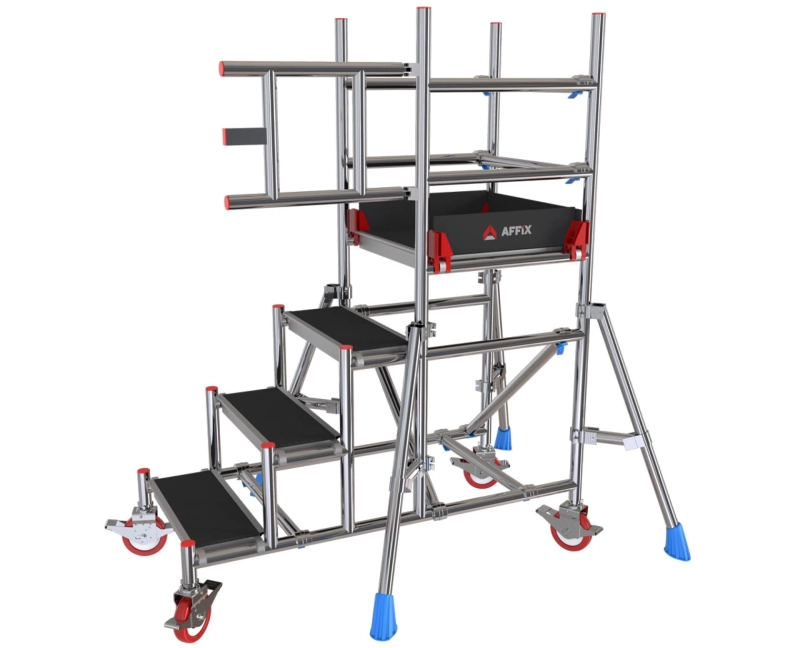
Work-at-height solutions shape productivity, safety, and cost efficiency across construction and maintenance projects. The mobile scaffolding for sale in Finland reflects how global markets value lightweight, movable structures for flexible job site operations. On the other hand, scissor lifts bring powered elevation and speed, offering a modern approach to vertical access. Each system serves a purpose, yet their differences influence how teams plan and execute work.
Mobile scaffolding provides a movable platform built from modular components, while a scissor lift operates as a powered machine that raises workers vertically. The choice depends on project scale, duration, and environment.
What Defines Mobile Scaffolding?
Mobile scaffolding consists of a tower structure mounted on wheels, allowing workers to move it across job sites without dismantling. It uses materials such as aluminum or steel to balance strength and portability.
Key features of mobile scaffolding:
- Wheeled base for easy repositioning
- Modular design for adjustable height
- Spacious platform for multiple workers
- Manual assembly and disassembly
- Suitable for both indoor and outdoor tasks
This system supports projects that require stability along with moderate mobility.
What Defines a Scissor Lift?
A scissor lift uses a crisscrossing metal support structure powered by hydraulics or electric motors. It lifts workers vertically with precision and speed.
Key features of scissor lifts:
- Motorized elevation system
- Push-button height control
- Compact design for tight spaces
- Built-in safety mechanisms
- Quick setup with minimal manual effort
This equipment suits tasks that demand rapid elevation and frequent height adjustments.
Structural Differences That Impact Performance
Mobile scaffolding builds a physical structure that workers climb. It creates a fixed working platform at a chosen height. Once set, it provides a stable base for extended tasks.
A scissor lift functions as a machine. It eliminates the need for climbing by lifting workers directly to the desired height. Operators can adjust height instantly without leaving the platform.
Core distinction:
- Mobile scaffolding: Static platform after setup
- Scissor lift: Dynamic platform with vertical movement
This difference affects speed, labor, and workflow.
Safety Aspects and Risk Management
Safety remains the top priority in elevated work. Both systems offer protective features, but they address risks differently.
Mobile scaffolding safety points:
- Guardrails and toe boards prevent falls
- Stable base reduces tipping risks when properly assembled
- Allows safe movement of tools and materials
- Requires proper locking of wheels during use
Scissor lift safety points:
- Integrated safety controls and alarms
- Emergency descent features
- Reduced climbing-related risks
- Automatic stabilization systems
Mobile scaffolding relies heavily on correct assembly, while scissor lifts depend on mechanical reliability.
Mobility and Ease of Movement
Mobility often determines how efficiently teams complete tasks across large areas.
Mobile scaffolding offers horizontal mobility. Workers can push the tower to a new location, provided the surface remains level and obstacles remain minimal.
Scissor lifts provide both vertical movement and limited horizontal repositioning through driving controls. Operators can move the lift without stepping down in many cases.
Mobility comparison:
- Mobile scaffolding: Easy to move manually over short distances
- Scissor lift: Faster repositioning with powered controls
For projects that require constant repositioning, scissor lifts often provide an advantage.
Setup Time and Operational Efficiency
Setup time influences project timelines and labor costs.
Mobile scaffolding requires assembly, which depends on height and complexity. Skilled workers can assemble it quickly, but it still involves manual effort.
Scissor lifts require minimal setup. Operators position the machine and begin work almost immediately.
Efficiency breakdown:
- Mobile scaffolding: Slower initial setup, stable for long tasks
- Scissor lift: Immediate operation, ideal for quick tasks
Projects with tight deadlines often benefit from faster deployment.
Load Capacity and Workspace
Mobile scaffolding provides a larger working platform. It allows multiple workers to operate together with tools and materials.
Scissor lifts typically support fewer workers and limited equipment due to weight restrictions.
Load and workspace comparison:
- Mobile scaffolding: High load capacity, team-friendly platform
- Scissor lift: Limited capacity, focused individual tasks
Larger teams often prefer scaffolding for efficiency.
Cost Considerations and Budget Impact
Cost plays a crucial role in decision-making.
Mobile scaffolding generally involves lower upfront costs and minimal maintenance expenses. It offers long-term value through repeated use.
Scissor lifts require higher investment or rental costs. Maintenance, fuel, or battery charging adds to operational expenses.
Cost factors:
- Mobile scaffolding: Lower cost, reusable, economical for long-term use
- Scissor lift: Higher cost, suitable for short-term or specialized tasks
Budget constraints often influence the final choice.
Maintenance Requirements
Maintenance ensures reliability and safety.
Mobile scaffolding requires basic upkeep:
- Regular inspection for damage
- Cleaning after use
- Checking wheel locks and joints
Scissor lifts require more complex maintenance:
- Hydraulic system checks
- Battery or engine servicing
- Electrical system inspection
- Professional servicing schedules
Maintenance comparison:
- Mobile scaffolding: Simple and low-cost maintenance
- Scissor lift: Technical and ongoing maintenance
Lower maintenance often appeals to cost-conscious operations.
Performance in Different Environments
Environmental conditions affect how each system performs.
Mobile scaffolding adapts well to both indoor and outdoor environments. It works effectively on stable surfaces and in areas with limited mechanical access.
Scissor lifts perform best on smooth, level surfaces. Rough terrain or uneven ground can limit their effectiveness unless specialized models are used.
Environmental suitability:
- Mobile scaffolding: Versatile across varied conditions
- Scissor lift: Best for controlled, even surfaces
Choosing the right system depends on site conditions.
Flexibility and Adaptability
Flexibility determines how easily a system adjusts to different tasks.
Mobile scaffolding offers high adaptability. Workers can modify height, platform size, and configuration based on project needs.
Scissor lifts provide flexibility in height adjustment but remain limited in structural modification.
Flexibility comparison:
- Mobile scaffolding: Customizable structure
- Scissor lift: Adjustable height but fixed design
Projects with varying requirements often favor scaffolding.
Productivity and Workflow Impact
Each system influences workflow differently.
Mobile scaffolding supports continuous work once assembled. Teams can operate without interruption for extended periods.
Scissor lifts improve productivity in tasks that require frequent movement between different heights or locations.
Productivity comparison:
- Mobile scaffolding: Best for long-duration tasks
- Scissor lift: Best for short, repetitive tasks
Matching the system to workflow improves efficiency.
Limitations to Consider
Every system has constraints that affect performance.
Mobile scaffolding limitations:
- Requires assembly time
- Less efficient for frequent repositioning
- Needs skilled labor for safe setup
Scissor lift limitations:
- Higher cost
- Limited load capacity
- Dependence on power sources
- Restricted use on uneven terrain
Recognizing these limitations helps avoid operational challenges.
Practical Use Cases
Mobile scaffolding works well for:
- Painting and finishing work
- Building maintenance
- Long-duration construction tasks
- Indoor installations
Scissor lifts suit:
- Warehouse operations
- Electrical maintenance
- Quick repairs at height
- Tasks requiring frequent elevation changes
Selecting the right system ensures smoother project execution.
Decision Factors That Matter Most
Choosing between mobile scaffolding and a scissor lift requires evaluating key aspects:
- Project duration
- Budget availability
- Site conditions
- Workforce size
- Safety requirements
A clear assessment leads to better decisions and improved outcomes.
Future Outlook for Elevated Work Equipment
Advancements continue to shape both systems. Mobile scaffolding benefits from lighter materials and improved locking mechanisms. Scissor lifts evolve with better battery technology, enhanced safety features, and smarter controls.
These improvements aim to increase efficiency, safety, and ease of use across industries.
Conclusion
Mobile scaffolding and scissor lifts serve different operational needs. Mobile scaffolding offers stability, cost efficiency, and workspace for teams. Scissor lifts provide speed, convenience, and precise elevation for dynamic tasks.
A well-informed choice depends on project demands, working conditions, and budget considerations. The right selection enhances productivity, ensures safety, and supports efficient work at height across every stage of a project.