



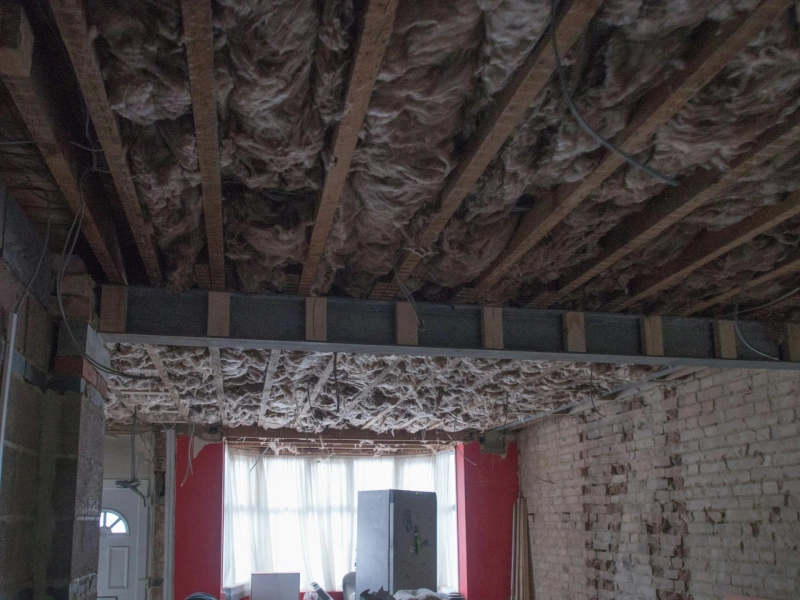
The most significant error homeowners make when selecting interior insulation in Temple is focusing solely on the material's R-value while ignoring air leakage. While R-value measures a material's resistance to conductive heat flow, it does not account for the hot, humid air that physically moves through gaps in walls and attics. In the Central Texas climate, airflow carries moisture and heat into the home, rendering high R-value batting ineffective if the building envelope remains porous.
This oversight leads to comfortable rooms becoming drafty and energy bills remaining high despite the investment in new materials. True efficiency requires a holistic approach that addresses both thermal resistance and air sealing. By understanding the specific demands of the local climate and how different materials interact with moisture and sound, property owners can avoid costly retrofits and achieve lasting comfort.
Prioritizing R-Value Over Air Sealing
A common misconception is that a higher number on the package guarantees a cooler home. R-value measures how well insulation stops heat from transferring through a solid material. However, it assumes the air inside the wall cavity is still.
In reality, traditional fiberglass batts do not stop air movement. When wind blows against the house or pressure differences occur due to the "stack effect," air passes right through the fiberglass fibers. This is like wearing a thick wool sweater on a windy day; the wind cuts right through it. Unless an air barrier is paired with the insulation, the R-value is significantly compromised.
The Hidden Cost of Air Leaks
Market data indicates that up to 30% of a home's cooling load comes from air infiltration. When homeowners in Temple choose insulation that does not seal gaps, they force their air conditioners to cool hot, humid outdoor air constantly. This shortens the lifespan of the HVAC unit and keeps monthly electricity costs high.
Ignoring the Humidity Factor
Temple experiences high humidity levels that punish improper insulation choices. Installing materials that absorb moisture or allow it to pass through can lead to severe structural issues.
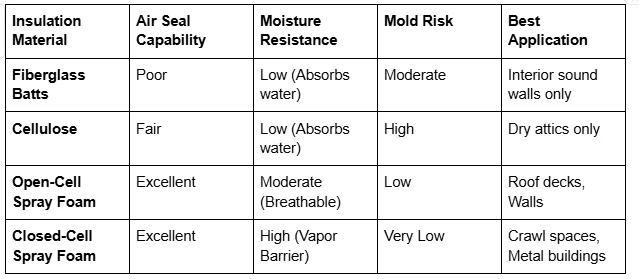
Fiberglass and cellulose are permeable. If warm, moist air penetrates the wall cavity and hits a cool surface (like the back of drywall in an air-conditioned room), condensation forms. This wet environment encourages mold growth and wood rot.
Choosing the Wrong Material for the Region
Homeowners often default to the cheapest option without considering moisture management.
Performance Comparison in Humid Climates
The DIY Trap and Installation Errors
Trying to save money by installing insulation personally often leads to performance failure. The effectiveness of insulation relies entirely on the quality of the installation.
Compression Kills Efficiency
A frequent mistake occurs when homeowners stuff thick fiberglass batts into spaces too small for them. Compressing fiberglass eliminates the air pockets that provide the insulation value. A compressed R-19 batt might perform closer to R-10.
Leaving Gaps and Voids
Cutting batts to fit around electrical boxes, wires, and plumbing requires precision. Amateurs often leave small gaps or "voids" around these obstacles. Heat flows through these gaps like water through a leak in a dam. Even a 4% void in the insulation layer can reduce the overall effectiveness of the wall by 50%.
Overlooking Acoustic Privacy
Interior insulation is not just about temperature; it is also about sound control. Many people renovate homes and leave interior walls hollow, resulting in a noisy living environment where conversations travel easily between rooms.
The Density Difference
Standard pink fiberglass offers minimal sound dampening. Homeowners seeking privacy for home offices, bathrooms, or media rooms make a mistake by using standard thermal batts. Materials like mineral wool or open-cell spray foam have higher density and better acoustic properties. They absorb sound waves and reduce vibration transfer through the wall studs.
Neglecting "The Envelope" Concept
Treating the attic, walls, and crawl space as separate entities is a strategic error. The home operates as a system. Sealing the walls tight while leaving the attic vented and uninsulated creates a pressure imbalance.
The Stack Effect
In the summer, hot air in the attic pushes down into the house. In the winter, warm air rises and escapes through the roof. If the top of the house (the attic) is not sealed, insulating the walls will not stop the draft. The most effective strategy starts at the top, sealing the attic to stop the primary source of heat gain and loss.
Bonus Tip: Check Your HVAC Sizing
If a homeowner successfully seals their home with high-performance insulation, the heating and cooling load drops drastically. An existing HVAC unit might become oversized for the new, efficient space. An oversized unit cools the house too fast and shuts off before it removes the humidity, leaving the house feeling clammy. A technician should evaluate the system after a major insulation upgrade.
Things to Consider Before Making a Decision
Before purchasing materials or signing a contract, homeowners should evaluate the current state of the home and their long-term goals.
- Existing Conditions: Installing new insulation over old, dirty material is rarely a good idea. Old insulation often contains dust, allergens, and rodent waste. It is better to remove it and start with a clean substrate.
- Recessed Lighting: Older "can" lights in the ceiling are major sources of air leakage. They must be rated for contact with insulation (IC-rated) or boxed off before insulating.
- Future Renovations: If wiring or plumbing upgrades are planned, do them before applying spray foam, as the foam makes accessing wires more difficult later.
Questions People Ask About Interior Insulation
Is it worth removing old insulation before installing new?
Yes. Removing old insulation allows installers to see the condition of the wiring and framing. It also removes years of accumulated dust and pest droppings, improving indoor air quality immediately.
Can I just add more insulation on top of what I have?
This is possible with blown-in cellulose or fiberglass in an attic, but it does not address air sealing. If the bottom layer has gaps, adding more on top acts like a blanket over a sieve. The air still leaks through.
Does spray foam insulation cause mold?
No, spray foam actually helps prevent mold. By sealing the gaps that allow humid air to enter the walls, it eliminates the moisture source that mold needs to grow.
How does insulation affect the resale value of a home?
Energy-efficient homes are in high demand. documenting lower utility bills and a comfortable indoor environment gives a property a competitive edge in the Temple real estate market.
Is mineral wool better than fiberglass for interior walls?
Yes. Mineral wool is denser, which provides better soundproofing. It is also fire-resistant and does not absorb moisture, making it a superior choice for bathrooms and bedrooms.
Conclusion
Avoiding common insulation mistakes in Temple requires shifting the focus from simple R-value to comprehensive air sealing and moisture management. Homeowners who prioritize sealing the building envelope and selecting materials appropriate for the humid Texas climate see the best returns on their investment. Whether the goal is lower energy bills, sound reduction, or improved air quality, understanding the science behind the materials ensures a successful project that enhances the home for years to come.
Reliable Insulation Solutions in Central Texas
Spray Foam Tech helps homeowners navigate the complexities of insulation selection and installation. Their team identifies the specific needs of properties in Temple, ensuring that every project addresses air leakage, thermal resistance, and durability.
For residents looking to correct past insulation mistakes or start a new project with confidence, professional guidance is available. Phone: (737) 777-9590 Email: oldworldtx@hotmail.com
Reviewer: Maria Lopez reviewed the article and brought 12 years of insulation industry experience to improve the guidance. Practical tips were added, and the content was made clearer and more useful for contractors working in the field every day.