



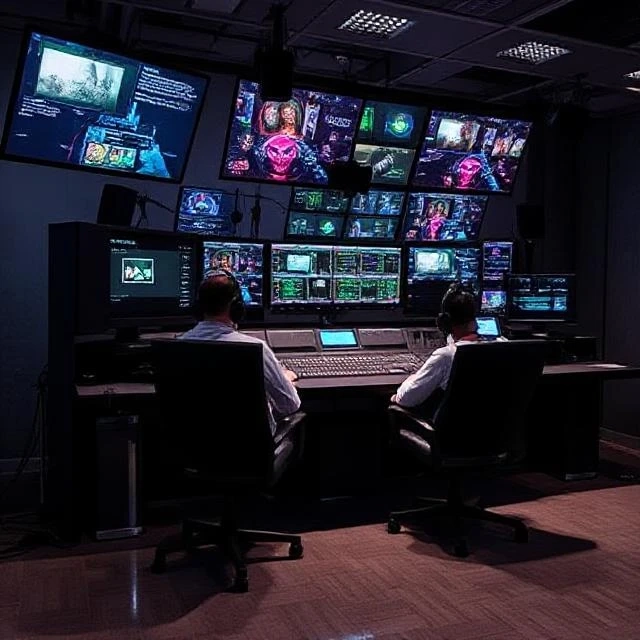
Broadcasting is quietly going through one of its biggest shifts in decades. It’s not flashy. There are no dramatic on-screen changes for viewers. But behind the scenes, everything is changing. Traditional baseband workflows are giving way to IP-based playout, and by 2026, this transition is no longer experimental. It’s expected.
At the center of this evolution are SMPTE 2110, smarter playout software, and the growing importance of the Electronic Program Guide. Together, they’re reshaping how channels operate, schedule, and deliver content in an IP-first world.
Why IP-Based Playout Is Becoming the New Normal
For years, broadcasters relied on SDI infrastructure. It worked, but it was rigid, hardware-heavy, and expensive to scale. IP-based playout changes that equation.
IP workflows allow audio, video, and metadata to travel over standard networks. This flexibility reduces physical limitations and opens the door to remote operations, virtualization, and faster innovation.
By 2026, IP-based playout isn’t about future-proofing. It’s about staying compatible with modern distribution models.
Understanding SMPTE 2110 Without the Jargon
SMPTE 2110 is often described as complex, but its core idea is simple.
Separating the Signals
Instead of bundling audio, video, and metadata into a single stream, SMPTE 2110 sends them separately over IP. This separation gives broadcasters more control and precision.
Audio can be routed independently. Video can be processed without touching sound. Metadata can be updated in real time.
Why This Matters for Playout
For modern playout software, SMPTE 2110 is a natural fit. Software-driven systems thrive on modularity. When each component is independent, workflows become more efficient and resilient.
Errors are easier to isolate. Changes are faster to deploy. And scaling doesn’t require tearing down existing infrastructure.
The Software-Defined Playout Era
Hardware-based playout servers are slowly giving way to software-defined solutions.
Flexibility Over Fixed Systems
Modern playout software runs on standard servers or in the cloud. Channels can be launched, modified, or duplicated without new physical equipment.
This flexibility is critical in 2026, where channels are constantly evolving. FAST channels, pop-up events, regional variations. All of these benefit from software-first playout.
Remote Operations Become Practical
IP-based playout allows operators to manage channels from anywhere. Control rooms no longer need to be tied to a specific building. This reduces costs and increases resilience during disruptions.
Electronic Program Guide: More Than a Schedule
The Electronic Program Guide used to be a simple grid. Show titles. Start times. End times. That’s no longer enough.
EPG as Metadata Hub
In IP-based environments, the EPG is deeply connected to playout software. It drives automation, triggers ad insertion, and feeds downstream platforms.
Errors in the EPG can now break workflows, not just confuse viewers. Accuracy matters more than ever.
Real-Time Updates and Personalization
With IP playout, EPG data can be updated in real time. Last-minute schedule changes, live event overruns, and regional variations can be reflected instantly.
In 2026, EPGs are also becoming more personalized. Different viewers may see different program listings based on location, device, or viewing habits.
How SMPTE 2110 Changes EPG Management
SMPTE 2110 enables tighter integration between content and metadata.
Because audio, video, and data travel separately, EPG updates don’t require interrupting the main feed. Playout software can adjust scheduling metadata on the fly.
This reduces downtime and allows more dynamic programming strategies, especially for live and hybrid channels.
Operational Challenges Broadcasters Still Face
Migration isn’t painless.
Network Expertise Is Essential
IP-based playout depends on strong network design. Latency, synchronization, and redundancy must be carefully planned. SMPTE 2110 environments require precise timing and monitoring.
Training and Workflow Shifts
Teams used to SDI workflows need time to adapt. Roles change. IT and broadcast engineering overlap more than ever.
Playout software interfaces are powerful, but they demand new skills and new ways of thinking.
Why 2026 Is a Turning Point
By 2026, the question is no longer whether to migrate to IP-based playout. It’s how efficiently you can do it.
Broadcasters who embrace SMPTE 2110 and modern playout software gain flexibility, scalability, and operational efficiency. Those who delay risk falling behind in a landscape that increasingly values speed and adaptability.
The Electronic Program Guide becomes a strategic asset rather than an afterthought, driving automation and viewer experience alike.
Final Thoughts: A Quieter Revolution With Lasting Impact
IP-based playout doesn’t change what viewers see on screen. It changes how confidently broadcasters can deliver it.
SMPTE 2110, intelligent playout software, and a smarter Electronic Program Guide together form the backbone of modern broadcasting in 2026.