



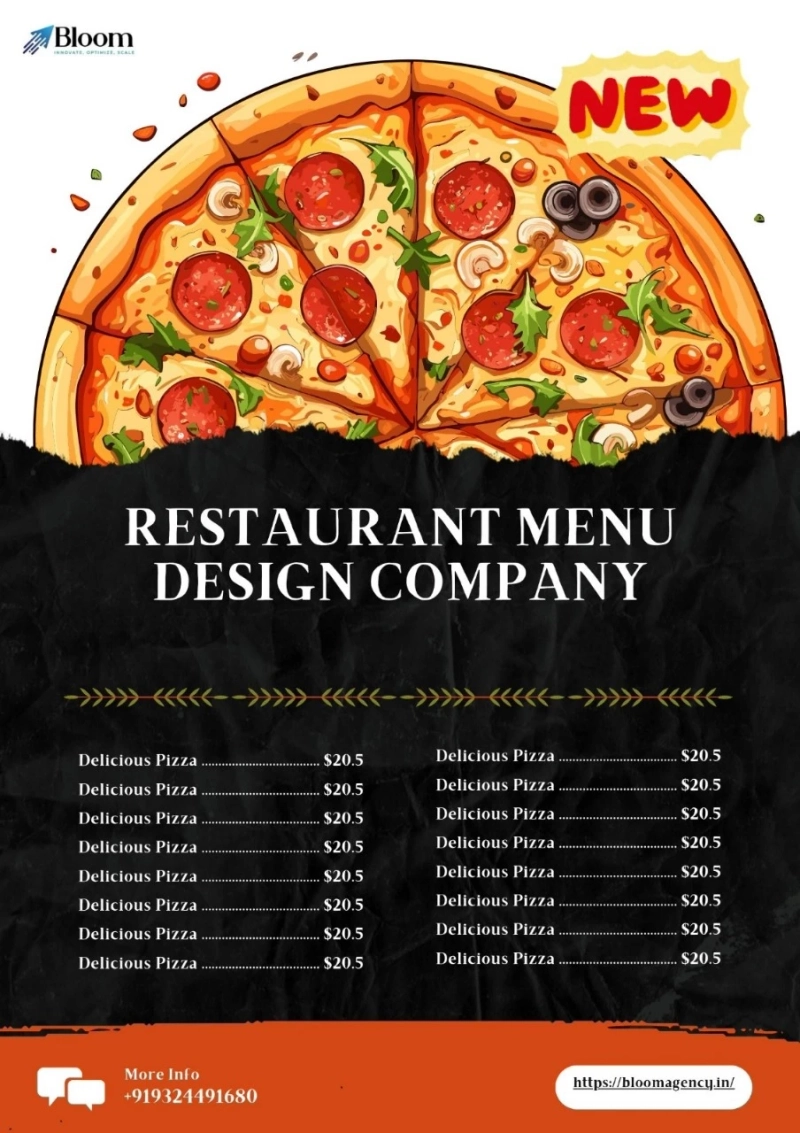
A menu card is more than just a list of dishes—it is a powerful marketing tool that can shape a customer’s dining experience and influence their purchasing decisions. Whether you run a fine-dining restaurant, a casual café, or a food truck, investing in a well-thought-out menu card design can make a significant impact on your brand image and sales.
Why Menu Card Design Matters
A thoughtfully designed menu card:
- Creates a strong first impression.
- Communicates your brand personality.
- Guides customers toward profitable items.
- Enhances the overall dining experience.
Research in hospitality marketing shows that customers often spend more when presented with an attractive and strategically arranged menu.
Key Elements of an Effective Menu Card Design
- Brand Consistency
- Your menu should reflect your restaurant’s identity. Fonts, colors, and imagery should align with your logo, interior design, and overall theme.
- Readable Typography
- Clarity is crucial. Choose legible fonts and maintain a proper hierarchy—highlight dish names, keep descriptions readable, and ensure pricing is visible without overpowering the design.
- Strategic Layout
- The human eye naturally follows a Z-pattern or F-pattern when reading. Placing your high-profit items in these “prime spots” can boost sales.
- High-Quality Images
- Mouth-watering food photography can entice customers to order more. However, avoid overloading the menu with pictures unless it matches your restaurant style.
- Color Psychology
- Colors influence appetite—red and yellow can stimulate hunger, while green conveys freshness. Choose colors that fit your cuisine and mood.
- Clear Categorization
- Separate menu sections such as appetizers, mains, desserts, and beverages to make browsing easy.
Types of Menu Card Designs
- Single Page Menu – Minimalist, great for short menus.
- Folded Menu – Common in restaurants with extensive offerings.
- Digital Menu – QR code-based menus for modern dining experiences.
- Specialty Menus – Seasonal or event-specific menu cards.
Tips for Creating a Sales-Driven Menu Card Design
- Highlight Signature Dishes – Use boxes, icons, or bold fonts.
- Use Price Anchoring – Place a higher-priced item next to moderately priced items to make them seem more affordable.
- Minimize Currency Signs – Studies show removing currency symbols can lead to higher spending.
- Keep It Updated – Regularly revise the menu to reflect seasonal changes and remove underperforming dishes.
Hiring a Professional for Menu Card Design
While DIY tools exist, working with a professional designer ensures your menu not only looks beautiful but also follows proven marketing strategies. Professionals understand the balance between aesthetics and functionality, ensuring your menu boosts revenue.
Final Thoughts
An effective menu card design is both an art and a science. It blends visual appeal, strategic layout, and psychological triggers to influence customer choices. Whether you’re starting a new restaurant or revamping your existing menu, investing in a well-crafted design can set you apart from competitors and increase your profits.