



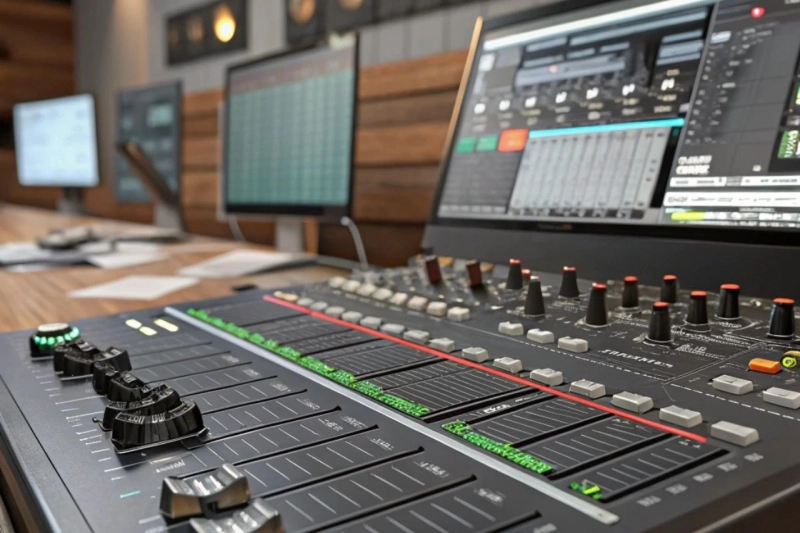
Equalisation, or EQ for short, is one of the most important tools for audio engineers. It helps you shape sound by boosting or cutting certain frequencies, which changes the tone of any audio signal. Whether it's vocals, instruments, or background noise, the work may need to be made clearer and/or more balanced. For most beginners, EQ is just turning up or down random frequencies. But the real skill in EQ is much more planned. People who take music production courses in India quickly learn that EQ is a scientific and creative process that needs a trained ear, accuracy, and a clear goal.
Why EQ is Important in Music Production
Every sound has a different mix of low, mid, and high frequencies. Some of these frequencies make things clearer, while others can make things sound muddy or harsh. EQ is like a sculpting tool that brings out the important parts and hides the unimportant ones.
Getting to Know the Frequency Spectrum
To use EQ well, you need to know how different frequency ranges change sound:
Sub-bass (20–60 Hz): Adds power and depth, but if not controlled, it can make things rumble.
Bass (60–200 Hz) makes things feel warm and full.
Low mids ➊ (200–500 Hz): If you have too much here, it makes the sound boxy, but if you have the right amount, it makes it heavier.
Mids: 500 Hz to 2 kHz, which is important for making the music clear and detailed.
Upper mids (2–5 kHz): Define attack and presence, but too much energy makes it sound harsh.
Highs: 5–12 kHz Adding shine, brightness, and clarity.
Air band: 12–20 kHz: adds sparkle and space when used sparingly.
You can make EQ decisions on purpose instead of just guessing if you know how sound works in these areas.
Different kinds of EQ and when to use them
There are different types of EQ, and each one has a different use:
Parametric EQ: Lets you control frequency, gain, and Q completely. Best for making small changes and fixing things that need to be fixed.
Graphic EQ: Uses sliders that stay in place. It's great for making big changes to the sound, especially when you're playing live.
Shelving EQ: This changes everything above or below a certain frequency. These are great for making simple tonal changes like warming or brightening.
Dynamic EQ: Changes based on the level of the signal. It's great to soften harshness or resonances right when they happen, without changing the whole recording.
Subtractive EQ: The Key to a Clean Mix
A lot of amateurs tend to boost a lot of frequencies, but professionals usually start with subtractive EQ. They don't just turn up the volume; they first get rid of what's causing the problem. Getting rid of unwanted frequencies makes the sound clearer and more natural.
Some examples of subtractive EQ
Cut down on the muddiness around 300 Hz in guitars or voices.
Cutting out sharp peaks between 4 and 5 kHz in bright recordings
Rolling off low-end rumble below 50 to 80 Hz on sources that don't have bass
When you take out things that don't help the mix, the other parts become clear on their own.
Additive EQ: Raising the Parts That Help the Mix
You can use additive EQ to make the character better after using subtractive EQ to clean up the signal. Boosting should always be gentle and have a purpose.
Additive EQ examples:
Adding air and shine to vocals by boosting around 10 kHz.
To make a kick drum sound thicker, add a small boost around 100 Hz.
Adding presence around 3 kHz will make guitars or speech sound clearer.
With additive EQ, a little goes a long way: small boosts make music sound better, while big boosts make music sound worse.
What the Q Factor Does
The EQ curve's width or narrowness is determined by the Q factor.
High Q-narrow: great for getting rid of ringing tones or other annoying resonances.
Low Q (wide): Good for shaping music and making the tone smoother.
The right Q setting lets you either find flaws exactly or make big changes that feel natural.
EQing vocals to make them clear and warm
Equalisation should be used carefully because vocals are the most important part of most mixes.
Common vocal EQ changes:
Get rid of rumble below 80 Hz
Cut down on the muddiness between 250 and 350 Hz
Only change the harshness in the 4–5 kHz range if you have to.
To make things clearer, add presence between 2 and 3 kHz.
For openness and shine, add air between 10 and 12 kHz.
The goal is to keep the emotion in the voice while making it sound good with the instruments.
EQing Drums: Punch, Power, and Clarity
Drums cover a wide range of frequencies, so you should treat each one separately:
For the beater click, add weight to the low end and presence to the 3–5 kHz range.
Snare: Add body around 200 Hz and snap around 5 kHz.
Toms: Use narrow cuts to shape the low-mid punch and control the resonance.
Hi-hats and cymbals: When brightness is needed, there are gentle high-frequency boosts.
Before boosting, get rid of ringing and harshness so that the kit sounds good together.
EQing Guitars: How to Avoid Frequency Clashes
If the EQ isn't set up right, guitars can easily clash with vocals and keyboards.
Here are some helpful guitar EQ tips:
At 250 Hz, make it less muddy.
If needed, soften harsh peaks between 2.5 and 4 kHz.
If the sound seems buried, add clarity around 1.5 kHz.
To keep from getting in the way of bass instruments, roll off lows below 90 Hz.
Small changes make for big enhancements, while maintaining natural tone.
Using EQ in Mastering
Obviously, mastering EQ needs to be very subtle. The whole mix should be polished, not reshaped.
Mastering EQ focuses on:
Correcting tonal imbalance
Increasing depth and clarity
Enhancing detail without altering the core sound
Even a boost or cut of only 1 dB can greatly enhance the listening experience.
Developing an Ear for EQ
EQ mastery grows with practice. Listening critically and making intentional adjustments improve the skill over time. Many learners enroll in sound engineering courses in Kerala or related programs to train their ears; however, frequent practice at home can also hone accuracy.
Ways to develop better EQ skills:
Listen to isolated frequencies to memorize their characteristics.
Practice EQing raw, unprocessed recordings
Compare before and after to understand the effect of
Mix genres to acquire versatility.
EQ mastery is not about learning presets; it is about training the ear to recognize what a track needs.
Practical Tips for Good EQ Decisions
EQ for the mix, not in solo.
Use subtractive EQ before boosting
Avoid unnecessary extreme boosts
Switch the EQ on and off regularly to compare Trust your ears more than visual graphs.
Conclusion
Mastery of EQ brings control, confidence, and creativity to the production of music. It takes a mix from being rough and cloudy to polished and expressive. Precision sculpting of frequencies is not about boosting everything-it's about finding out what each sound needs and forming it with a purpose. With patient listening and continuous practice, anyone can master the art of equalization and achieve professional results.