


Hair loss can feel like it happened overnight—one day your hairline looks sharp, the next photo shows more scalp than you remember. The truth is, male pattern thinning is gradual, influenced by genetics, hormones, stress, nutrition, and lifestyle. The good news: modern male hair restoration isn’t one-size-fits-all. You can combine medical care, lifestyle upgrades, and visual solutions like micropigmentation hairline design and micropigmentation for scars to create a fuller, natural look with minimal downtime.
This guide breaks down practical options so you can choose a plan that fits your goals, budget, and schedule.
Understand the Landscape: Why Men Lose Hair
Most men experiencing hair loss are dealing with androgenetic alopecia (male pattern baldness). DHT— a byproduct of testosterone—shrinks follicles over time, leading to finer, shorter hair. Other contributors include inflammation, nutrient gaps, scalp conditions (seborrheic dermatitis), and habits that increase oxidative stress (poor sleep, smoking, excess alcohol). A thoughtful plan aims to slow the biology and improve the appearance—both matter.
Natural Treatments for Hair: Build a Healthy Foundation
“Natural” doesn’t mean “miracle overnight.” It means supporting scalp health and hair quality with consistent, low-risk habits.
1) Nutrition for follicles
- Prioritize protein (keratin is a protein-based structure).
- Add iron- and zinc-rich foods, plus B vitamins (especially biotin and B12).
- Include omega-3s (fatty fish, flax, walnuts) to reduce inflammation.
- Consider a physician-approved multivitamin if lab work shows deficiencies (vitamin D is a common one).
2) Scalp fitness
- Keep the scalp clean to reduce sebum buildup that can suffocate follicles.
- Gentle weekly exfoliation (enzymatic or mild scrub) helps remove dead skin and improve product penetration.
- Scalp massage 5–10 minutes/day may increase local blood flow—use light, circular pressure.
3) Lifestyle levers
- Sleep 7–8 hours; growth and repair happen at night.
- Manage stress (breathwork, walks, resistance training). Chronic stress can push hair into shedding cycles.
- Avoid tight caps/helmets for long periods and reconsider hairstyles that pull (man-buns, tight braids).
4) Evidence-informed topicals (discuss with a professional)
- Caffeine, rosemary oil, and peptide-based serums have supportive—but not definitive—data for improving hair quality. They can complement medical treatments and male hair restoration strategies.
Natural measures alone rarely reverse established recession, but they improve scalp conditions and help you get more from every other option you choose.
Medical & Procedural Options (Briefly)
- Minoxidil (topical/oral): Extends growth phase; may thicken miniaturized hair.
- Finasteride/Dutasteride: Reduces DHT; talk to your doctor about benefits and side effects.
- Low-Level Laser Therapy (LLLT): At-home devices with studies showing improvements in density for some users.
- PRP/PRF: Platelet-based injections that may enhance hair quality; results vary.
- Hair Transplant (FUT/FUE): Moves permanent follicles from donor areas to thinning zones—powerful but dependent on donor supply and budget.
Even with these, there are limits to density. That’s where visual artistry shines.
Micropigmentation Hairline: Instant, Low-Maintenance Density
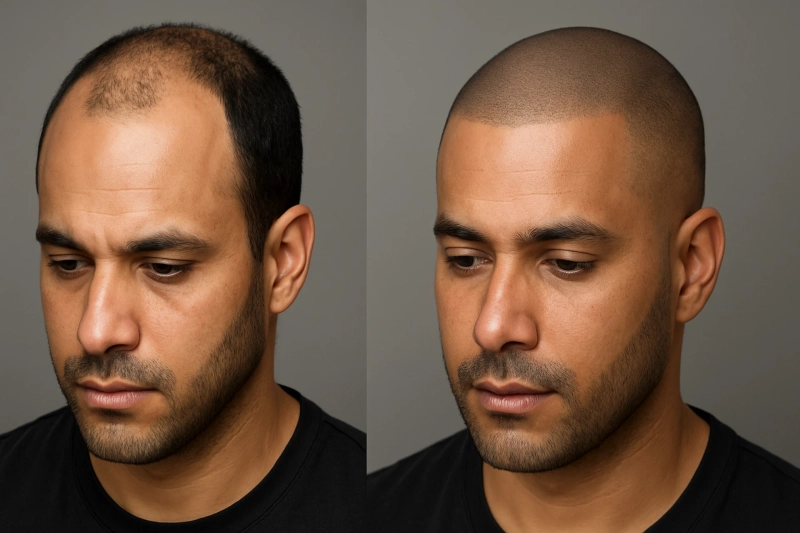
Scalp micropigmentation (SMP) places micro-dots in the scalp that look like shaved hair follicles. For men who like a close cut, a micropigmentation hairline recreates a clean, age-appropriate edge and uniform “stubble” across the scalp. For those keeping some length, SMP is placed between strands to reduce the contrast of visible scalp—making hair look thicker in harsh lighting or photos.
Why men choose SMP
- Immediate cosmetic impact after session one
- No surgery or donor limitations
- Sweat-proof, swim-proof, and camera-ready
- Precision hairline design that flatters face shape
What natural looks like: A soft, slightly irregular hairline with graduated density (no perfect ruler-straight edges). Pigment tone matches your complexion; dot size and spacing mimic real follicles. Always ask to see healed results in different lighting.
Micropigmentation for Scars: Camouflage That Complements Transplants
If you’ve had a transplant, SMP can supercharge results by creating the perception of more density between grafts. It’s also excellent for micropigmentation for scars:
- FUT (linear) scars: Micro-dots match the surrounding stubble so the line blends with the rest of the scalp.
- FUE (dot) scars: Pigmentation evens tone and reduces the “polka dot” effect in buzzed cuts.
- Injury/surgical scars: SMP softens hard edges and color mismatch so skin reflects light more uniformly.
Because scar tissue differs from normal skin, choose an artist with specific scar experience and ask about test patches.
What to Expect: Sessions, Healing, and Care
Typical plans include 2–4 sessions spaced 7–14 days apart:
- Design & mapping: Hairline mock-up, pigment testing, and coverage plan.
- Foundation pass: A light layer to set tone and placement.
- 3–4. Density building: Layered sessions deepen realism and balance in multiple lighting scenarios.
Aftercare: Keep the scalp dry and sweat-free for several days; avoid sun while healing; use SPF moving forward; don’t pick or scratch. Results last years; minor refreshes keep tone perfect as skin naturally exfoliates.
Combine Approaches for Best Results
The most satisfied clients combine appearance and biology:
- Use medical therapies (if appropriate) to slow shedding.
- Maintain natural treatments for hair (nutrition, scalp hygiene, sleep) to support quality.
- Add SMP for a sharp micropigmentation hairline and enhanced density—especially powerful if your donor hair is limited or you want instant results.
- If you already had surgery, consider micropigmentation for scars and between-graft blending to elevate the final look.
Think of SMP as the finishing tool that makes every other step look better—on camera, under bright lights, and from every angle.
How to Choose the Right Practitioner
- Portfolio depth: Healed results for hairline design and scar work—across multiple skin tones.
- Safety & hygiene: Single-use needles, aseptic protocols, and informed consent.
- Color science: Ability to tailor tone to your undertone and anticipate how it will heal.
- Consultation quality: Realistic expectations, hairline options, and written aftercare.
- Reputation: Verified reviews that mention naturalism and long-term satisfaction.
The Takeaway
Modern male hair restoration is a toolkit. Natural habits and medical care can support hair health, but visual density often decides how confident you feel day to day. Scalp micropigmentation delivers that density with a customizable micropigmentation hairline, and micropigmentation for scars polishes transplant outcomes or conceals old marks. Choose a skilled practitioner, keep your scalp healthy, and combine strategies thoughtfully—the result is a stronger, more youthful appearance that holds up in real life and on camera.