



The global healthcare sector continues to undergo a rapid transformation, with diagnostic imaging emerging as one of the key pillars of modern medicine. At the heart of this transformation lies Magnetic Resonance Imaging (MRI) — a powerful, non-invasive imaging technique that has redefined how clinicians visualize internal body structures. Known for its precision, safety, and versatility, MRI technology is revolutionizing diagnostics across multiple medical disciplines.
As medical facilities increasingly adopt advanced imaging systems to improve clinical accuracy, the Magnetic Resonance Imaging Market is witnessing robust expansion worldwide. Driven by technological innovation, the rising prevalence of chronic diseases, and growing healthcare investments, MRI systems are playing a vital role in shaping the future of personalized and preventive medicine.
Magnetic Resonance Imaging Market Outlook 2035
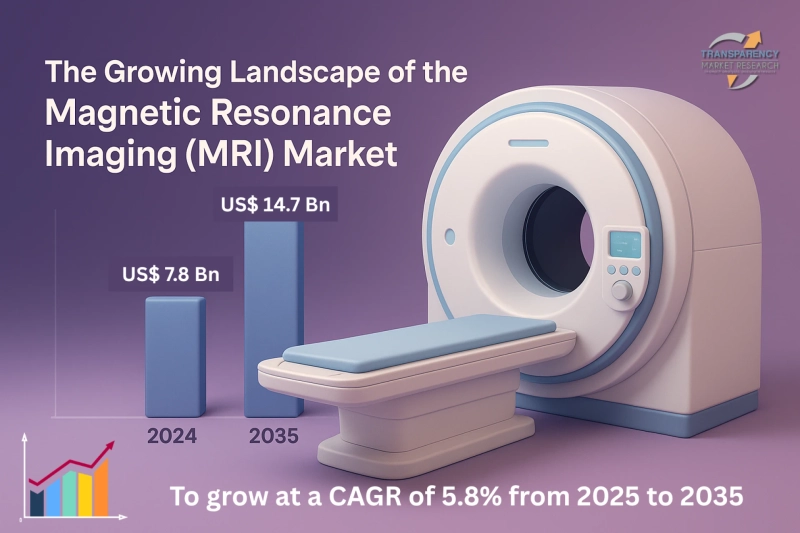
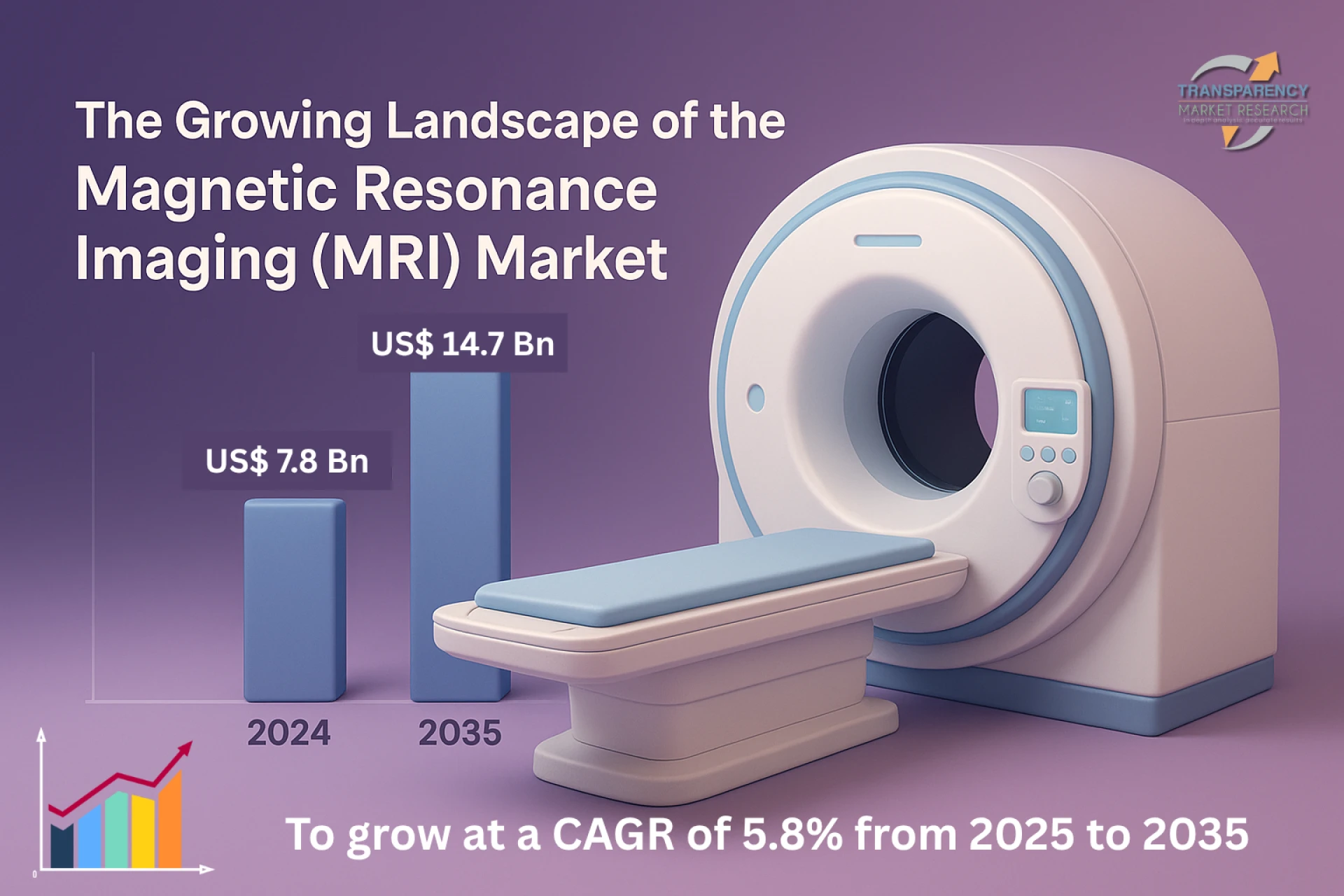
The global magnetic resonance imaging industry was valued at US$ 7.8 Bn in 2024. It is projected to grow at a CAGR of 5.8% from 2025 to 2035 and reach US$ 14.7 Bn by the end of 2035.
This upward trend highlights the growing importance of MRI as an essential diagnostic tool. Factors such as the increasing burden of neurological and cardiovascular disorders, the shift toward early disease detection, and the development of high-performance MRI systems are contributing to sustained market growth.
Sample Research Report Copy- https://www.transparencymarketresearch.com/sample/sample.php?flag=S&rep_id=191
MRI: Redefining the Standards of Diagnostic Accuracy
MRI systems have gained prominence for their ability to produce high-resolution, three-dimensional images of organs and tissues without using ionizing radiation. This makes them safer compared to other imaging modalities like CT scans or X-rays. By leveraging powerful magnetic fields and radiofrequency waves, MRI provides unmatched clarity in detecting abnormalities in soft tissues, the brain, spine, joints, and internal organs.
The technology’s ability to identify even the smallest lesions or structural changes has made it indispensable in detecting life-threatening diseases at an early stage. This is particularly crucial in cancer, neurology, and cardiology, where timely diagnosis can significantly improve treatment outcomes and survival rates.
Furthermore, functional MRI (fMRI) has revolutionized neuroscience by enabling the mapping of brain activity, offering insights into cognitive functions and neurological disorders such as Alzheimer’s, Parkinson’s, and epilepsy.
Technology Innovations Powering MRI Growth
The MRI market has entered a new era of innovation, driven by advancements in imaging software, hardware design, and digital integration. High-field MRI systems (3 Tesla and above) are increasingly preferred for their ability to deliver faster scans and superior image quality. These high-performance systems are particularly beneficial for complex examinations in neurology, oncology, and musculoskeletal imaging.
The integration of artificial intelligence (AI) has further elevated MRI capabilities. AI-driven tools assist radiologists in automating image analysis, enhancing diagnostic precision, and improving workflow efficiency. Machine learning algorithms can detect subtle abnormalities that might escape human observation, thereby supporting faster and more accurate diagnoses.
Additionally, portable and compact MRI systems are opening new avenues in point-of-care imaging. Designed for mobility and accessibility, these systems are particularly useful in emergency rooms, intensive care units, and remote healthcare facilities.
Expanding Applications Across Medical Disciplines
The applications of MRI technology extend across a wide range of clinical specialties:
- Neurology: MRI is indispensable for diagnosing and monitoring conditions like stroke, multiple sclerosis, brain tumors, and spinal cord injuries.
- Cardiology: Cardiac MRI provides detailed insights into heart structure, blood flow, and tissue health, assisting in diagnosing heart failure and congenital defects.
- Oncology: MRI plays a vital role in cancer detection, treatment planning, and assessing therapy response, particularly in breast, brain, and prostate cancers.
- Orthopedics: It helps in evaluating joint injuries, ligament tears, and musculoskeletal disorders with exceptional clarity.
- Gastroenterology: Abdominal MRI scans are increasingly used to identify liver, kidney, and pancreatic diseases non-invasively.
This broad clinical relevance ensures that MRI systems remain in high demand across hospitals, diagnostic centers, and research institutions.
Regional Insights: Growth Across Global Markets
North America continues to dominate the MRI market, led by the U.S., where advanced healthcare infrastructure, strong reimbursement frameworks, and continuous technological adoption drive market expansion.
Europe ranks second, with significant growth in countries such as Germany, the U.K., and France. The region’s focus on upgrading imaging equipment and integrating digital technologies into radiology departments is contributing to steady growth.
Asia Pacific, however, is projected to witness the fastest growth rate through 2035. The expansion of healthcare infrastructure in emerging economies like China, India, and Japan, coupled with growing awareness about early disease detection, is fueling MRI adoption. Increasing government investments and medical tourism are also accelerating demand across the region.
Competitive Landscape: Key Market Players
The global Magnetic Resonance Imaging Market is highly competitive, with major companies focusing on product innovation and AI integration. Key players include GE HealthCare, Siemens Healthineers, Philips Healthcare, Canon Medical Systems, and Hitachi Ltd.
These companies are emphasizing the development of high-efficiency MRI systems, cloud-based imaging solutions, and cost-effective models to expand their reach. Collaborations with hospitals and research organizations are enabling continuous improvement in diagnostic precision and operational performance.
Future Outlook: Smarter and More Accessible MRI Solutions
The next decade will mark a shift toward smarter, faster, and more accessible MRI solutions. Artificial intelligence, automation, and cloud-based image sharing will continue to enhance radiology efficiency. Moreover, sustainability and affordability will become central themes as manufacturers aim to reduce operational costs and improve energy efficiency.
Low-field MRI scanners, designed for resource-limited settings, are expected to play a key role in democratizing access to advanced diagnostics globally.
Conclusion
The Magnetic Resonance Imaging Market is poised for a period of transformative growth, bridging technology and healthcare innovation. With the market projected to reach US$ 14.7 Bn by 2035, MRI technology will continue to shape the future of diagnostics through precision, safety, and accessibility.
As AI integration, portable imaging, and patient-centric design become mainstream, MRI systems will not only improve disease detection but also redefine healthcare delivery across the globe. The future of MRI is clear—smarter imaging for healthier lives.