



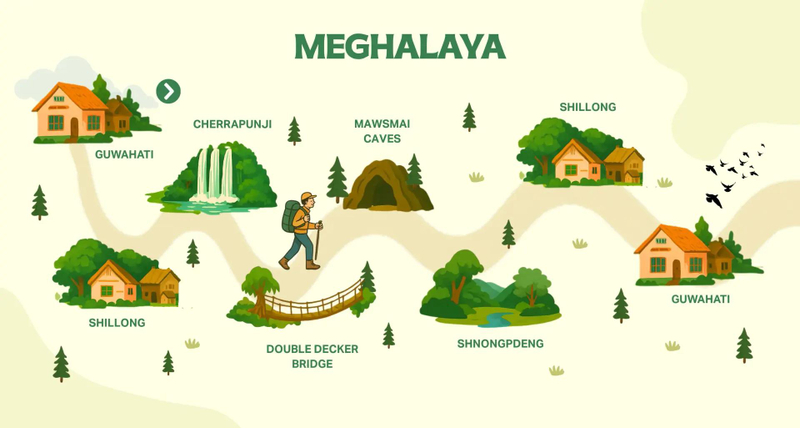
Why Backpacking in Meghalaya is Different
For many travelers, Northeast India is still an uncharted paradise, and a Meghalaya backpacking tour is one of the most soulful adventures you can embark on. Known as the “Abode of Clouds,” Meghalaya offers misty mountains, rain-soaked forests, living root bridges, and some of the warmest communities you’ll ever meet. Unlike commercial tourist circuits, a backpacking journey here is raw, intimate, and filled with surprises—whether it’s hopping into shared sumos with locals, staying in humble homestays, or trekking through trails that feel like passages into another world.
This blog will serve as your complete guide to planning a Meghalaya backpacking trip, blending practical advice with real stories to make your journey both affordable and unforgettable.
Why Choose Meghalaya for a Backpacking Adventure?
If you’ve ever craved a destination where every corner feels like a secret waiting to be discovered, Meghalaya is your place. Here’s why backpackers love it:
- Budget-Friendly Travel: Shared taxis, homestays, and local eateries make this a paradise for travelers on a shoestring budget.
- Nature’s Playground: From caves and canyons to rolling waterfalls, adventure lies around every corner.
- Community and Culture: The Khasi, Jaintia, and Garo tribes bring incredible warmth and unique traditions to your journey.
- Slow Travel at Its Best: Meghalaya’s beauty demands you pause and soak it all in rather than rushing through.
Backpacking in Meghalaya is less about luxury and more about connection—to nature, people, and yourself.
Preparing for Your Meghalaya Backpacking Tour
- Best Time to Visit
October to April: Clear skies, perfect for trekking and sightseeing.
June to September: Lush greenery at its peak during monsoons, but heavy rains may disrupt travel.
Travel Essentials
- Comfortable trekking shoes
- Lightweight rain gear
- Quick-dry clothes
- A reusable water bottle
- Torch and power bank
- Minimal but warm clothing (nights can be chilly)
Budget Breakdown (Per Day Estimate)
- Accommodation: ₹500–₹1,000
- Food: ₹300–₹600
- Local transport: ₹300–₹500
- Extras (entry tickets, activities): ₹200–₹500
Backpackers usually spend between ₹1,200–₹2,000 per day, making Meghalaya one of India’s most affordable adventure destinations.
Reaching Meghalaya on a Budget
Meghalaya doesn’t have a major airport or railway station, so your journey usually begins in Assam.
- By Air: Land at Guwahati Airport. Shared cabs to Shillong cost around ₹500–₹600 per person.
- By Train: Guwahati Railway Station is well connected to major cities. From there, hop into a shared taxi.
- By Road: If you’re already in Assam, shared sumos and buses connect Guwahati to Shillong and other parts of Meghalaya.
For backpackers, the road trip itself becomes part of the adventure—the winding mountain roads, misty pine forests, and little roadside tea stalls all add magic to the journey.
Shillong: The First Stop on Your Backpacking Journey
Most Meghalaya backpacking trips begin in Shillong, the vibrant capital. With its mix of traditional Khasi culture and modern cafes, Shillong is the perfect warm-up before diving deeper into rural Meghalaya.
What to Do in Shillong
- Ward’s Lake: A peaceful retreat in the heart of the city.
- Police Bazaar: Street food, handicrafts, and lively local vibes.
- Shillong Peak & Laitlum Canyon: Stunning viewpoints.
- Cafe Culture: Shillong is India’s rock music capital—don’t miss live performances.
Budget stays like Zostel Shillong or family-run guesthouses start as low as ₹600.
Cherrapunji (Sohra): Rain and Root Bridges
No backpacking in Meghalaya is complete without a trip to Cherrapunji, famous as one of the wettest places on Earth.
Highlights
- Double Decker Living Root Bridge, Nongriat: A tough 3,500-step trek, but the sight is worth every drop of sweat.
- Nohkalikai Falls: The tallest plunge waterfall in India.
- Mawsmai Caves: Natural limestone caves for a bit of thrill.
Backpackers often spend a night in Nongriat village, cut off from the outside world but brimming with warmth and tranquility.
Dawki and Shnongpdeng: Crystal Rivers and Campsites
Located near the Bangladesh border, Dawki offers an experience you’ll never forget.
- Umngot River: Famous for its glass-like water where boats appear to float on air.
- Camping by the River: Shnongpdeng village has riverside tents and bamboo huts for under ₹700.
- Adventure Sports: Kayaking, cliff jumping, and zip-lining are all available for thrill-seekers.
This is often the highlight of any Meghalaya backpacking tour, thanks to its mix of serenity and adrenaline.
Mawlynnong: Asia’s Cleanest Village
If cultural immersion is your style, Mawlynnong is a must-visit.
- Learn how villagers maintain cleanliness and sustainability.
- Stay in a homestay to enjoy Khasi hospitality.
- Walk on bamboo skywalks for panoramic views of Bangladesh.
For backpackers, it’s an eye-opening experience in how communities live in harmony with nature.
Beyond the Tourist Trail: Hidden Treasures for Backpackers
Meghalaya is full of offbeat destinations, perfect for those who love slow travel and discovery.
- Laitlum Canyon: Known as the “End of the World,” offering breathtaking views.
- Krang Suri Falls: A turquoise pool tucked away from crowds.
- Mawphlang Sacred Forest: A mystical forest guarded by Khasi traditions.
- Garo Hills: Less visited but filled with unique landscapes and culture.
These spots turn your Meghalaya backpacking trip into a personal adventure, far from the mainstream.
Food and Culture: A Backpacker’s Delight
Traveling is incomplete without tasting local food.
- Jadoh: Rice cooked with pork, a Khasi specialty.
- Dohneiiong: Pork cooked with black sesame seeds.
- Tungrymbai: Fermented soybean dish.
- Street Food in Shillong: Momos, chowmein, and hot tea stalls make for quick, cheap meals.
Backpackers also love Meghalaya for its respect toward sustainable living—plastic bans, community cleanliness, and eco-friendly practices are common here.
Tips for Backpackers in Meghalaya
- Travel in Groups: Helps reduce costs in shared taxis.
- Stay Local: Opt for homestays or hvillages have strict rules about plastic and waste.
- Be Prepared for Rain: Even in the ostels for authentic experiences.
- Respect Traditions: Many dry season, sudden showers are common.
- Take Your Time: Meghalaya is best enjoyed slowly—don’t rush your journey.
Conclusion: Finding Yourself in the Abode of Clouds
A Meghalaya backpacking tour is not just a trip—it’s an immersion into a land where clouds kiss the hills, rivers shine like glass, and people live in deep connection with their surroundings. Backpacking here means giving up comfort for authenticity, trading luxury for connection, and embracing a journey that feels both grounding and liberating.
Whether it’s trekking to the living root bridges, camping by Dawki’s river, or learning from the people of Mawlynnong, Meghalaya leaves an imprint on your soul. For those who truly want to travel rather than just visit, Meghalaya isn’t just a destination—it’s an experience you’ll carry with you forever.