



Introduction
A loan management system (LMS) is a specialized software platform that automates, manages, and streamlines the entire lifecycle of loans. From application to disbursement, repayment tracking, collections, and reporting, a robust LMS enables banks, credit unions, microfinance institutions, fintech companies, and non-bank lenders to operate efficiently and reduce manual workloads.
In today’s fast-paced financial environment, borrowers demand quick approvals, clear communication, and transparency. Traditional manual processes involving spreadsheets and paper documentation are error-prone, slow, and inefficient. A loan management system replaces these methods with a centralized digital platform that ensures accuracy, compliance, and operational efficiency.
This guide provides a detailed overview of a loan management system, its features, benefits, workflow, implementation best practices, and emerging trends in the lending industry.
What Is a Loan Management System?
A loan management system is an integrated software solution designed to manage all aspects of loan administration. Unlike traditional tools, an LMS consolidates tasks into a single platform, including:
- Loan application processing
- Credit assessment and scoring
- Document management and verification
- Disbursement and repayment tracking
- Compliance reporting and auditing
- Customer communication
- Analytics and portfolio monitoring
Modern LMS platforms integrate with core banking systems, accounting software, credit bureaus, and customer relationship management (CRM) tools. This centralization enables lenders to reduce errors, improve decision-making, and provide a superior borrower experience.
Why Lenders Need a Loan Management System
A loan management system addresses several challenges faced by lenders:
- Operational Efficiency – Automates repetitive tasks such as data entry, repayment calculation, and reporting.
- Accuracy – Reduces manual errors in loan processing, calculations, and documentation.
- Compliance – Ensures adherence to financial regulations, audit requirements, and internal policies.
- Customer Satisfaction – Enables faster approvals, self-service options, and real-time updates.
- Data Centralization – Provides a single source of truth for borrower information and portfolio monitoring.
- Risk Management – Supports better decision-making with integrated credit scoring and analytics.
How a Loan Management System Works
A typical loan management system automates the entire loan lifecycle, following structured steps:
1. Loan Application Submission
Borrowers submit applications via online portals, mobile apps, branch offices, or call centers. The LMS captures personal information, financial details, and supporting documents.
2. Verification and KYC
The system verifies identity documents, income proof, credit history, and eligibility criteria. Integration with credit bureaus ensures accurate, real-time credit checks.
3. Loan Assessment and Underwriting
The LMS evaluates loan applications against pre-defined criteria using automated underwriting rules. Risk scores, repayment capacity, and eligibility are calculated to aid decision-making.
4. Approval and Decisioning
Based on automated or manual evaluation, the system approves, rejects, or escalates applications. Configurable workflows allow different approval hierarchies depending on loan size or type.
5. Document Management
The system securely stores contracts, identification documents, and supporting files. It can generate standardized agreements and enable electronic signatures.
6. Disbursement
Funds are transferred to the borrower or relevant account according to the approved loan terms. The LMS logs all disbursement activity for auditing and reporting.
7. Repayment Tracking
Automated schedules calculate interest, principal, and fees. Notifications and reminders alert borrowers of upcoming payments, reducing delinquency.
8. Collections and Delinquency Management
The LMS identifies overdue accounts, schedules follow-ups, and tracks collection activity to improve recovery rates.
9. Reporting and Analytics
Dashboards provide insights into portfolio performance, risk exposure, repayment patterns, and compliance metrics.
Key Features of a Loan Management System
A robust loan management system includes:
- Multi-Channel Loan Application – Accept applications via web, mobile, branch, or call centers.
- Credit Scoring Integration – Connects with credit bureaus to assess risk.
- Workflow Automation – Configurable approval processes and automated decisioning.
- Document Management – Secure storage, retrieval, and e-signatures for compliance.
- Repayment Scheduling – Automatic calculation of interest, principal, and fees.
- Alerts and Notifications – Reminders for borrowers and staff for payments and approvals.
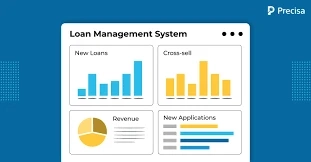
- Analytics and Dashboards – Portfolio insights, risk analysis, and performance metrics.
- Regulatory Compliance – Built-in checks and reporting for audit readiness.
- Security Controls – Role-based access, encryption, and authentication.
Benefits of a Loan Management System
Implementing a loan management system provides multiple benefits:
For Lenders:
- Faster loan processing and approvals
- Improved operational efficiency and productivity
- Reduced human errors and risks
- Enhanced compliance and audit readiness
- Real-time insights into portfolio performance
For Borrowers:
- Transparent application and approval process
- Faster disbursement of funds
- Automatic notifications and reminders
- Access to loan history and statements
- Tailored repayment options
Types of Loan Management Systems
Loan management systems can vary depending on deployment model and organization type:
1. On-Premise LMS
Installed on the lender’s internal servers. Provides full control over data but requires dedicated IT infrastructure.
2. Cloud-Based LMS
Hosted on cloud servers. Offers scalability, lower upfront cost, and remote accessibility.
3. Hybrid LMS
Combines on-premise and cloud deployment to balance control, security, and flexibility.
4. Specialized LMS
Designed for specific loan types (mortgage, auto, SME) with features tailored to industry needs.
Best Practices for Implementing a Loan Management System
- Define Objectives – Identify the specific problems the LMS should solve.
- Evaluate Deployment Options – Decide between cloud, on-premise, or hybrid based on IT capabilities and budget.
- Engage Stakeholders – Include compliance, operations, IT, and credit teams in selection and implementation.
- Pilot Testing – Conduct small-scale testing to identify gaps before full rollout.
- Staff Training – Train employees thoroughly to ensure smooth adoption.
- Monitor KPIs – Track loan processing times, repayment rates, delinquency, and system performance.
- Continuous Optimization – Update workflows and rules as business needs evolve.
Challenges and How to Overcome Them
- Data Migration – Move legacy data carefully with validation checks.
- System Integration – Ensure LMS integrates seamlessly with core banking, accounting, and payment systems.
- Regulatory Compliance – Configure the LMS to comply with local and international regulations.
- User Adoption – Provide training and change management support to staff.
Future Trends in Loan Management Systems
- AI and Machine Learning – Predictive analytics for credit scoring and risk detection.
- Mobile Access – Mobile apps for borrowers and lenders for real-time updates.
- Blockchain – Secure loan agreements and tamper-proof records.
- Robotic Process Automation (RPA) – Automate repetitive tasks like data entry and document verification.
- Advanced Analytics – Real-time dashboards for portfolio monitoring, risk management, and strategic planning.
Conclusion
A loan management system is a vital tool for modern lending institutions. By automating workflows, ensuring compliance, enhancing borrower experience, and providing real-time portfolio insights, LMS platforms help lenders operate efficiently, reduce errors, and compete effectively in today’s financial landscape.
From small-scale microfinance operations to large banks and fintech platforms, adopting a robust loan management system streamlines operations, improves risk management, and enables faster, transparent, and more accurate loan processing. With AI, mobile capabilities, cloud deployment, and advanced analytics, LMS solutions continue to evolve, making them indispensable for any lender aiming for operational excellence and superior customer service.