



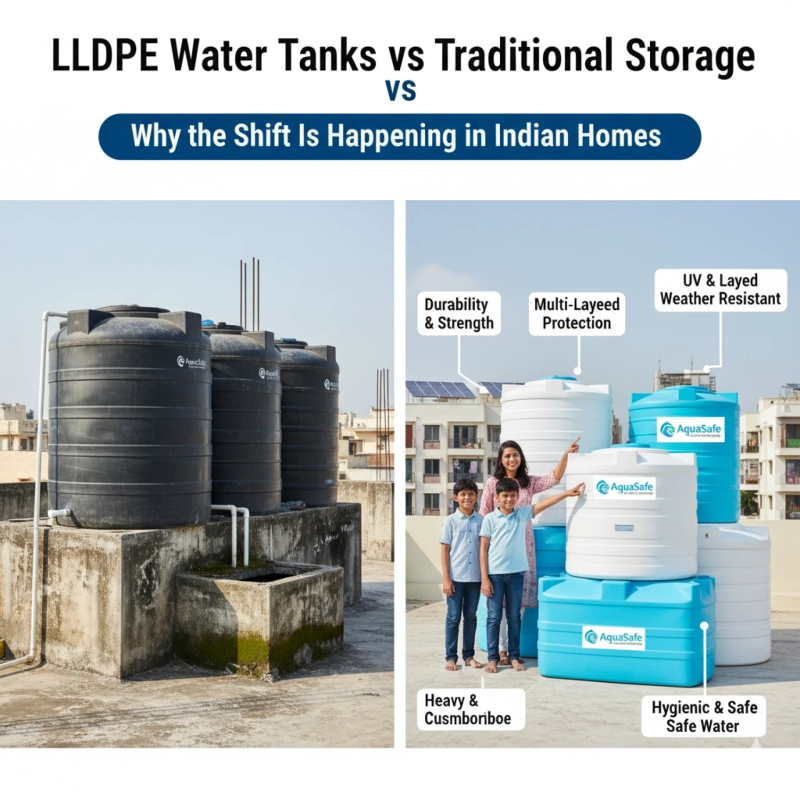
In Indian households, storing water safely and reliably has always been a concern—from monsoon rains to erratic municipal supplies. Historically, many homes have relied on metal tanks, concrete reservoirs, or simple overhead water cisterns. However, there is a strong shift towards modern plastic storage solutions, particularly the use of LLDPE water tanks. This transformation is driven by changing lifestyles, building constraints, hygiene awareness, and material technology.
Here we explore why LLDPE (Linear Low-Density Polyethylene) water tanks are increasingly preferred over traditional storage options, and what this means for Indian homes today.
What are Traditional Storage Options?
Traditional water storage in Indian homes typically falls into two categories:
- Metal tanks (stainless steel, galvanised steel, mild steel) fixed on rooftops or terraces.
- Concrete tanks/terraces built into the structure or separate masonry reservoirs.
While both have served their purpose for decades, they come with drawbacks: corrosion in metal, leakage or crack-formation in concrete, heavy weight, complicated installation, maintenance, and hygiene risks.
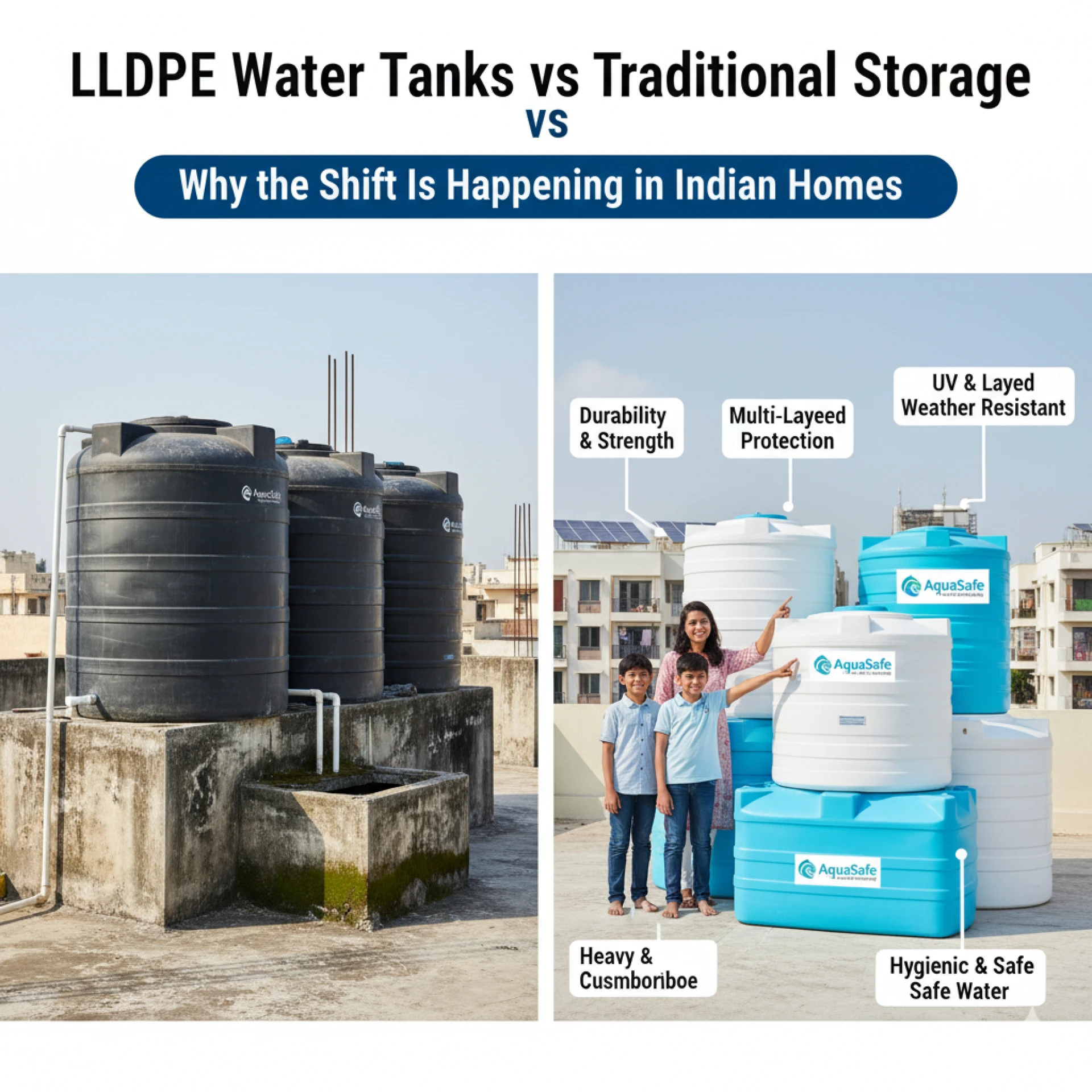
Enter LLDPE Water Tanks: What are they?
LLDPE water tanks are made from Linear Low-Density Polyethylene polymer, used in rotational moulding to create seamless containers. As described by manufacturers: “LLDPE ... is a substantially linear polymer with significant numbers of short branches …”
Key features of LLDPE tanks include resistance to corrosion, chemical attack, UV degradation, and many are food-grade safe for potable water.
Why Are Indian Homes Shifting to LLDPE Tanks?
1. Corrosion-free & Hygienic
Unlike metal tanks which may rust, leach metallic particles, or require regular treatment, LLDPE tanks remain non-corrosive and maintain water quality. Experts note that plastic tanks are “rust-proof compared with steel tanks and less prone to leakage compared with concrete tanks.”
2. Lightweight & Easy to Install
LLDPE tanks are much lighter in weight compared to metal or concrete. That means easier transport, simpler rooftop installation (especially in older buildings), and less structural burden.
3. Durability & Maintenance-friendly
With seamless moulding, UV stabilisation, food-grade polymer use, and multi-layer options (e.g., 3-layer, 4-layer, 5-layer) for thermal insulation, LLDPE tanks are built to last with minimal upkeep.
4. Better Thermal & Weather Performance
In Indian summers, rooftop tanks get very hot. Some LLDPE tank variants include foam insulation between layers to reduce heat transfer and maintain cooler water.
5. Cost Effectiveness & Space Efficiency
Because of their ease of installation and less structural support needed, and lower maintenance costs, LLDPE tanks offer attractive value for Indian homes, particularly flats and urban settings.
6. Hygiene & Safety for Drinking Water
With urban supply becoming more unpredictable, the need for hygienic domestic storage is elevated. LLDPE tanks often use food-grade polymer materials safe for potable water.
Traditional Tanks: What Are Their Limitations?
- Metal tanks: Susceptible to corrosion, heavy, potential for rust, may require periodic painting or anti-corrosive treatment.
- Concrete tanks or masonry reservoirs: Heavy, prone to cracks, seepage, algae growth, difficult to clean, long installation time and higher structural burden.
- All these may incur higher maintenance costs, more frequent repairs, and may compromise water quality over time.
Choosing the Right LLDPE Tank: What to Look For?
For homeowners making the shift to plastic storage tanks, there are a few important attributes to check:
- Capacity vs usage: Select size appropriate to family size and water usage.
- Material quality: Look for virgin LLDPE, UV-stabilised and food-safe inner core.
- Number of Layers / insulation: For hotter climates or rooftop installation, 3-/4-/5-layer tanks with foam insulation perform better.
- Finish & build quality: Seamless moulding, heavy-duty lids, strong wall thickness, good aesthetics.
- Manufacturer/brand reliability: Reputation, warranty, service network matter, especially for long-term use.
- Installation & maintenance ease: Ensure flat base, accessibility for cleaning, safe connections.
How This Shift Impacts Indian Homes & Environment
The widespread adoption of LLDPE water tanks is not just about material choice—it reflects broader trends:
- Urban constraints: With rooftop space limited and structural loads critical, lighter tanks are advantageous.
- Water security & hygiene: In areas with erratic supply, reliable storage with safe material becomes essential.
- Sustainability: Plastic tanks (especially high-quality ones) reduce the need for heavy infrastructure, require less energy for manufacture/maintenance, and mitigate many issues of older systems.
- Modern lifestyle compatibility: Flats, high-rises, retrofits—LLDPE tanks fit modern home designs better than bulky metal/concrete tanks.
Conclusion
In the comparison of traditional storage tanks versus LLDPE water tanks, the latter offers emerging homeowners a compelling value proposition: durability, hygiene, ease of installation, lower maintenance, and compatibility with modern infrastructure. As Indian homes evolve—whether in metros or semi-urban locations—the shift makes practical, economic, and environmental sense.
For those looking at upgrading their water storage system, considering an LLDPE tank is a smart step. It aligns with the demands of modern living, accepts less compromise, and supports safe water supply in a sustainable way.