



End of the day. Office lights too bright. Still thinking about conversations that didn’t finish cleanly.
People don’t walk in saying they want anxiety depression counseling. They never say it that way. They say they’re tired. Or wired. Or that their chest won’t settle even when nothing’s technically wrong. Sometimes they just sit down and go quiet.
That’s usually when I know it’s been building for a while.
Anxiety and Depression Don’t Stay Contained
Anxiety isn’t always panic. Most of the time it’s subtle. Overthinking texts. Reading tone into silence. Waiting for something bad to happen even during normal moments.
Depression doesn’t always look heavy either. Sometimes it’s flat. Low energy. Cancelling plans without a reason that makes sense.
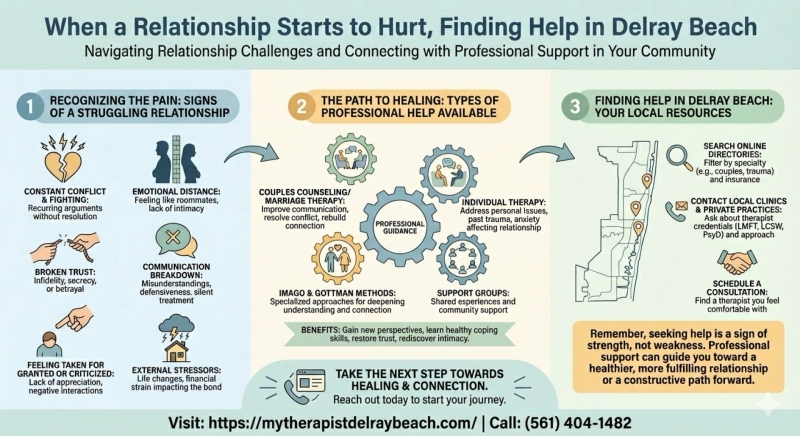
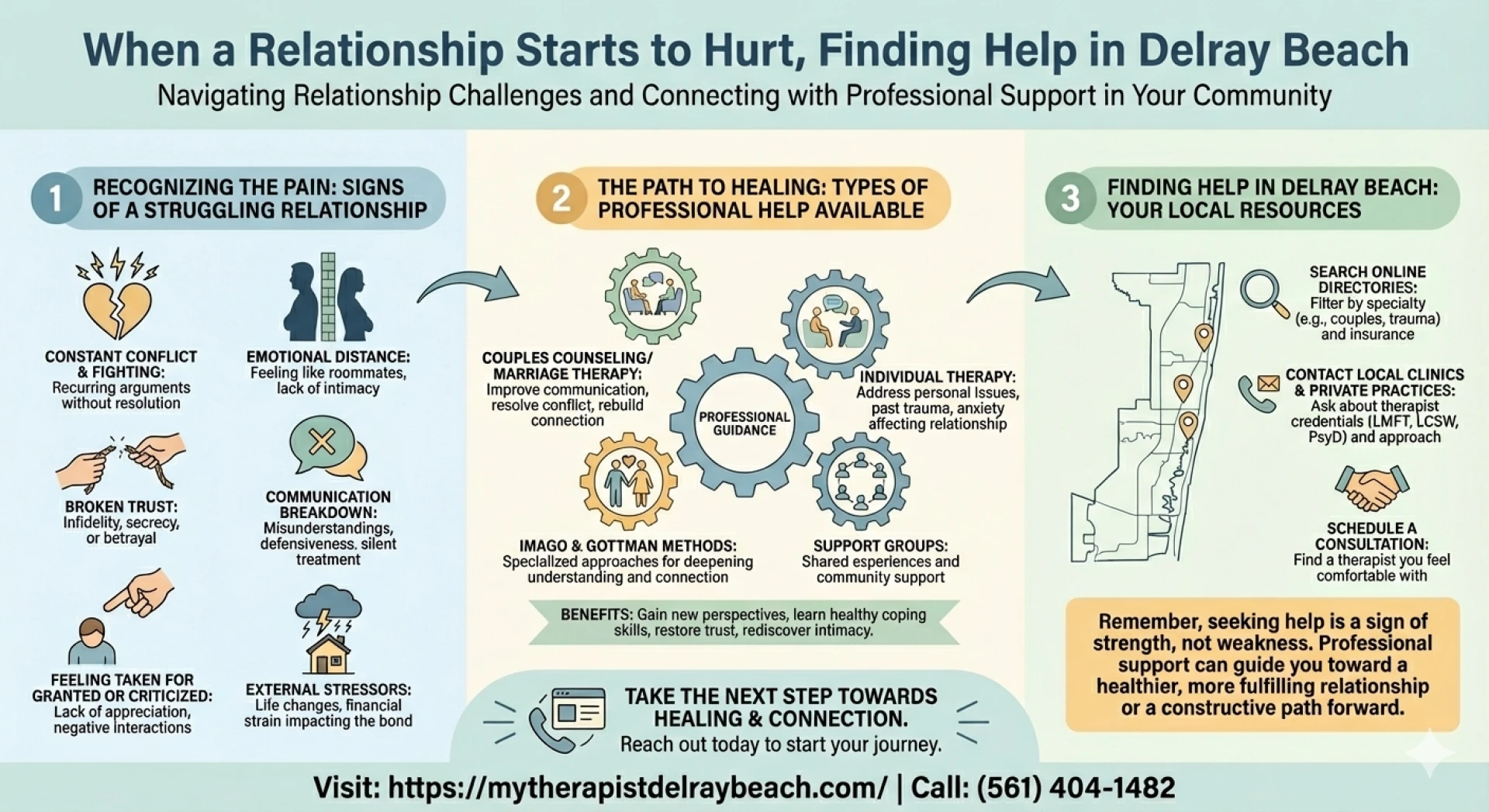
A lot of people land here after searching for a therapist delray beach late at night. Or after finally clicking on a delray beach psychologist profile and staring at it for twenty minutes before booking.
Not because they’re broken. Because whatever they’ve been carrying stopped fitting quietly.
Sometimes we talk about the body first. Breath. Tightness. Heart rate. Things people usually ignore. That’s where interoceptive therapy can be useful. It’s not deep or dramatic. It’s noticing what’s already happening instead of fighting it. Feels awkward at first. Almost pointless. Until it isn’t.
Trust Issues Rarely Start Where People Think
Most assume trust problems only come from betrayal. That’s not always true. I’ve seen them grow from inconsistency. From emotional absence. From being told one thing and shown another, over and over.
People type trust issues in relationship because they don’t know how else to frame it. What they’re really asking is how to deal with trust issues in a relationship without feeling paranoid or controlling.
There isn’t a switch for that.
Learning how to get over trust issues in a relationship takes time and repetition. Safety isn’t created by reassurance. It comes from predictability. From patterns that hold up under stress.
That’s why trust issues therapy or therapy for trust issues isn’t about making someone less cautious. It’s about helping them feel steady enough to respond instead of react. About learning how to overcome trust issues without losing yourself in the process.
When Cheating Enters the Room
Everything shifts.
Cheating scrambles memory. People replay conversations. They question their instincts. They stop trusting their own reactions. That’s usually when someone starts searching for therapy for cheating spouse or counseling for cheating, not knowing what outcome they want yet.
In cases involving cheating husband counseling or cheating husband therapy, there’s often a lot of defensiveness at first. Apologies come fast. Accountability comes slower. A skilled cheating therapist doesn’t rush repair. Pushing forgiveness too early usually backfires.
Cheating therapy is uncomfortable. It has to be. Avoiding hard truths keeps things stuck.
Some couples look into marriage counseling for cheating husband or marriage counseling for cheating hoping it will give them a clear answer. Stay or go. It doesn’t always do that. What it does offer is clarity about what’s actually possible.
Couples Stuck Between Staying and Leaving
Infidelity doesn’t automatically end relationships. But it forces honesty. Quickly.
People explore couples therapy cheating when conversations keep looping or turning explosive. Others quietly wonder about how to fix a broken marriage without counseling, hoping effort alone will be enough.
Sometimes it is. Often it isn’t. Not because people don’t care, but because emotions drown out intention.
Support doesn’t create effort. It organizes it.
Finding Support That Actually Fits
Not everyone finds the right help nearby. Some expand their search to therapists in west palm beach fl when local options don’t feel right. Others type infidelity therapist near me because distance matters when everything already feels unstable.
Fit matters more than credentials. Feeling heard matters more than technique.
And when cost becomes an issue, people look into free online therapy counseling or free online therapy just to have somewhere to start. Free resources aren’t a replacement for deeper work, but they can help someone feel less alone on a hard night.
Final Thoughts
Anxiety, depression, trust issues, cheating—they overlap more than people expect. They feed each other. They wear people down quietly.
If any of this feels familiar, it doesn’t mean you failed. It means you noticed something wasn’t working anymore. Support isn’t about fixing yourself. It’s about understanding what you’re carrying and deciding what happens next.
FAQs People Usually Ask (But Hesitate to Say Out Loud)
How do I know if therapy is actually helping?
Progress usually shows up quietly. Fewer emotional spikes. Clearer boundaries. Better sleep. If sessions feel uncomfortable but grounding instead of chaotic, that’s often a good sign. Therapy isn’t about constant relief—it’s about building stability over time.
Can trust really be rebuilt after cheating?
Sometimes. Not always. Rebuilding trust requires consistency, accountability, and patience from both people. Apologies alone don’t restore safety. Behavior over time does. Therapy helps clarify whether repair is realistic or whether separation is healthier.
What if my partner refuses to participate?
This happens a lot. Individual work can still be valuable. One person changing how they respond often shifts relationship dynamics. Therapy isn’t about dragging someone else in—it’s about strengthening your own footing first.
Are online therapy options actually useful?
They can be, especially as a starting point. Online support offers accessibility and privacy. While it may not replace in-person work for everyone, it can provide coping tools, perspective, and emotional grounding when other options aren’t available.