



When Jennifer moved into her first apartment three months ago, she knew absolutely nothing about lighting. Like most people, she assumed all light bulbs were basically the same – you screwed them in, flipped a switch, and hoped for the best. Her landlord had left behind some flickering overhead fixtures that made her cozy studio feel like a subway station, but she had no idea what to do about it. "I don't even know what questions to ask," she confided to her friend over coffee. "Smart lights? LED? What does any of that even mean?"
If Jennifer's confusion sounds familiar, you're not alone. Lighting technology has changed dramatically in recent years, but most of us never got the memo explaining what any of it means or why it matters. Let's change that.
## Starting at the Very Beginning: What Actually IS an LED?
Before we dive into ceiling lights, let's start with the absolute basics. LED stands for "Light Emitting Diode" – but honestly, you don't need to remember that. What you DO need to know is that LEDs are simply a completely different way of making light compared to the old-fashioned bulbs your parents used.
Think of it this way: old incandescent bulbs worked like tiny space heaters. They got so hot that they glowed, and that glow produced light. It was incredibly wasteful – most of the energy went into heat, not light. LEDs work more like tiny computers. They use electricity to create light directly, without all that wasted heat.
Jennifer discovered this difference when she accidentally touched a traditional bulb that had been on for an hour – "Ouch!" – then touched an LED bulb under the same conditions. The LED was barely warm. That's your first clue that LEDs are fundamentally different and better.
Why Should You Care About LEDs?
Here's the simple truth: LEDs will save you money, last longer, and give you better control over your home's lighting. Let's break that down:
Money Savings: An LED bulb uses about 75% less electricity than an old-style bulb. If your electric bill is $100 per month, switching to LEDs could save you $15-25 monthly just on lighting costs.
Longer Life: A good LED bulb lasts 15-25 years with normal use. You'll literally buy fewer light bulbs over your lifetime.
Better Light: LEDs can be dimmed smoothly, don't flicker, and come in different "colors" of white light (more on this in a moment).
Cooler Operation: LEDs don't heat up your rooms the way old bulbs did, which means your air conditioning doesn't have to work as hard in summer.
Jennifer's "aha moment" came when she calculated that her five main light fixtures were costing her about $30 per month to operate with the old bulbs. After switching to LEDs, that dropped to under $8 per month. "I wish someone had told me this years ago," she said.
Understanding "Smart" Lights: It's Easier Than You Think
The word "smart" makes many people nervous, conjuring images of complicated technology and confusing setup processes. But smart lights are actually incredibly simple once you understand what they do.
A smart light is just an LED light that connects to your home's Wi-Fi network. Once connected, you can control it with your smartphone instead of (or in addition to) the wall switch. That's it. No advanced computer science degree required.
Here's what smart lights let you do that regular lights can't:
Control from anywhere: Turn lights on or off from your phone, whether you're in bed, at work, or on vacation.
Dimming without special switches: Make any light brighter or dimmer using an app, even if you don't have dimmer switches installed.
Scheduling: Set lights to turn on automatically at sunset or turn off at bedtime.
Voice control: If you have Alexa, Google Assistant, or Siri, you can control lights with simple voice commands like "turn on the living room lights."
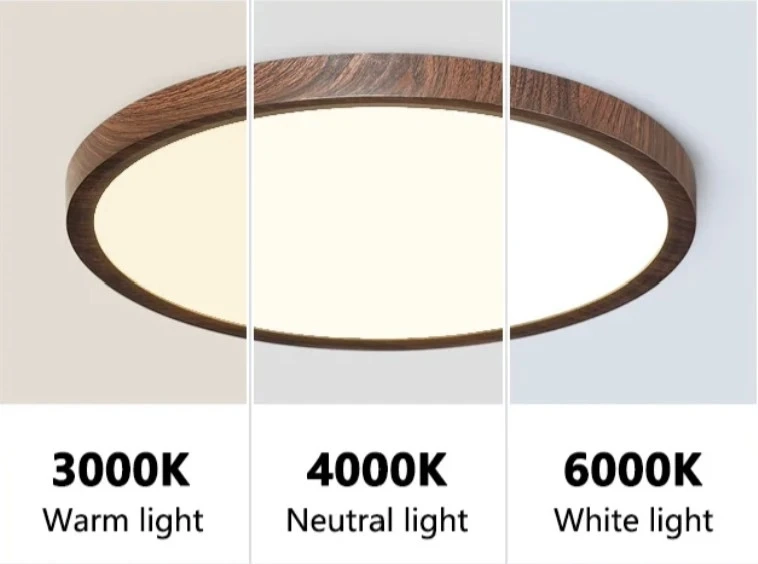
Different colors of white: This might sound weird, but white light actually comes in different "temperatures" – some whites look warm and cozy, others look bright and energizing.
Jennifer was skeptical at first. "I can barely figure out my TV remote," she laughed. But after her friend helped her set up her first smart bulb, she was amazed. "I just say 'Alexa, dim the bedroom lights' and they dim. It feels like living in the future, but it's so simple."
Ceiling Lights vs. Other Types: Why Ceiling Lights Matter
You might wonder: why focus specifically on ceiling lights when there are so many types of lighting available? Great question!
Ceiling lights are what designers call "ambient lighting" – they provide the basic, overall illumination for a room. Think of them as the foundation of your room's lighting. Without good ceiling lights, table lamps and other fixtures are just fighting an uphill battle against darkness.
Smart minimalist LED ceiling lights are particularly valuable because they're usually the main light source in most rooms. When you walk into a room and flip the wall switch, you're typically controlling the ceiling light. Making that light smart and efficient affects how you experience the room every single day.
Plus, ceiling lights are often the hardest to change bulbs in – they're up high, sometimes requiring ladders. LED ceiling lights that last 20+ years mean you'll almost never need to deal with changing bulbs again.
Demystifying Light "Temperature": Warm vs. Cool
This concept confuses almost everyone at first, but it's actually simple once you see it in action. When people talk about light "temperature," they're not talking about how hot the bulb gets. They're talking about the color of the white light.
Here's the easiest way to understand it:
Warm light (2700K-3000K): Think candlelight or sunset. It has a slightly yellow or orange tint and feels cozy and relaxing. Great for bedrooms, living rooms, and dining rooms.
Cool light (4000K-6500K): Think bright daylight or office lighting. It's crisp, white light that helps you stay alert and see details clearly. Great for kitchens, bathrooms, and home offices.
The numbers (like 2700K) are just a way to measure this. Lower numbers = warmer/more yellow. Higher numbers = cooler/more white.
Jennifer tested this by buying two identical lamps – one with warm LED bulbs, one with cool LED bulbs. "The difference was incredible," she said. "The warm light made my living room feel like a cozy café. The cool light made it feel like I could perform surgery in there."
Most smart LED ceiling lights can actually change their temperature throughout the day – warm and cozy in the evening, bright and energizing in the morning.
Shopping for Your First LED Ceiling Light: The Simple Checklist
Walking into a store (or browsing online) to buy LED ceiling lights can feel overwhelming. Here's a simple checklist to make it manageable:
1. Measure your room: For ceiling lights, you want the fixture diameter (in inches) to roughly equal the length plus width of your room (in feet). So a 12x10 foot room would suit a 22-inch fixture.
2. Decide if you want smart features**: Ask yourself: "Would I use phone control, voice control, or scheduling?" If yes, look for smart fixtures. If no, regular LED fixtures work great too.
3. Choose your preferred light temperature**: Do you want warm and cozy (2700K-3000K) or bright and crisp (4000K+)? Many smart fixtures let you adjust this, but basic fixtures require you to choose.
4. Check your voltage**: Most homes use standard voltage, and quality fixtures work with both 110V and 260V systems worldwide. Look for fixtures that specify "110-260V" for maximum compatibility.
5. Consider your ceiling height**: Standard 8-9 foot ceilings work with most fixtures. Higher ceilings might need larger fixtures or multiple lights.
6. Think about dimming**: Do you want to be able to make lights brighter or dimmer? Smart fixtures usually include this. Regular fixtures require compatible dimmer switches.
Jennifer used this checklist for her bedroom and ended up with [smart minimalist LED ceiling lights](https://50bulbs.com/product/smart-minimalist-led-ceiling-lights-for-living-room-bedroom-decoration-ceiling-lamp-compatible-with-alexa-ceiling-light-110-260v/) that she can control with her voice. "I never realized how much I'd love being able to dim the lights without getting out of bed," she said.
Installation: Easier Than You Think (But When to Call for Help)
Many LED ceiling lights are designed for easy installation, but it's important to know your limits. Here's the honest truth about DIY installation:
You can probably handle it if
- You're replacing an existing ceiling fixture (not adding a new one)
- You're comfortable using basic tools
- Your home's electrical system is relatively modern
- The new fixture weighs about the same or less than your old one
You should call an electrician if:
- You're adding a new fixture where none existed before
- Your home was built before 1960
- The new fixture is significantly heavier than the old one
- You feel uncertain or uncomfortable at any point
The basic process involves: turning off power at the circuit breaker, removing the old fixture, connecting a few wires (usually just matching colors), and mounting the new fixture. Most quality fixtures include clear instructions with diagrams.
Jennifer opted to hire an electrician for her first installation. "It cost $100, but I learned so much watching him work that I felt confident installing the second one myself," she said.
Common Beginner Mistakes (And How to Avoid Them)
After talking to dozens of people about their first LED ceiling light experiences, I've noticed the same mistakes happening repeatedly:
Buying the wrong size: This is the #1 mistake. A tiny fixture in a big room looks ridiculous and provides inadequate light. A huge fixture in a small room overwhelms the space. Always measure first.
Ignoring existing switches: If you have dimmer switches, make sure your LED fixture is compatible. Not all LEDs work with all dimmers.
Mixing light temperatures: Using warm light (2700K) in one room and cool light (5000K) in an adjacent room creates an uncomfortable contrast. Try to stay consistent in connected spaces.
Forgetting about the ceiling: Very high ceilings need larger fixtures or multiple lights. Very low ceilings need slim, flush-mount fixtures to avoid hitting your head.
Not planning for smart features: If you want smart controls, it's much easier to buy a smart fixture than to try to make a regular fixture smart later.
Skipping the instructions: LED fixtures often have specific installation requirements. Reading the instructions prevents most problems.
Jennifer made the "wrong size" mistake with her first fixture. "I bought this cute little light for my living room, and it looked like a toy hanging from the ceiling. I had to exchange it for something twice as big, and suddenly the room made sense."
Understanding Your Electrical Bill Impact
One of the most compelling reasons to switch to LED ceiling lights is the immediate impact on your electricity bill. Let's look at some simple math that shows why this matters:
Old incandescent ceiling fixture:
- Uses about 300 watts per hour
- Run 5 hours daily = 1,500 watts daily
- Monthly usage: about 45,000 watts (45 kWh)
- Cost: roughly $5-7 per month per fixture
LED ceiling fixture:
- Uses about 50 watts per hour for the same brightness
- Run 5 hours daily = 250 watts daily
- Monthly usage: about 7,500 watts (7.5 kWh)
- Cost: roughly $1-2 per month per fixture
Multiply this by every fixture in your home, and LED ceiling lights can easily save $20-50 per month on electricity bills. Jennifer calculated that her five main fixtures were costing her $35 per month with old bulbs, but only $9 per month with LEDs – a savings of over $300 per year.
Smart Features That Actually Matter for Beginners
Smart LED ceiling lights come with dozens of features, but most beginners only need to understand the basics:
**App Control**: Control lights from your phone. Useful when you're in bed, away from home, or can't reach the wall switch.
**Voice Control**: Works with Alexa, Google, or Siri. Say "turn on the kitchen lights" instead of fumbling for switches.
**Dimming**: Make lights brighter or dimmer without installing special switches.
**Scheduling**: Set lights to turn on at sunset, turn off at midnight, or follow any schedule you want.
**Color Temperature Adjustment**: Change between warm, cozy light and bright, energizing light depending on your mood or time of day.
**Scenes**: Save combinations of brightness and color temperature with names like "Reading," "Dinner Party," or "Movie Night."
Jennifer's favorite feature turned out to be scheduling. "My lights automatically turn on 30 minutes before I get home from work, so I never walk into a dark apartment. And they gradually dim starting at 9 PM to help me wind down for bed."
Living Room vs. Bedroom: Different Needs, Different Choices
While the basic principles of LED ceiling lights apply everywhere, different rooms have different needs:
Living Room Lights:
- Need to be bright enough for activities like reading or cleaning
- Should be dimmable for movie watching or entertaining
- Benefit from adjustable color temperature (bright for daytime, warm for evening)
- Size matters a lot – living rooms usually need larger fixtures
Bedroom Lights:
- Should definitely be dimmable (nobody wants harsh light first thing in the morning)
- Warm light temperature helps with sleep
- Smart controls are extra valuable (control without getting out of bed)
- Consider fixtures that can be very dim for nighttime navigation
Jennifer ended up with different strategies for each room. "My living room has a big, bright smart fixture that I can make super bright for cleaning or dim and warm for movie nights. My bedroom has a smaller fixture that I keep on warm light most of the time, but I can make it brighter when I need to find something."
Troubleshooting Common Issues
Even with the best planning, you might encounter some common issues:
Flickering lights: Usually means the LED fixture isn't compatible with your dimmer switch. Solution: replace the dimmer with an LED-compatible version, or buy a different fixture.
Smart features not working: Check that your Wi-Fi reaches the fixture location. Smart lights need good internet connection to work properly.
Light seems too bright or too dim: LEDs are very efficient, so a 60-watt equivalent LED might seem brighter than your old 60-watt incandescent. Try dimming first before assuming you bought the wrong fixture.
Colors look wrong: This usually means the LED has a low Color Rendering Index (CRI). Look for fixtures with CRI ratings above 80, or preferably above 90.
App won't connect to fixture: Make sure you're connecting to your home's 2.4GHz Wi-Fi network, not the 5GHz network. Most smart lights only work with 2.4GHz.
The Money Question: What Should You Expect to Spend?
LED ceiling light prices vary widely, but here's what to expect for different categories:
**Basic LED ceiling lights (non-smart)**: $30-80
- Good for people who just want efficient, long-lasting light
- Usually include dimming if you have compatible wall switches
- Fixed color temperature (you choose warm or cool when buying)
Mid-range smart LED ceiling lights**: $80-150
- Include smartphone app control
- Usually dimmable without special switches
- May include adjustable color temperature
- Voice control compatibility
Premium smart LED ceiling lights: $150-300+
- Advanced features like color-changing, music sync, or premium materials
- Superior build quality and longer warranties
- Professional-grade light quality
Jennifer started with a mid-range option and was completely satisfied. "I spent about $120 on my living room light, and it does everything I need. I can't imagine needing anything fancier."
Remember: even expensive LED fixtures pay for themselves through energy savings over their 15-25 year lifespans.
## Getting Started: Your First LED Ceiling Light
If you're ready to try your first LED ceiling light, here's the simplest possible approach:
1. Pick one room to start with – probably the room where you spend the most time
2. Measure the room and calculate the fixture size you need
3. Decide if you want smart features – when in doubt, go with smart for maximum flexibility
4. Choose warm light (2700K-3000K) for bedrooms and living areas, or adjustable temperature for maximum flexibility
5. Buy from a reputable retailer that offers easy returns in case you need to exchange sizes
6. Plan for professional installation if you're not comfortable with electrical work
Jennifer's advice for other beginners: "Start with one room and see how much you love it. I guarantee you'll want to upgrade the rest of your house once you experience the difference."
Conclusion: You've Got This!
Six months ago, Jennifer didn't know the difference between an LED and an incandescent bulb. Today, she has smart LED ceiling lights in every room of her apartment, controlled by voice commands and scheduled to match her daily routine. Her electricity bill dropped by $25 per month, her apartment feels more comfortable and beautiful, and she never has to change light bulbs.
"The whole thing seemed so complicated at first," she reflects. "But it's really not. You just need someone to explain it in normal language instead of technical jargon."
The world of LED ceiling lights doesn't have to be intimidating. Start with the basics: LEDs save money and last longer. Smart features add convenience. Different rooms have different needs. Take it one step at a time, and don't be afraid to ask questions.
Whether you're looking to save money, improve your home's comfort, or just finally understand what all the LED fuss is about, you now have the knowledge to make informed decisions. The technology that once seemed complicated is actually designed to make your life simpler.
Your journey toward better lighting starts with a single fixture. Choose one that fits your room size, matches your preferences, and includes the features you'll actually use. Everything else you can figure out as you go.
*For additional insights into how overhead lighting can transform your living spaces, explore the comprehensive guide at Emily Henderson's design blog for professional tips and inspiration.*