



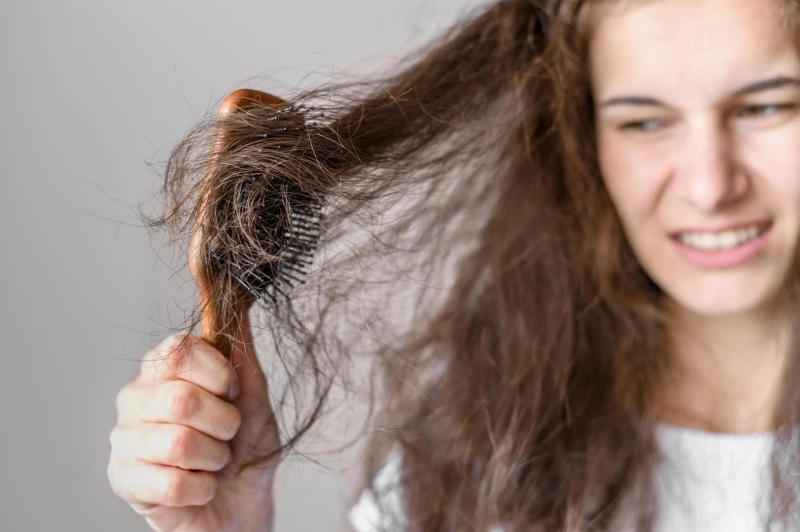
Hair loss affects an estimated 50% of men by age 50 and nearly 40% of women by age 40. Androgenetic alopecia (pattern hair loss) remains the most common cause, but stress, hormonal imbalance, nutritional deficiencies, and medical conditions can also contribute.
With advances in regenerative medicine and light-based technologies, two increasingly discussed hair regrowth solutions are laser hair treatment and platelet-rich plasma (PRP) therapy. Both are non-surgical approaches designed to stimulate hair follicles—but they work in very different ways.
This article provides a scientific, balanced comparison of laser vs PRP for hair loss, including benefits, limitations, and how they compare with traditional hair loss treatment methods.
Understanding Hair Loss: The Biological Background
Hair grows in cycles:
- Anagen (growth phase)
- Catagen (transition phase)
- Telogen (resting phase)
In pattern hair loss, the anagen phase shortens, follicles shrink (miniaturization), and hair becomes thinner over time. Effective hair growth therapy aims to:
- Stimulate dormant follicles
- Prolong the anagen phase
- Improve blood supply and cellular energy
- Reduce inflammation
Laser therapy and PRP approach these goals through different biological pathways.
What Is Laser Hair Treatment?
Laser hair treatment, also known as Low-Level Laser Therapy (LLLT), uses red or near-infrared light (typically 630–680 nm wavelength) to stimulate hair follicles.
How It Works (Scientific Mechanism)
Laser therapy works through photobiomodulation:
- Light penetrates the scalp.
- It is absorbed by cytochrome c oxidase in mitochondria.
- ATP (cellular energy) production increases.
- Blood circulation improves.
- Follicles shift from telogen (resting) to anagen (growth).
Several randomized controlled trials have shown increased hair density in both men and women using LLLT devices consistently over 16–26 weeks.
The treatment is non-invasive and typically performed at home using FDA-cleared devices or in clinical settings.
What Is PRP (Platelet-Rich Plasma) Therapy?
PRP therapy involves drawing a patient’s blood, processing it in a centrifuge to concentrate platelets, and injecting the platelet-rich plasma into the scalp.
How It Works (Scientific Mechanism)
Platelets contain growth factors such as:
- Platelet-derived growth factor (PDGF)
- Vascular endothelial growth factor (VEGF)
- Transforming growth factor (TGF)
When injected into the scalp:
- Growth factors stimulate dermal papilla cells.
- Blood vessel formation increases.
- Inflammation may decrease.
- Hair follicle activity improves.
Research published in dermatology journals suggests PRP can increase hair density and hair shaft thickness after 3–4 treatment sessions spaced about one month apart.
Laser vs PRP: Key Differences
1. Invasiveness
- Laser hair treatment: Non-invasive, painless.
- PRP: Minimally invasive; involves multiple scalp injections.
2. Procedure Type
- Laser: Light-based stimulation.
- PRP: Biological regenerative therapy using your own blood.
3. Frequency of Treatment
- Laser: Typically 2–4 times per week at home.
- PRP: Initial monthly sessions (3–4), then maintenance every 4–6 months.
4. Downtime
- Laser: No downtime.
- PRP: Mild swelling, soreness, or tenderness possible for 1–2 days.
5. Cost Structure
- Laser: One-time device purchase or clinic sessions.
- PRP: Ongoing per-session clinical cost.
Effectiveness: What Does the Research Say?
Both treatments show positive outcomes in early to moderate androgenetic alopecia.
Laser Therapy Evidence
Studies show:
- Increased hair density after 16–24 weeks.
- Improved hair thickness.
- Reduced shedding in some users.
Results depend heavily on consistency and stage of hair loss.
PRP Evidence
Clinical studies report:
- 20–30% increase in hair density in some patients.
- Improved hair shaft diameter.
- Best results in early hair thinning.
However, outcomes may vary depending on preparation methods, platelet concentration, and provider technique.
Comparison With Traditional Hair Loss Treatments
Topical Minoxidil
- FDA-approved.
- Stimulates blood flow and prolongs anagen phase.
- Requires daily use.
- Possible scalp irritation.
Oral Finasteride
- Reduces DHT (hormone responsible for follicle shrinkage).
- Effective for many men.
- Possible systemic side effects.
Hair Transplant Surgery
- Permanent relocation of hair follicles.
- Invasive procedure.
- Higher cost and recovery time.
Compared to traditional methods:
- Laser hair treatment offers a drug-free, non-invasive hair regrowth solution.
- PRP provides a biologically active regenerative approach.
- Both can complement medical treatments rather than replace them.
Pros and Cons
Laser Hair Treatment
Pros:
- Non-invasive
- No injections
- Minimal side effects
- Convenient home use
- Safe for long-term application
Cons:
- Requires ongoing commitment
- Gradual results
- Less effective in advanced baldness
PRP Therapy
Pros:
- Uses natural growth factors
- Clinically supervised
- May improve hair thickness faster in some cases
Cons:
- Injections required
- Potential discomfort
- Variable protocols
- Higher recurring cost
Who Is a Good Candidate?
Laser Hair Treatment May Be Ideal For:
- Individuals with early-stage thinning
- Those seeking non-invasive hair growth therapy
- Patients preferring at-home solutions
- Individuals avoiding medications
PRP May Be Suitable For:
- Early to moderate androgenetic alopecia
- Individuals comfortable with injections
- Those seeking regenerative scalp therapy
- Patients combining with other treatments
Neither option is typically effective for completely bald areas where follicles are no longer active.
Future of Laser Hair Treatment
The field of light-based therapy continues to evolve.
Emerging research focuses on:
- Optimized wavelengths for deeper penetration
- Combination therapies (laser + PRP)
- AI-guided treatment personalization
- Enhanced diode density in devices
- Integration with stem cell research
As photobiomodulation research expands, laser hair treatment is increasingly being studied not only for hair regrowth but also for anti-inflammatory scalp benefits and tissue repair.
The future may involve multimodal hair regrowth solutions combining:
- Laser stimulation
- Regenerative biologics
- Nutritional therapy
- Hormonal modulation
Frequently Asked Questions (FAQs)
1. Is PRP more effective than laser hair treatment?
There is no universal answer. PRP may show faster improvement in some patients, while laser therapy provides consistent, gradual stimulation. Effectiveness depends on individual factors and stage of hair loss.
2. Can laser and PRP be combined?
Yes. Some clinicians combine laser hair treatment with PRP to enhance follicle stimulation and support cellular repair.
3. Are these treatments safe?
Both are generally considered safe when performed correctly. Laser therapy has minimal side effects, while PRP may cause temporary scalp tenderness.
4. How long before results appear?
Laser therapy often requires 4–6 months of consistent use. PRP patients may see improvement after 3–4 sessions over several months.
5. Do results last permanently?
Hair loss is typically progressive. Maintenance treatments are often necessary for both laser and PRP to sustain results.
Final Thoughts
Both laser hair treatment and PRP represent scientifically grounded advancements in non-surgical hair loss treatment. Laser therapy stimulates follicles using light-based cellular activation, while PRP leverages the body’s own growth factors to promote repair and regeneration.
For individuals exploring hair regrowth solutions, the right choice depends on personal preferences, tolerance for procedures, stage of hair loss, and medical history. Consulting a qualified healthcare professional ensures that treatment decisions are based on clinical evaluation rather than trends.
As research progresses, integrated and personalized hair growth therapy approaches are likely to define the next phase of hair restoration science.