



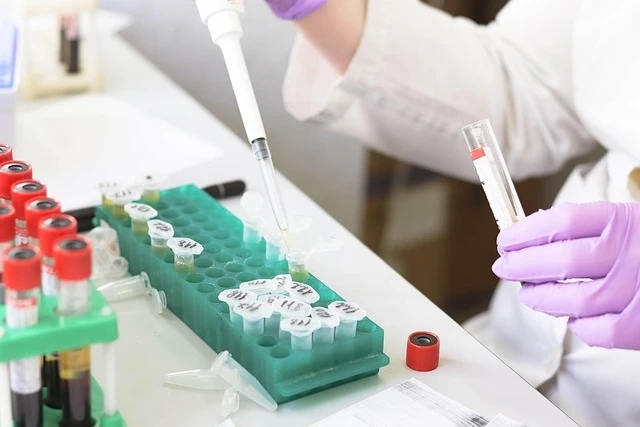
From cryogenic storage to autoclaves and solvent washes, laboratory environments punish ordinary labels. Getting labeling right is about more than neat handwriting; it’s about traceability, specimen integrity, and defensibility when results are audited or shared. This guide covers materials, printing methods, design, and workflow so your labels survive the full journey.
What makes lab labeling hard
Samples move through temperature extremes, centrifugation, water baths, and chemical exposures (ethanol, xylene, bleach). Plastics shrink and expand, condensation forms on cold surfaces, and inks smear. Adhesives can fail if applied at the wrong temperature or if the surface isn’t clean. Meanwhile, space on tubes, slides, and microplates is tight—yet IDs must be both human-readable and machine-scannable.
Materials and adhesives that work
Face stocks.
- Polyester (PET) offers excellent dimensional stability for slides and cassettes and resists many solvents.
- Polypropylene (PP) is flexible for wrap-around vial labels and performs well at low temps.
- Polyimide handles extreme heat; think high-temp processes and long autoclave cycles.
Adhesives.
Use freezer-grade acrylic for cryogenic storage; it bonds at lower application temperatures and resists brittleness. For room-temp workflows with frequent re-positioning, a removable acrylic can prevent residue on reusable assets. Always match adhesive to the application temperature (the temp when you stick it on), not just the storage temp.
Label formats by application
- Vial and microtube wrap-arounds with a clear tail so graduations remain visible.
- Cap-top dots for rack visibility; pair with side wraps so the same ID appears in two views.
- Microscope slide labels sized to avoid cover slip interference.
- Tissue cassettes with chemical-resistant coatings for histology solvents.
- Microplate and deep-well plate labels with alphanumeric edge indexing.
- Freezer box labels for outer faces to speed retrieval without opening every lid.
Printing technologies and ribbons
Thermal transfer is the lab workhorse: durable, smudge-resistant, and compatible with small barcodes. For maximum chemical and abrasion resistance, choose a resin or wax/resin ribbon matched to your face stock.
Direct thermal is convenient but typically not solvent- or heat-resistant and can darken over time.
Laser and inkjet sheets are fine for low-volume batching but require careful toner/ink selection and curing to avoid smearing.
Pro tip: keep a labels + ribbon pairing chart at the printer and lock in those settings as “presets” in the driver so staff can’t accidentally swap to a weaker profile.
Barcodes, symbologies, and sizing
- 1D (Code 128) is compact and widely supported for tubes and slides.
- 2D (Data Matrix or QR) packs more data into less space and scans at oblique angles—ideal for tiny cryo vials.
- Keep quiet zones (blank space around the code) clear.
- Maintain adequate contrast (dark code on light background) and ensure the x-dimension (bar width or module size) fits your scanners at expected distances.
Pair the barcode with minimal but essential human-readable fields: sample ID, collection date/time, and collector initials. Everything else can live in the LIMS.
Design for the real world
- Use bold, sans-serif fonts at 6–8 pt minimum for small tubes; larger for slides and boxes.
- Place the barcode where line-of-sight scanners can see it in racks or on instruments; avoid curves that distort small modules.
- For wrap-arounds, position the start of the label below the cap rim so it doesn’t catch when loading and unloading.
- Color can help, but don’t rely on it alone—keep the text readable in grayscale for photocopies.
Application best practices
Surface prep. Wipe condensation from cold tubes with a lint-free cloth or alcohol swab and let the surface dry completely before labeling. Oils from gloves can weaken adhesion—handle by the edges.
Apply at the right temperature. If possible, bring tubes to room temp for labeling, then return to cold storage. If that’s not feasible, use labels specified for on-wet or on-frozen application.
Firm pressure and full wrap. Press from center outward to eliminate bubbles. For wrap-arounds, overlap fully so edges don’t lift during vortexing or water baths.
Cure time. Some adhesives reach full strength after several minutes; avoid immediate immersion or centrifugation unless the labels are rated for it.
Workflow, LIMS, and pre-barcoded stock
Decide whether to print on demand at accessioning or use pre-barcoded kits staged for common workflows. On-demand printing gives maximum flexibility and integrates smoothly with LIMS merge fields (e.g., {SampleID}, {DateTime}). Pre-barcoded stock speeds surge days and reduces printer bottlenecks.
Where possible, scan to create: generate a specimen record by scanning a pre-printed code and attaching metadata, rather than typing IDs—this cuts transcription errors dramatically.
Quality, compliance, and audits
- Maintain a labeling SOP that covers materials, printer settings, verification steps, and reprint exceptions.
- Include verification at the bench: after application, scan the barcode and confirm it resolves to the correct sample in LIMS.
- Use lot tracking for label rolls and ribbons so you can trace failures to a specific batch.
- Validate new labels across the full process—freezing/thawing, solvents, autoclave, centrifuge—and document results.
- Train new staff with a hands-on labeling station and a pass/fail checklist.
Storage, inventory, and sustainability
Keep label rolls and ribbons in sealed bags away from heat and sunlight; allow them to acclimate to lab conditions before use. Rotate stock (first-in, first-out) and record shelf-life dates. If sustainability is a priority, consider linerless options and recyclable cores where compatible with your printers.
Troubleshooting quick guide
- Peeling or lifting: check application temperature, switch to freezer-grade adhesive, increase wrap overlap.
- Smearing: move from direct thermal to thermal transfer; change to a higher-resin ribbon; increase print darkness and speed balance.
- Scanner failures: increase barcode size, improve contrast, confirm quiet zones aren’t covered by wrap, re-position for line-of-sight.
Bottom line
Durable laboratory labels are a system—materials, adhesives, print technology, design, and a disciplined application workflow. When those elements fit your environment, labels stay readable, scans are instant, and every specimen’s story is traceable from collection to result.