I had been thinking about a trek for months. It started casually during one of those long office breaks when someone mentioned escaping to the mountains. The idea stayed with me, and slowly I began to picture myself away from the desk, walking on trails instead of staring at screens. I started looking at dates, checked with a trek operator, and even began a bit of fitness routine. Waking up earlier, jogging a couple of kilometers, and doing push-ups became part of my mornings. I wanted to be ready. The closer the date came, the more I found myself daydreaming about leaving city noise behind.
The Trail That Drew Me In- Kuari Pass Trek
When I finally sat down to decide, Kuari Pass kept coming up. People called it the “Lord Curzon Trail,” and almost every picture I saw showed sweeping meadows and a backdrop of giant snow peaks. The trek promised forests of oak and rhododendron, quiet campsites, and the chance to see Mt. Nanda Devi up close. It wasn’t too extreme, yet it carried enough challenge to feel like a real Himalayan journey.
I wanted a trek that wasn’t too extreme but still carried the thrill of the Himalayas, and the Kuari Pass, known as an easy-to-moderate trek, seemed like the perfect match.
The Journey to Dehradun
I was supposed to catch a late evening flight to Dehradun. I got stuck in traffic on my way to Delhi Airport, and by the time I reached, the gates had just closed. Annoyed at myself, I grabbed a quick sandwich and decided not to waste the night sulking. I walked out, crossed the busy road, and booked a seat on a Volvo bus.
The bus ride to Dehradun was long but comfortable. I sat next to a fellow passenger who was carrying a giant rucksack. We exchanged a smile but didn’t talk much, both too tired to start a conversation. By dawn, we rolled into Dehradun ISBT.
That morning, Dehradun was alive with food stalls. I stepped out and ordered aloo puri from a street vendor. The warm, spicy taste after a cold bus ride was heavenly. I strolled around, sipping hot chai from a clay cup. By noon, I met the rest of my trekking group. We spent the day in Dehradun, picking up last-minute gear and sharing small stories of why each of us had chosen this trek.
Drive from Dehradun to Joshimath
The next morning, we set out for Joshimath. The drive was long—around 9 to 10 hours. The road twisted along the Alaknanda River, with mountains keeping us company throughout. At one point, our guide, Rakesh, asked us to notice the confluence of rivers at Devprayag, where Bhagirathi and Alaknanda meet to form the Ganga.
Inside the tempo traveler, conversations grew warmer. A girl named Ananya from Bangalore, who worked in tech, asked Rakesh about his years as a guide. He smiled shyly and said, “It’s been ten years. I’ve seen trekkers from all over India, and sometimes they come back with their families too.” I noticed he looked at her a little longer than at others, though none of us thought much about it then.
By the evening, we reached Joshimath. After dinner, we packed our small day bags and left the heavier luggage behind. Tomorrow, we would start walking.
Day 1: Joshimath to Dhak to Gulling Top
The first morning of the trek began with excitement. From Joshimath, we drove about 12 km to Dhak village. The trail started right there. The climb was steady, moving through dusty paths and small houses. Kids waved at us, and women carried firewood on their backs.
The first campsite was at Gulling Top. It was a gentle ascent, about 4–5 km, but enough to make us sweat. By the time we reached, the sun was dipping behind the mountains. That night, while we sat around sipping hot soup, Rakesh told us about his first trek as a porter when he was just sixteen. “Back then,” he said, “I didn’t even have proper shoes. I walked in slippers most of the way.” His story made us all realize how much work goes into making our experience comfortable.
Day 2: Gulling to Khullara Top
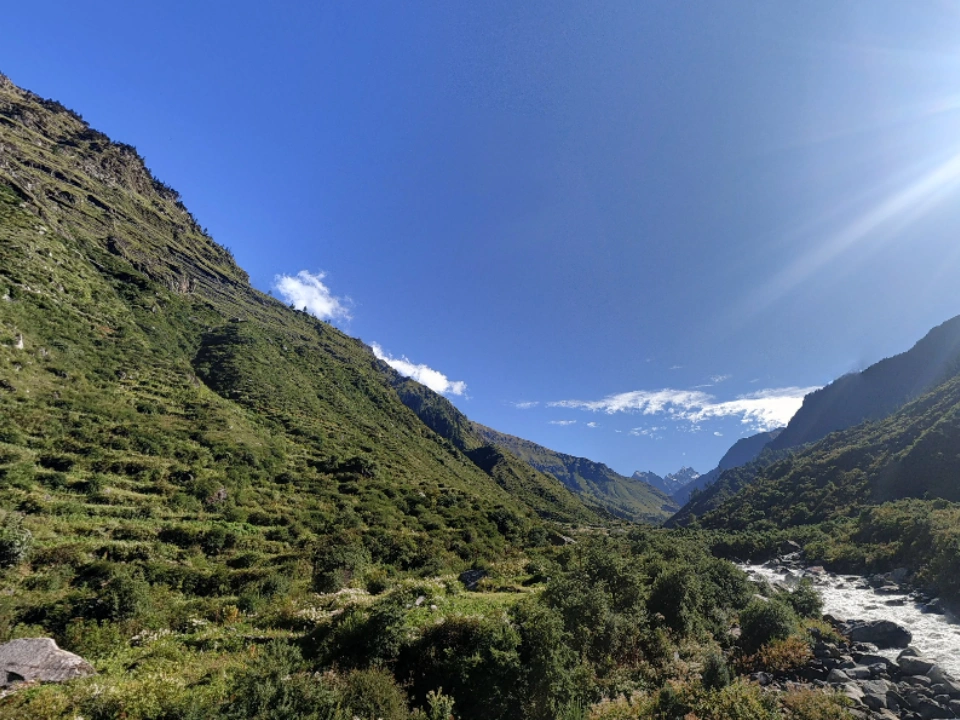
The trail to Khullara was my favorite. Tall oak and rhododendron forests surrounded us, their silence broken only by our footsteps. The gradient was moderate, and after a few hours, the forest opened into wide meadows.
At Khullara Top, we camped under the watch of Mt. Dronagiri. The evening sky was painted orange, and Rakesh showed us how to spot other peaks- Chaukhamba, Kamet, and Hathi Parbat. The temperature dropped quickly after sunset. We wore all our layers and sat close to the kitchen tent, where food smelled too good to resist.
That night, someone teased Rakesh about talking a lot with Ananya. He laughed it off, but we could see he was flustered.
Day 3: Khullara to Kuari Pass and Back
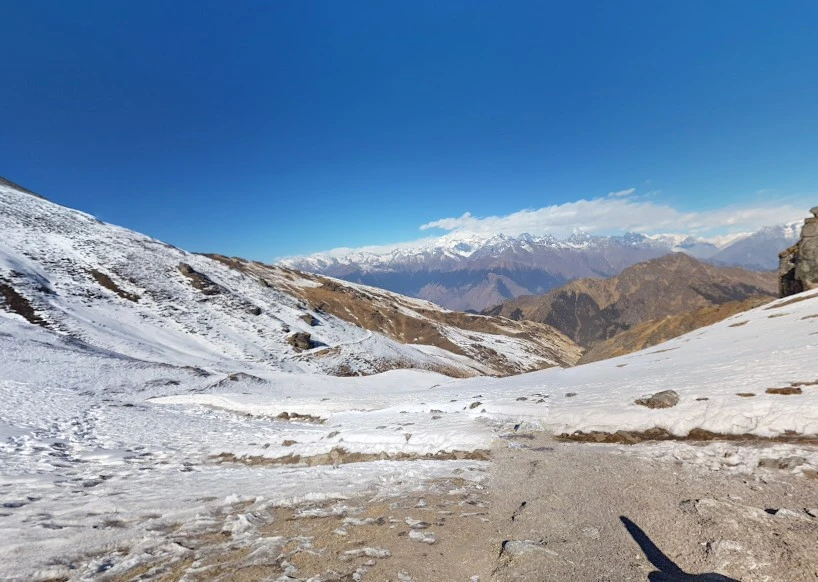
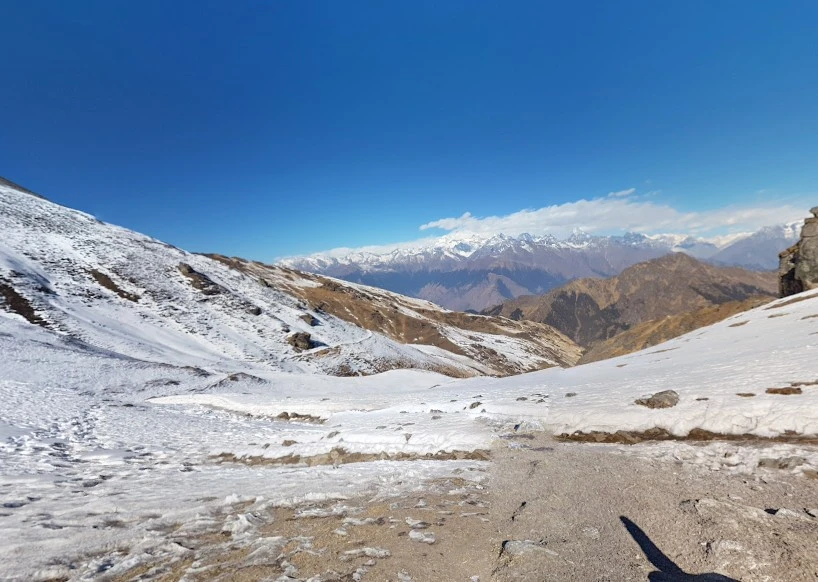
This was the big day. We started early, crunching through snow patches even though it was only December. The climb to Kuari Pass was steeper but manageable. Slowly, step by step, we made it.
At the pass, standing at 12,500 feet, the world opened up. Right in front of us was the mighty Nanda Devi, India’s second-highest mountain. Around her stood a whole skyline of peaks- Mana, Neelkanth, Gauri Parbat, Trishul, and Chaukhamba.
We sat there in silence for a while. Some of us took photos, some just stared. I remember feeling a mix of exhaustion and awe. It’s strange how the effort of the climb makes the view more meaningful.
The descent back to Khullara was quicker. By evening, the mood was celebratory. We had soup, laughter, and tired faces glowing in the light of headlamps.
Day 4: Khullara to Tali via Chitrakantha
The next day, we walked along a ridge, one of the most scenic parts of the trek. On one side were endless valleys, and on the other side, snow-capped peaks. We reached Chitrakantha meadows and later descended into the Tali campsite, tucked inside a forest.
Tali was calm and beautiful. A stream ran nearby, and we washed our hands in its freezing water. That evening, Ananya sat outside her tent, and Rakesh joined her. The rest of us pretended not to notice.
Day 5: Tali to Auli and Back to Joshimath
From Tali, we hiked towards Auli, passing through Gorson Bugyal. This meadow was vast and open, like a natural stadium with mountains on every side. In winter, it turns into a snowfield, but even now it was wide, golden, and breezy.
Finally, we reached Auli, known for its ski slopes. A cable car brought us down to Joshimath. The trek was complete. That night, we all sat together for one last dinner. We joked about the tough climbs, shared numbers, and promised to meet again.
Day 6: Joshimath to Rishikesh
The return drive felt quieter. Everyone was tired, but the mountains stayed with us. As we approached Rishikesh, the sound of traffic slowly replaced the silence of meadows and forests.
Before saying goodbye, Rakesh announced that he was planning to get married the next year. When we asked who, he simply smiled and looked at Ananya. The group burst into cheers. It was the perfect ending to our trek.
Practical Information
- Trek Distance: About 33 km round trip.
- Maximum Altitude: 12,500 ft (3,800 m).
- Difficulty: Easy to moderate; suitable for beginners with basic fitness.
- Best Seasons:
- Winter (Nov–Feb): Snow-covered landscapes, cold temperatures (down to -8°C).
- Spring (Mar–Apr): Melting snow, blooming rhododendrons.
- Summer (May–Jun): Pleasant weather, clear skies.
- Autumn (Sep–Nov): Golden meadows, crisp mountain views.
- Starting Point: Dhak village, accessible from Joshimath.
- Not Advisable: July–August (monsoon).
Why Kuari Pass is Special
- Grand Views: Close, clear sight of Nanda Devi and many other peaks.
- Beautiful Forests: Walk through oak and rhododendron forests.
- Meadows: Expansive bugyals like Gorson and Chitrakantha.
- Campsites: Picturesque spots like Khullara and Tali.
- History: Known as Lord Curzon Trail, a classic Himalayan route.
Kuari Pass may not be the hardest trek in Uttarakhand, but it has everything—forests, meadows, snow, and mountain views that leave you humbled. For me, it was not just about reaching the pass. It was about the people I met, the guide’s quiet love story, and the small moments that made the trail come alive.
When I look back, I don’t just see Nanda Devi’s snow-covered slopes—I also remember the taste of aloo puri in Dehradun, the laughter in the camps, and the feeling of walking slowly under the tall oaks. That’s what Kuari Pass gave me: a story to carry home.
I did this trek with Himalayan Dream Treks, and I would highly recommend them to anyone who wants to go trekking in the Himalayas.