



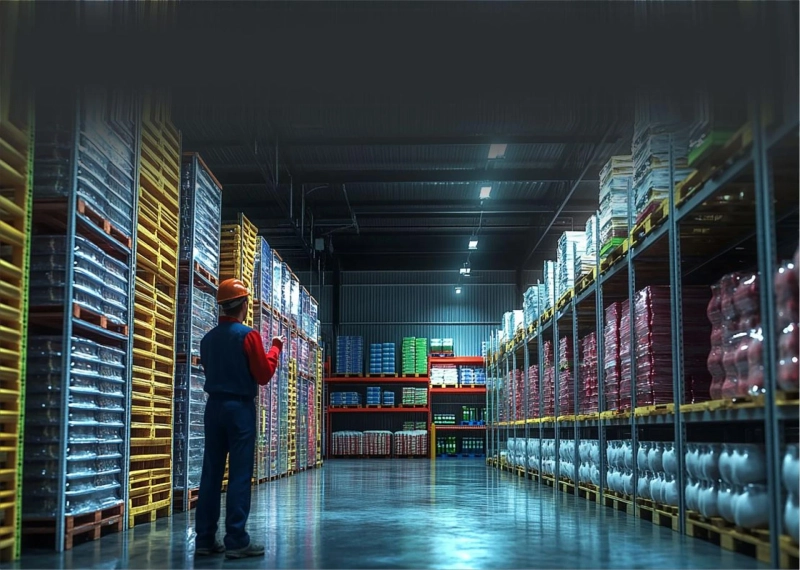
When heat pushes products the wrong way, logistics stops feeling like daily work and starts acting like a discipline you have to respect. Medicines. Healthcare supplies. Select chemicals. All of them react fast when temperature drifts. Cold Chain Management in India sits right inside this pressure zone. Weather turns quickly. Roads stretch longer than planned. Power and infrastructure still surprise you. Keeping temperature where it belongs, hour after hour, becomes a full-time responsibility, not a checkbox.
Cold chain effort is not about cold alone. It is about sameness. The same condition at pickup. The same condition at transfer points. The same condition at final delivery. Safety lives there. Compliance too. One weak link breaks value everywhere else. People in this field repeat a line often, “the chain breaks at its weakest point,” and it stays true for a reason. Below are the pieces that hold this system upright across India.
1. Temperature-Controlled Storage Infrastructure
Storage decides everything early on. If the warehouse fails, the rest does not matter much.
Cold chain facilities rely on chambers set for different bands like ambient, chilled, and frozen. Each band serves a purpose. Each one needs its own controls. Modern setups use live temperature sensors, thick insulation that saves energy, and backup power so a short outage does not ruin weeks of work.
Location matters too. Many of these warehouses sit close to industrial clusters or transport corridors. Less time on the road means less exposure to risk.
Across India, multi-temperature warehouses are no longer rare. Automation, sensors, and AI-based controls run day and night. Conditions stay tight. Deviations drop. Compliance becomes easier to prove when records are always there.
2. Reliable and Refrigerated Transportation
Transport is where things usually get tested.
One short delay. One broken unit. Even a brief temperature swing damages sensitive material. This is why refrigerated vehicles carry so much weight in cold chain planning.
Reefers today come with built-in refrigeration systems that hold steady temperatures during long hauls. Many fleets now use GPS and IoT tools to track location, humidity, and temperature together. Operators see issues as they happen, not after delivery.
3. Technology Integration and Data Monitoring
Cold chains now run on data as much as steel and fuel.
IoT devices, RFID tags, and cloud dashboards watch shipments without blinking. Data flows in continuously. When numbers slip outside limits, alerts trigger fast responses.
This constant stream also helps with foresight. Equipment issues. Route delays. Power problems. Patterns show up early. Action happens before losses pile up.
India’s logistics space is moving fast into digital systems. Companies that invest here gain clarity. Clients see traceability. Teams work with proof, not guesses. Trust follows naturally when every reading is recorded.
4. Standard Operating Procedures and Compliance
Rules keep the cold chain steady when people change shifts.
Every step needs a written process. Loading. Unloading. Storage checks. Distribution handoffs. SOPs define temperature limits, handling steps, inspection routines, and paperwork.
In pharma and healthcare, global standards apply. WHO GDP, which stands for “Good Distribution Practice,” sets clear expectations. ISO 9001 adds structure to quality systems. Audits and certifications confirm that these rules are not just printed, but practiced.
In India, oversight is tightening year by year. Companies that follow international standards early show seriousness and reliability without needing loud claims.
5. Skilled Workforce and Training
Machines help. People decide outcomes.
Warehouse leads, drivers, technicians. Each role touches the cold chain differently, but all of them influence temperature control. Training keeps everyone aligned.
Programs cover new tools, safety steps, and handling methods. More important, teams learn why temperature slips matter. Once people see the impact, response times improve. Small corrections happen fast.
Spending on skills strengthens the entire system. Efficiency improves. Errors drop. The chain holds longer without stress.
6. Risk Management and Contingency Planning
Problems never send warnings in advance.
Power cuts. Traffic jams. Equipment breakdowns. Cold chain plans include responses for these moments. Backup generators, spare storage sites, alternate routes, emergency contacts. All of it needs testing, not just documentation.
Predictive maintenance tools help too. They flag parts before failure, not after.
India’s operating conditions change by region and season. Risk planning keeps supply lines steady when conditions turn unpredictable.
7. Sustainable Practices in Cold Chain Operations
Cold chain work consumes energy. That reality does not disappear.
Newer facilities use efficient refrigeration units and insulation that reduces power draw. Some warehouses now rely on solar energy to support daily operations. Route optimization cuts fuel use. Data tools trim waste quietly.
These steps help the environment, yes. They also support long-term efficiency and brand trust. With India pushing toward greener logistics, sustainability is no longer a side topic.
8. Collaboration and Strategic Partnerships
Cold chains rarely work alone.
Logistics providers team up with manufacturers, distributors, and tech firms to design solutions that fit specific needs. Shared data improves coordination. Planning becomes synchronized instead of reactive.
Partnerships also bring innovation into play. Smarter storage systems. Predictive analytics. Integrated platforms that reduce friction across handovers.
In India’s changing market, these alliances keep cold chains flexible and ready for pressure.
Conclusion
A cold chain protects more than products. It protects reliability and confidence.
India’s climate, distances, and infrastructure test this system daily. Success depends on storage that holds firm, transport that stays steady, technology that watches closely, people who know their role, and plans that assume things will go wrong at some point.
Cold chain systems grow over time. They adjust. They learn. They tighten weak spots. And when they work well, nobody notices them. That silence, in this line of work, says enough.