Introduction
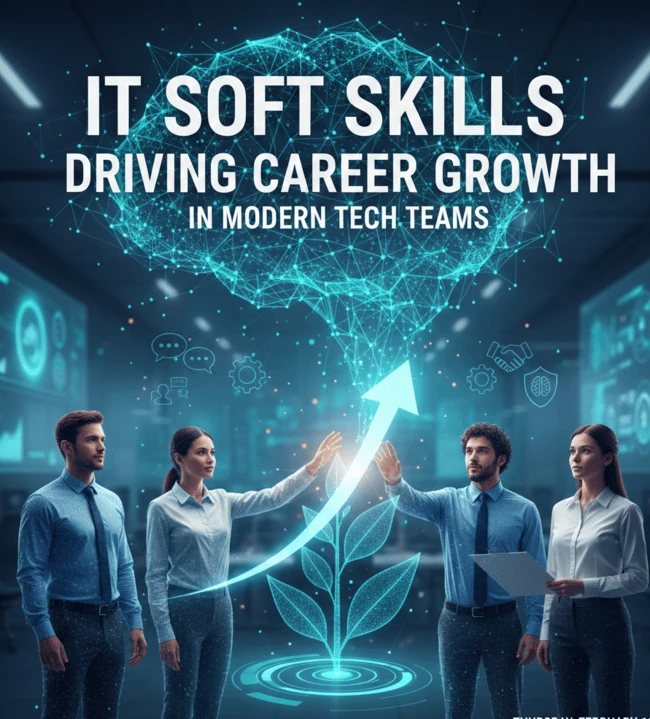
Technical expertise may open the door to a career in technology, but long-term success depends heavily on IT soft skills. In today’s digital-first business environment, organizations are not only hiring professionals who can code, analyze data, or manage infrastructure, but also individuals who can collaborate, communicate, and adapt effectively.
The demand for IT soft skills has grown rapidly as companies embrace agile development, remote work models, and cross-functional innovation. While technical skills ensure systems function properly, IT soft skills ensure teams function efficiently. Professionals who master these abilities consistently stand out in competitive tech landscapes.
In this article, we explore why IT soft skills matter, how they impact career growth, and which capabilities are essential for modern IT professionals.
Why IT Soft Skills Matter in Technology Careers
Technology projects rarely succeed because of technical ability alone. They require teamwork, leadership, and clear communication across departments. Strong IT soft skills help bridge the gap between technical teams and business stakeholders.
Organizations value employees who can explain complex concepts in simple language, resolve conflicts professionally, and collaborate across time zones. These IT soft skills reduce misunderstandings, prevent costly delays, and improve overall project efficiency.
When professionals develop IT soft skills, they gain the ability to align technical goals with business objectives. This alignment strengthens client relationships and builds trust within teams.
Core IT Soft Skills Every Professional Needs
Modern workplaces demand more than coding or infrastructure expertise. Below are the essential IT soft skills that drive measurable impact.
- Effective Communication
- Clear written and verbal communication ensures technical ideas are understood by non-technical stakeholders. Strong communication is one of the most critical IT soft skills for project success.
- Team Collaboration
- Technology projects involve developers, designers, analysts, and managers. Collaboration-focused IT soft skills promote shared responsibility and innovation.
- Problem-Solving Mindset
- IT professionals constantly encounter challenges. Advanced IT soft skills enable individuals to analyze problems logically and propose practical solutions.
- Adaptability and Flexibility
- Technology evolves rapidly. Adaptable IT soft skills allow professionals to learn new tools, processes, and methodologies without resistance.
- Leadership and Accountability
- Even non-managerial roles require initiative. Leadership-driven IT soft skills encourage ownership, mentorship, and proactive decision-making.
- Time Management
- Meeting deadlines is essential in software development and infrastructure management. Time-focused IT soft skills improve productivity and reduce burnout.
- Emotional Intelligence
- Understanding team dynamics and responding thoughtfully during conflicts reflects strong IT soft skills that build positive work environments.
IT Soft Skills in Remote and Hybrid Work Environments
The shift toward remote work has amplified the importance of IT soft skills. Without face-to-face interaction, communication clarity becomes even more crucial. Virtual meetings, collaboration platforms, and distributed teams require professionals who can manage conversations effectively.
Strong IT soft skills help remote teams stay aligned on goals, timelines, and expectations. Professionals who demonstrate accountability and responsiveness often become valuable assets in distributed environments.
Moreover, digital collaboration tools cannot replace empathy and interpersonal understanding. These human-centered IT soft skills ensure that remote projects remain productive and cohesive.
IT Soft Skills and Career Advancement
Career growth in technology increasingly depends on the balance between technical knowledge and IT soft skills. Many professionals reach a plateau because they focus solely on technical certifications while neglecting communication and leadership abilities.
Managers and executives consistently prioritize candidates who demonstrate strong IT soft skills. Whether leading a DevOps initiative or presenting cybersecurity insights to executives, these competencies enhance visibility and influence.
Developing IT soft skills also improves performance during interviews, client meetings, and performance evaluations. Professionals who articulate ideas confidently often receive promotions faster than equally skilled peers lacking interpersonal strengths.
How to Develop Strong IT Soft Skills
Improving IT soft skills requires intentional effort and consistent practice. Below are actionable strategies to build these competencies.
- Participate actively in team discussions and knowledge-sharing sessions
- Seek feedback from peers and supervisors
- Practice clear documentation and concise email communication
- Engage in cross-department collaboration projects
- Attend workshops focused on leadership and communication
- Observe and learn from senior professionals who demonstrate exceptional IT soft skills
Self-awareness plays a key role in strengthening IT soft skills. Identifying areas for improvement allows professionals to focus on meaningful growth.
The Business Impact of IT Soft Skills
Organizations that encourage IT soft skills development often experience improved productivity, higher employee engagement, and better client satisfaction. Teams that communicate effectively reduce errors and enhance innovation.
Strong IT soft skills foster trust between IT departments and executive leadership. This trust accelerates decision-making and ensures technology investments align with strategic goals.
From startups to global enterprises, companies increasingly recognize that technical performance alone cannot sustain long-term growth. Human-centered IT soft skills create competitive advantage.
Building a Future Ready IT Workforce
As automation and artificial intelligence transform technical roles, uniquely human abilities will become even more valuable. The future of work demands advanced IT soft skills that complement emerging technologies.
Professionals who combine technical expertise with refined IT soft skills will remain adaptable in evolving digital landscapes. Organizations that invest in these competencies build resilient, high-performing teams.
By prioritizing continuous learning and communication excellence, individuals ensure their IT soft skills remain relevant and impactful in every stage of their career journey.
Conclusion
Technical knowledge may secure a role in the technology sector, but sustained success depends heavily on IT soft skills. From communication and collaboration to leadership and emotional intelligence, these competencies shape career growth and organizational performance.
Professionals who actively develop IT soft skills position themselves as strategic contributors rather than technical executors. In an industry defined by constant change, strong IT soft skills remain the foundation of long-term achievement.