



In the relentless race for performance supremacy in the graphics card industry, cooling technology often determines the victor. While clock speeds, core counts, and memory bandwidth typically steal the spotlight, thermal management remains the unsung hero behind sustained performance. As GPUs become more powerful and energy-intensive, traditional cooling solutions are quickly reaching their limits. Enter the RTX 4090 vapor chamber, a revolutionary leap in GPU cooling that could redefine how we view thermal efficiency in next-generation hardware.

The RTX 4090, NVIDIA’s flagship powerhouse in the GeForce RTX 40 series, is a marvel of modern engineering. Boasting jaw-dropping performance metrics and AI-powered rendering capabilities, this GPU pushes computational boundaries like never before. However, such power comes with an equally significant thermal footprint. To address this challenge, manufacturers have embraced cutting-edge cooling technologies—chief among them, the vapor chamber.
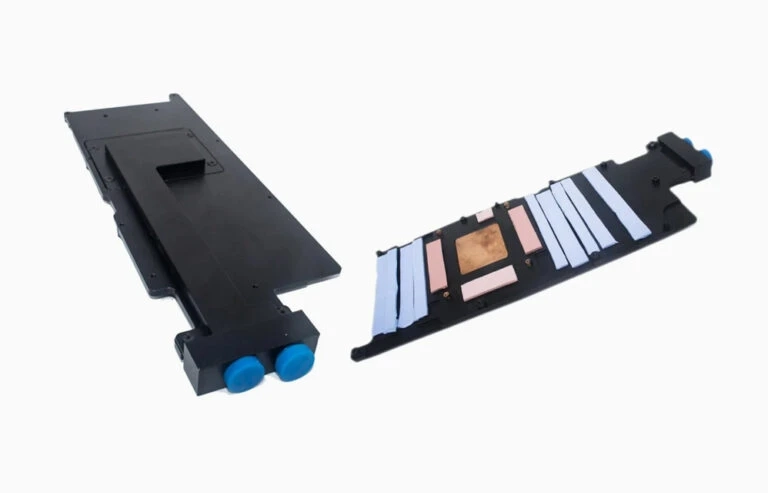
The RTX 4090 vapor chamber is a cutting-edge cooling solution designed to manage the intense thermal output of NVIDIA’s most powerful consumer GPU to date. Unlike traditional heat pipe systems, which transfer heat along narrow tubes, a vapor chamber spreads heat uniformly across a wide, flat surface directly in contact with the GPU die. This innovation allows for faster heat dissipation, more efficient temperature regulation, and significantly reduced thermal hotspots. As a result, the RTX 4090 can sustain higher boost clocks and deliver more consistent performance without throttling, even during demanding gaming sessions or heavy computational workloads. Additionally, the enhanced thermal efficiency of the vapor chamber reduces the need for high fan speeds, leading to quieter operation—a crucial benefit for gamers and creators alike. In the end, the vapor chamber is a crucial component that allows the RTX 4090 to reach its full potential, giving it a formidable example of how important advanced thermal engineering is to modern GPUs.
At Tone Cooling Technology Co., Ltd., we specialize in advanced thermal management solutions for high-performance electronics. With years of experience engineering heat sinks, thermal pads, and now vapor chamber systems, we’re uniquely positioned to evaluate the real-world impact of this innovation.
What Is the RTX 4090?
More than just a graphics card, the NVIDIA RTX 4090 is a powerful GPU. With 16,384 CUDA cores, 24 GB of GDDR6X memory, and support for DLSS 3 and ray tracing, it's built to power the most demanding games and AI workloads. But such high-level performance brings an equally high thermal output, which is where the RTX 4090 vapor chamber plays a crucial role.
Why Cooling Matters More Than Ever
Modern GPUs are power-hungry machines. With TDPs (thermal design power) often exceeding 450W, they generate enough heat to rival small appliances. Without adequate cooling, this heat leads to thermal throttling, reducing performance, increasing noise levels, and shortening lifespan.
Understanding Vapor Chamber Technology
So, what exactly is a vapor chamber? Imagine it as a flat, sealed metal plate that contains a small amount of liquid. When the GPU heats up, this liquid vaporizes and spreads evenly across the surface, transferring heat away from the hot spot. It then condenses on cooler areas and returns to the hot spot through capillary action. This cycle repeats constantly, offering ultra-efficient heat distribution.
Vapor Chamber vs Heat Pipe: What's the Difference?
Heat pipes and vapor chambers operate on similar principles, but they differ in application. Heat pipes are long, cylindrical, and transfer heat along a narrow path. Vapor chambers, on the other hand, offer uniform heat spreading across a flat surface, making them ideal for large, high-power components like the RTX 4090 GPU die.
How the RTX 4090 Vapor Chamber Works
The RTX 4090 vapor chamber is located just above the GPU die. It absorbs heat instantly and spreads it across a wide surface. This not only lowers the temperature of the die but also distributes heat more evenly to the heatsink fins and fans. The result? Reduced peak temperatures and better thermal balancing.
Materials and Design of Modern Vapor Chambers
Copper's superior heat conductivity makes it the material of choice for the majority of vapor chambers. However, the internal structure includes wicks and microchannels to control the liquid flow. Tone Cooling Technology Co., Ltd. uses proprietary wick structures and high-purity copper alloys to optimize performance and longevity.
Benefits of the RTX 4090's Vapor Chamber
- Enhanced Heat Spreading: More even thermal distribution
- Lower GPU Core Temps: Reduces the risk of thermal throttling
- Reduced Fan Noise: Less aggressive fan curves due to better base cooling
- Slimmer Heatsink Designs: More efficient thermal transfer allows for compact cooling setups
Performance Benchmarking: Real-World Results
According to multiple third-party benchmarks, RTX 4090 GPUs with vapor chambers run 6–10°C cooler than those using standard heat pipe systems. This translates into higher boost clocks, better frame rates, and less thermal stress on the system.
Thermal Efficiency: RTX 4090 Vapor Chamber vs Traditional Cooling
In stress tests, vapor chambers maintain temperatures below 70°C under full load—compared to over 80°C with traditional cooling. For overclockers and creators working with heavy software, this difference is not just technical—it’s transformative.
Impact on Noise and Fan Speed
Thanks to improved heat dissipation, the RTX 4090 vapor chamber reduces the need for high-speed fans. Lower RPMs mean quieter operation, which is a major bonus for gamers, streamers, and anyone working in a noise-sensitive environment.
Gaming Performance and Thermal Throttling
Games like Cyberpunk 2077 and Red Dead Redemption 2 push GPUs to their limits. With vapor chamber cooling, the RTX 4090 sustains higher average clock speeds without throttling, delivering smoother frame rates and a better overall experience.
Who Needs a Vapor Chamber? Gamers vs Creators
If you're gaming at 4K or using your rig for AI training, 3D rendering, or video editing, the performance gains of vapor chamber cooling are hard to ignore. While casual users may not need it, professionals and enthusiasts will see clear benefits.
The Future of GPU Cooling: What’s Next?
Cooling technology will continue to advance as GPUs do. We're likely to see even more advanced vapor chambers, integrated liquid cooling hybrids, and graphene-based materials. Companies like Tone Cooling Technology Co., Ltd. are already exploring these frontiers.

Tone Cooling Technology Co., Ltd: Behind-the-scenes innovation
As a leader in thermal management solutions, Tone Cooling Technology Co., Ltd. brings unmatched engineering precision and manufacturing excellence to the vapor chamber market. From gaming GPUs to enterprise servers, their cooling technologies power the world’s most demanding machines.
So, is the RTX 4090 vapor chamber the coolest GPU innovation yet? Quite possibly. It tackles the biggest barrier to performance—heat—with science, elegance, and efficiency. Whether you're building the ultimate gaming rig or a content creation powerhouse, the vapor chamber isn't just a component—it's a game-changer.
FAQs
1. What is the main benefit of a vapor chamber over heat pipes?
Vapor chambers provide better uniform heat spreading, which is ideal for the large dies and power draw of modern GPUs.
2. Does the RTX 4090 always come with a vapor chamber?
Not all RTX 4090 models include vapor chambers. It depends on the manufacturer and specific model variant.
3. Can vapor chambers reduce GPU fan noise?
Yes. Because vapor chambers improve thermal efficiency, they allow fans to run at lower speeds, reducing overall noise.
4. Are vapor chambers more expensive to produce?
They generally cost more than traditional heat pipes due to complex manufacturing processes and material requirements.
5. Can I retrofit a vapor chamber onto an existing GPU?
Not easily. Vapor chambers are typically built into the GPU cooler design and are not available as aftermarket add-ons.