



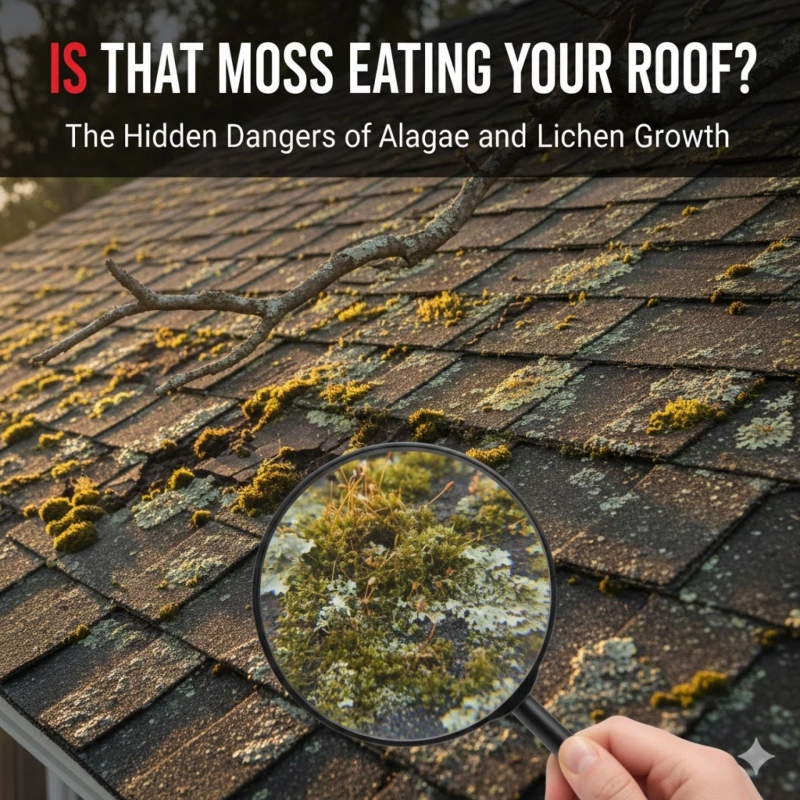
When you glance up at your roof and notice patches of green or gray, it may seem harmless—almost charming, even. But what most homeowners don’t realize is that those velvety green carpets and crusty textured spots could be slowly destroying one of the most important protective layers of your home. Moss, algae, and lichen growth on a roof are far more than cosmetic issues. They are active threats that feed on dark, moist spaces, weaken shingles, shorten roof lifespan, and can lead to expensive structural damage if ignored.
In this deep, comprehensive guide, we’re going to uncover how moss, algae, and lichen eat away at your roof, the risks they bring, how to remove them safely, and—most importantly—how to prevent them from returning. If you want to protect your home, save money, and keep your roof looking its best, keep reading.
What’s Growing on Your Roof? Moss, Algae & Lichen Explained
Before you can fight the enemy, you need to know it.
Moss
Moss is a thick, sponge-like plant that thrives in damp environments. It has tiny root-like structures called rhizoids that latch onto shingles and hold moisture, creating the perfect breeding ground for rot.
Algae
Often appearing as streaky black or dark green stains, algae feed on limestone fillers found in many asphalt shingles. You might notice it more on shaded areas of your roof where sunlight rarely reaches.
Lichen
Lichen is tougher and more resilient than moss or algae. It forms a hard, crusty layer that firmly attaches to roof materials. Once it establishes itself, removing it incorrectly can damage shingles further.
These organisms don’t appear overnight—they grow quietly and slowly, which makes their damage easy to overlook until it’s too late.
Why Moss and Algae Grow on Your Roof in the First Place
Understanding why these growths appear is the first step in stopping them.
Here are the most common causes:
- Excess moisture or humid climate
- Low sunlight exposure
- Overhanging trees or poor roof ventilation
- Debris buildup such as leaves and branches
- Old or aging roofing materials
A damp, shaded surface is like a welcome mat for moss and algae. Once they take hold, they can spread across the roof in months—sometimes weeks under ideal conditions.
How Moss and Algae Damage Your Roof Over Time
You might think moss is just sitting there, minding its own business.
It isn’t.
Moss behaves like a sponge, absorbing water and holding it directly against your shingles. Over time, this creates swelling, cracking, and separation between roofing layers. Algae, meanwhile, eats away at the limestone in asphalt shingles, making them brittle and easier to tear.
Lichen is even more destructive—it chemically bonds to shingle surfaces, slowly degrading their protective granule layer.
Left untreated, moss, algae, and lichen growth can result in:
- Shingle deterioration and granule loss
- Water seepage into the underlayment
- Roof leaks and interior water damage
- Mold growth inside the attic
- Shortened roof lifespan (sometimes by 5–10+ years)
What looks like a simple discoloration could be a ticking time bomb for structural failure.
Signs Your Roof Is Being Damaged—Even if You Don’t See Moss
Not all signs are obvious. Look for:
- Dark streaks or spotting
- Curved or lifted shingles
- Soft, spongy areas when walked on
- Visible shingle granules in gutters
- Higher indoor humidity or attic moisture
The earlier you catch the problem, the more money you’ll save in repairs.
Can Moss Really Eat Your Roof? The Shocking Short Answer—Yes
While moss doesn’t literally bite into shingles like an animal would, it damages by suffocation, moisture retention, and root penetration. The longer it stays, the deeper it anchors. This can cause shingles to slide out of place, allowing water to seep beneath the roof surface.
Think of it this way:
A clean roof repels water.
A moss-covered roof absorbs water.
One protects your home.
The other puts it at risk.
DIY vs Professional Roof Cleaning—Which Is Better?
Homeowners often ask: Can I remove moss myself?
The answer is yes—if you know what you're doing. But there are risks.
DIY Cleaning May Work If:
- The growth is new or minimal
- You have a safe ladder and appropriate tools
- You use gentle cleaning methods (no pressure washing!)
Professional Cleaning Is Much Safer When:
- The roof is steep or high
- Moss or lichen are heavily embedded
- You want long-term prevention treatments
- Your roof is older or brittle
A professional roof cleaning not only removes growth, but also applies preventative coatings to stop regrowth for years. DIY methods tend to be short-term solutions unless you maintain them consistently.
How to Safely Remove Moss, Algae & Lichen From Your Roof
Step-by-step gentle removal method:
- Use a soft bristle brush to loosen surface moss.
- Apply a roof-safe moss removal solution (oxygen-based products recommended).
- Allow solution to sit and break down organic growth.
- Rinse gently with low-pressure water—never a pressure washer.
- Treat with a long-term algae-resistant sealant.
Avoid scraping or pulling—this can rip shingles and cause more harm than good.
Top Prevention Strategies to Keep Your Roof Moss-Free
Stopping regrowth is the real win. Use these expert strategies:
- Install zinc or copper roof strips (natural moss killers)
- Trim branches to increase sunlight exposure
- Clean gutters regularly for proper drainage
- Improve attic ventilation to reduce humidity
- Remove debris buildup after storms or seasonal changes
Persistence is key. Even a small patch of regrowth can spread quickly if ignored.
Roof Replacement: When Moss Damage Has Gone Too Far
Some roofs—especially older ones—may be too damaged for cleaning alone. If shingles crumble to the touch, show bare fiberglass, or curl upward from moisture retention, a full or partial roof replacement may be necessary.
But the good news is this:
Addressing the problem early can save thousands in repairs.
The Cost of Ignoring Moss and Algae Growth
Homeowners often delay roof care because the problem seems small. But the longer these growths stay, the more expensive the outcome. A simple $300–$800 cleaning today could prevent a $10,000–$20,000 roof replacement in the future.
Ignoring moss now is like ignoring termites in a wooden beam—it only gets worse.
Conclusion: Don’t Let Moss Destroy Your Roof One Spores at a Time
Moss, algae, and lichen are not just ugly—they are active threats capable of eating away at your roof, weakening the structure, and reducing lifespan dramatically. What begins as harmless discoloration can lead to leaks, mold growth, rotting wood, and major financial damage. For expert help identifying and removing growth safely, visit https://www.ripcityroofcleaning.com/.
The solution is simple:
👉 Identify growth early
👉 Remove it safely
👉 Prevent it from returning
Your roof protects everything beneath it. Treat it with care, keep it clean, and don’t underestimate the danger growing quietly above your head.