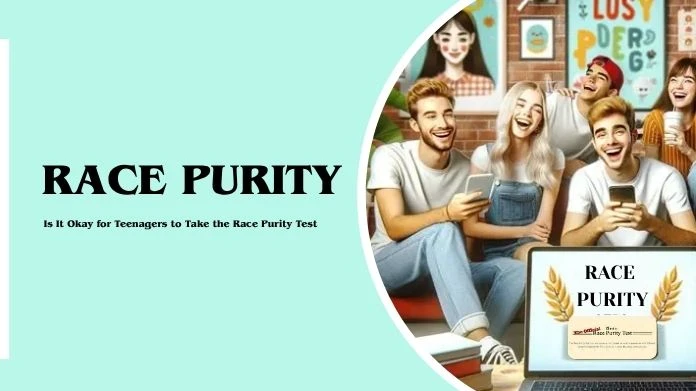
Have you ever stopped to think about your own biases? In a world where social media spreads quizzes like wildfire, the Race Purity Test has gained attention for its provocative title and viral reach.
The Race Purity Test does not determine your character. The Race Purity Test is a racism assessment based on one's experiences with different races throughout life.
By examining the questions thoughtfully, teens can begin to recognize unconscious biases and understand how their upbringing, experiences, and environment shape the way they perceive others.
Teenagers who take the exam responsibly, ideally with the aid of parents, teachers, or mentors, can expose unconscious prejudices, increase empathy, and initiate critical discussions about race, power, and diversity.
In this article, you will learn why teenagers might be drawn to the Race Purity Test, the potential benefits and risks, and how to explore it in simple, responsible ways that encourage reflection and growth.
Quick Overview of the Race Purity Test
The Race Purity Test is an online quiz designed to encourage self-reflection on attitudes, experiences, and biases related to race. While it is not scientific, its provocative name and viral presence on social media have made it popular among teenagers.
It typically consists of a series of questions that users answer based on their personal experiences, and it generates a “score” that the site suggests reflects one’s racial attitudes.
While its name might sound formal or scientific, the test is primarily meant for self-reflection, social engagement, and entertainment, rather than serving as a validated or factual measurement of bias.
The test has gained viral popularity on social media platforms, where users often share their results for discussion, humor, or even provocation.
Why Teenagers Might Be Interested?
Race purity tests are online quizzes that claim to measure how “racially pure” someone is, often using biased or pseudoscientific ideas.
- Curiosity About Self-Awareness and Identity
Teenagers are discovering their identities and how they interact with the environment. The test asks you to think about your own views and experiences.
- Influence of Peer Culture and Social Media
Viral quizzes are widely shared online, and teens may participate to engage with friends or see how their results compare.
- Desire to Understand Personal Biases
The test encourages introspection by providing a chance to look at one's own views on diversity and race.
- Engagement with Trending Online Content
Teens are generally drawn to participatory or popular online activities, making the test interesting as a social or entertainment platform.
Possible Benefits if Approached Carefully
When teens take the Race Purity Test wisely and ethically, it can provide several positive outcomes:
- Encourages Self-Reflection: By pushing youngsters to critically examine their own attitudes, presumptions, and experiences, the test helps them detect unconscious biases they may not be aware of.
- Sparks Meaningful Conversations: Talking about the findings with friends, parents, or teachers can start a conversation about diversity, privilege, and race that promotes understanding and the exchange of viewpoints.
- Promotes Empathy and Awareness: With guidance, the test can help teenagers see the world through others’ perspectives, challenge stereotypes, and develop a more inclusive mindset.
- Supports Personal Growth: Reflecting on one’s attitudes encourages responsibility and motivates teens to adopt more thoughtful, open-minded, and respectful behaviors toward others.
Potential Risks for Teenagers while Taking the Race Purity Test
While the Race Purity Test may appear to be a simple online test, teens are still in the process of developing an awareness of complicated societal issues. Taking the test without supervision comes with a number of risks:
- Misinterpreting Scores – Teenagers may take the numerical score too seriously, thinking it reflects their character, morality, or “worthiness.” This can lead to unnecessary guilt, shame, or anxiety about their personal beliefs and experiences.
- Exposure to Provocative or Offensive Content – Some questions in the test are intentionally provocative or framed in a way that could be confusing.
- Reinforcing Stereotypes – The quiz asks participants about interactions with different racial groups. If teenagers approach it casually or without reflection, they may unintentionally reinforce stereotypes or develop skewed views about certain communities.
- Emotional Impact – Adolescence is a sensitive period for emotional development. A high or low score may trigger strong feelings such as superiority, defensiveness, guilt, or insecurity that can affect self-esteem and peer interactions.
- False Sense of Understanding – Some teenagers might assume that taking the quiz is enough to understand racial issues. This can lead to oversimplified thinking about complex social and historical situations, preventing true learning and empathy.
Climax
The Race Purity Test is not intended to judge or label anyone; rather, it is a tool for self-reflection and growth.
For teenagers, approaching it responsibly can encourage awareness of personal biases, foster empathy, and inspire meaningful conversations about race, privilege, and diversity.
By reflecting on their own attitudes, teenagers can develop critical thinking, open-mindedness, and a deeper appreciation for the diverse world around them, taking positive steps toward becoming more understanding, compassionate, and socially aware individuals. So, take a step toward self-awareness, explore your perspectives.
About Author;
Hi I’m Mikhail Devis, a cultural anthropologist passionate about exploring how our experiences shape the way we see one another.
The Race Purity Test was created to encourage honest reflection and meaningful conversations around bias, equality, and the society we live in. My goal is not to judge, but to raise awareness in a way that inspires understanding and growth.