



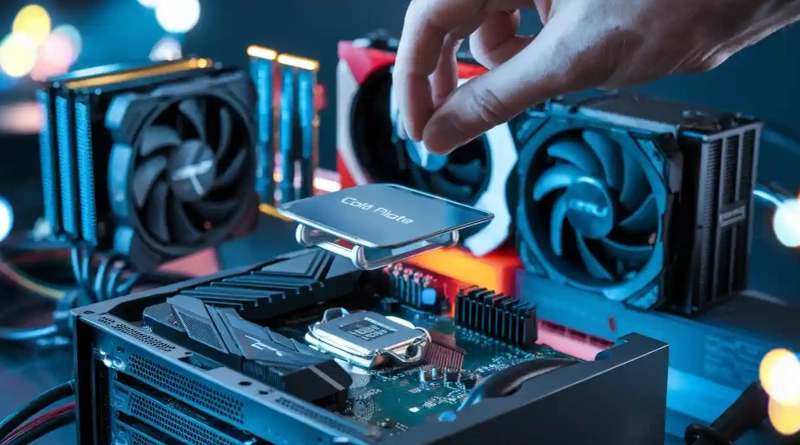
In today's era of high-performance computing, thermal management has become more than just an afterthought—it's a critical component of overall system stability and efficiency. Whether you're a PC enthusiast overclocking the latest multi-core processor, an engineer powering AI simulations, or an OEM building industrial servers, cooling solutions are top of mind. One specific cooling technology that's been gaining significant traction in both consumer and enterprise markets is the CPU Cold Plate.
But with so many options available—from air coolers to AIO (All-in-One) liquid loops—you might be wondering: Is a CPU cold plate really worth the investment? Can it outperform other options in terms of efficiency, performance gains, and long-term durability? And more importantly, is it the right fit for your specific application?
At Tone Cooling Technology Co., Ltd., we're at the forefront of liquid cooling innovation, supplying high-precision thermal solutions, including custom-engineered cold plates, to clients worldwide. Our CPU cold plates are integrated into systems used in data centers, gaming rigs, workstations, servers, and high-capacity edge computing platforms.
Understanding What a CPU Cold Plate Is
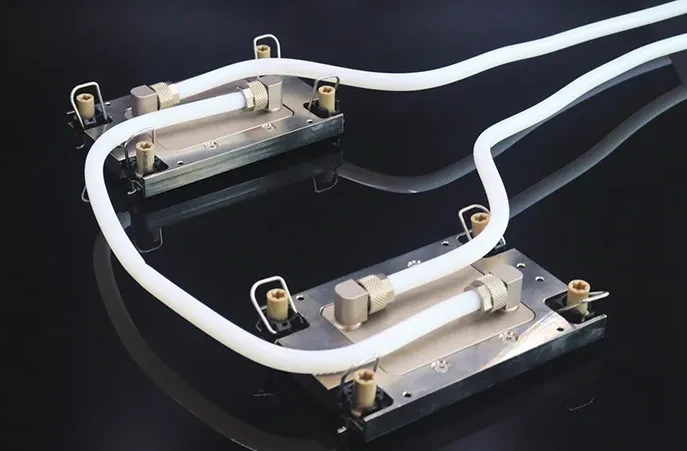
A CPU cold plate is a specialized component in a liquid-cooled system that serves as the interface between the CPU's heat-generating surface and the coolant. This precision-engineered block is made from thermally conductive materials like copper or aluminum and contains:
- Microchannels or fins to maximize surface area
- Inlet/outlet ports for liquid circulation
- A sealed design to prevent coolant leaks
The cold plate distributes coolant over the CPU hotspot, ensuring rapid heat absorption and efficient transport away from the core for dissipation via a radiator.
How CPU Cold Plates Work
Here’s a simplified breakdown of the cooling cycle when using a CPU cold plate:
- Heat Transfer: The CPU generates heat during operation, which is absorbed by the base of the cold plate (in direct contact with the CPU).
- Coolant Flow: A coolant (usually a water-glycol solution) flows through the internal microchannels of the cold plate, picking up this heat.
- Heat Dissipation: The heated liquid is then moved via a pump to a radiator, where it’s cooled by fans before circulating back.
This closed-loop system enables much faster and more even heat transfer compared to traditional air-cooling methods.
Pros of Using a CPU Cold Plate
Upgrading to a CPU cold plate provides numerous distinct advantages — especially in demanding computing environments:
✅ Superior Thermal Performance
Cold plates can bring CPU temps down by 10°C–30°C compared to air coolers, which is crucial when managing extended workloads or overclocking.
✅ Silent Operation
Without bulky heatsinks and high-RPM fans, systems using cold plates run quieter—perfect for offices, studios, and labs.
✅ Better Overclocking Potential
Cooler CPUs can maintain higher boost clocks longer, enabling better benchmark scores and real-world performance.
✅ System Longevity
High temps wear components down faster. Efficient cooling reduces thermal stress over time, enhancing system reliability.
✅ Compact & Liquid Loop Integration
Cold plates are ideal for rack-mounted or compact setups where air cooling would be constrained by space.
Potential Drawbacks to Consider
While CPU cold plates offer powerful advantages, there are also trade-offs:
⚠️ Higher Initial Cost
Compared to traditional CPU coolers, a liquid cooling system (including a cold plate, pump, and radiator) typically costs more.
⚠️ Complex Installation
Setting up a system with a CPU cold plate can be more involved, especially for first-time users or DIY PC builders.
⚠️ Maintenance Requirements
Coolant must be replaced periodically, and the system must be monitored for leaks or blockages to ensure long-term performance.
Materials and Design Insights
Tone Cooling Technology Co., Ltd. offers CPU cold plates engineered to exacting standards. Key specification considerations include:
- Material: Copper offers superior thermal conductivity, while aluminum reduces cost and weight.
- Microchannel density: More channels mean increased surface area for better cooling.
- Finish quality: A smooth base ensures stronger thermal connection with the CPU's IHS.
- Port compatibility: Standard G1/4” fittings for flexible loop design.
- Sealing: Leak-proof joints with O-rings and quality welding.
Using CFD (Computational Fluid Dynamics), we simulate heat flow and coolant behavior, optimizing every channel for maximum performance.
Installation and Maintenance Tips
🔧 Installation:
- Always apply high-quality thermal paste.
- Ensure even pressure during mounting.
- Properly bleed the loop to prevent air pockets.
- Use coolant recommended for your materials (avoid corrosion).
✨ Maintenance:
- Check coolant levels every 6 months.
- Replace coolant annually for best performance.
- Clean the cold plate and radiator during fluid changes.
Tip: Investing in pre-assembled kits with a cold plate can make setup easier for non-technical end users.
Applications in Industrial, Server, and Gaming Systems
Our CPU cold plates are used in:
- High-density data centers
- AI/ML cluster workstations
- Gaming rigs and stream setups
- Medical imaging machines
- CAD/CAE engineering stations
When uptime, silence, and precision matter, cold plates deliver.
Custom Solutions from Tone Cooling Technology Co., Ltd.

At Tone Cooling Technology Co., Ltd., we partner with manufacturers, OEMs, and system integrators to develop bespoke CPU cold plates, offering:
- OEM branding and logo engraving
- Shape/design matching for non-standard mounts
- NRE prototyping and thermal simulation services
- Bulk order production with ISO-certified facilities
- Support for B2B, retail, and server deployment clients
We manufacture in-house to maintain quality control, cost efficiency, and engineering excellence.
Is a CPU Cold Plate Worth It?
The answer is clear: Yes, a CPU cold plate is worth it — for performance, long-term hardware protection, thermal efficiency, and acoustics. Whether you're building a powerhouse gaming rig, outfitting a computational server farm, or designing cooling for embedded systems, liquid cold plates offer unmatched thermal control.
Frequently Asked Questions (FAQs)
Q1: Can a CPU cold plate be used with any CPU?
A: Tone Cooling offers plates compatible with most sockets (AM5, LGA1700, TRX4). Custom plates are available upon request.
Q2: Are CPU cold plates only for extreme overclocking?
A: No. They’re ideal for anyone demanding stable performance at lower temps — even casual gamers or office power users.
Q3: How does a cold plate differ from an AIO cooler?
A: AIO units include the cold plate, pump, and radiator in one closed system. Cold plates are modular and customizable for higher performance loops.
Q4: What coolant should I use?
A: Use non-conductive, anti-corrosive coolant (e.g., distilled water + glycol). Avoid mixing types to reduce clogs or corrosion.
Q5: Do you provide international shipping?
A: Yes! We offer OEM/ODM services and ship globally to Europe, North America, Asia, and more.