



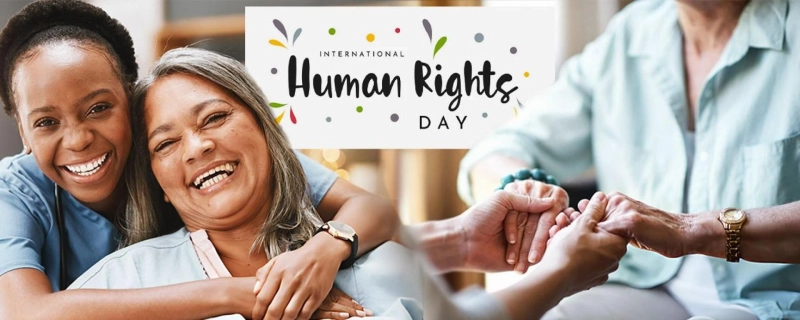
International Human Rights Day is more than a global observance—it is a reminder that every individual, regardless of age, deserves dignity, safety, and respect. As we recognize this important day, it is essential to highlight the significance of Supporting Senior Rights on Human Rights Day, especially for people with dementia and older adults who depend on strong community care and effective senior support services.
Why Senior Rights Matter on International Human Rights Day

Every year on December 10th, the world celebrates International Human Rights Day with the promise to protect fundamental freedoms. While discussions often focus on gender equality, freedom of speech, or global justice, senior citizens—especially dementia people—are often overlooked. Yet, they face increasing challenges such as neglect, emotional isolation, limited healthcare access, and vulnerability due to memory loss or cognitive decline.
By Supporting Senior Rights on Human Rights Day, we shine a light on the urgent need to ensure that older adults receive fair treatment, equal opportunities, and the respect they deserve as valued members of society.
Challenges Faced by Dementia People
Dementia often struggle with everyday activities, communication, emotional stability, and personal safety. These challenges make them one of the most vulnerable groups when it comes to exercising their basic human rights. Without strong senior support services, dementia individuals may face:
Difficulty receiving timely medical attention
Higher chances of emotional or physical neglect
Social isolation due to memory loss
Safety concerns, such as wandering or accidents
Misunderstanding or stigma within the community
Recognizing their struggles on International Human Rights Day encourages families, caregivers, and organizations to prioritize their well-being.
The Role of Senior Support Services
High-quality senior support services play a critical role in maintaining the dignity and independence of older adults. From 24/7 monitoring to personalized dementia care plans, these services act as a bridge between seniors and the resources they need to live comfortably.
Key benefits of enhanced senior support services include:

Professional dementia care tailored to individual needs
Assistance with daily activities, meals, hygiene, and mobility
Emotional companionship that reduces loneliness
Safety monitoring to prevent falls or wandering
Encouraging cognitive exercises, social interaction, and mental wellness
On International Human Rights Day, promoting these services reminds communities that every senior deserves compassionate care, especially dementia people who rely heavily on structured support.
Supporting Senior Rights on Human Rights Day: What We Can Do
There are many meaningful ways to honor and support senior citizens on this global observance:
Raise Awareness: Share information about senior rights, dementia challenges, and the need for better care programs.
Prioritize Inclusion: Encourage seniors to participate in community events, conversations, and decision-making.
Advocate for Better Policies: Support laws that protect dementia people and improve senior healthcare.
Provide Compassionate Support: Whether through professional senior support services or family involvement, showing empathy makes a huge difference.
Recognize Their Contributions: Celebrate the wisdom, experience, and life stories seniors bring to society.
Conclusion
International Human Rights Day is a powerful reminder that rights belong to everyone—children, adults, and especially seniors. By Supporting Senior Rights on Human Rights Day, we reaffirm our responsibility to protect dementia people and ensure they have access to compassionate senior support services. When seniors feel respected, safe, and valued, we create a more humane and inclusive world for all.