



When you struggle with rest night after night, it’s natural to wonder whether it’s simply a bout of sleeplessness or something more serious. Two of the most common sleep-disturbing conditions are insomnia and sleep apnea, and though they both leave you feeling drained, they are fundamentally different and each demands its own approach for diagnosis and care.
What is Insomnia?
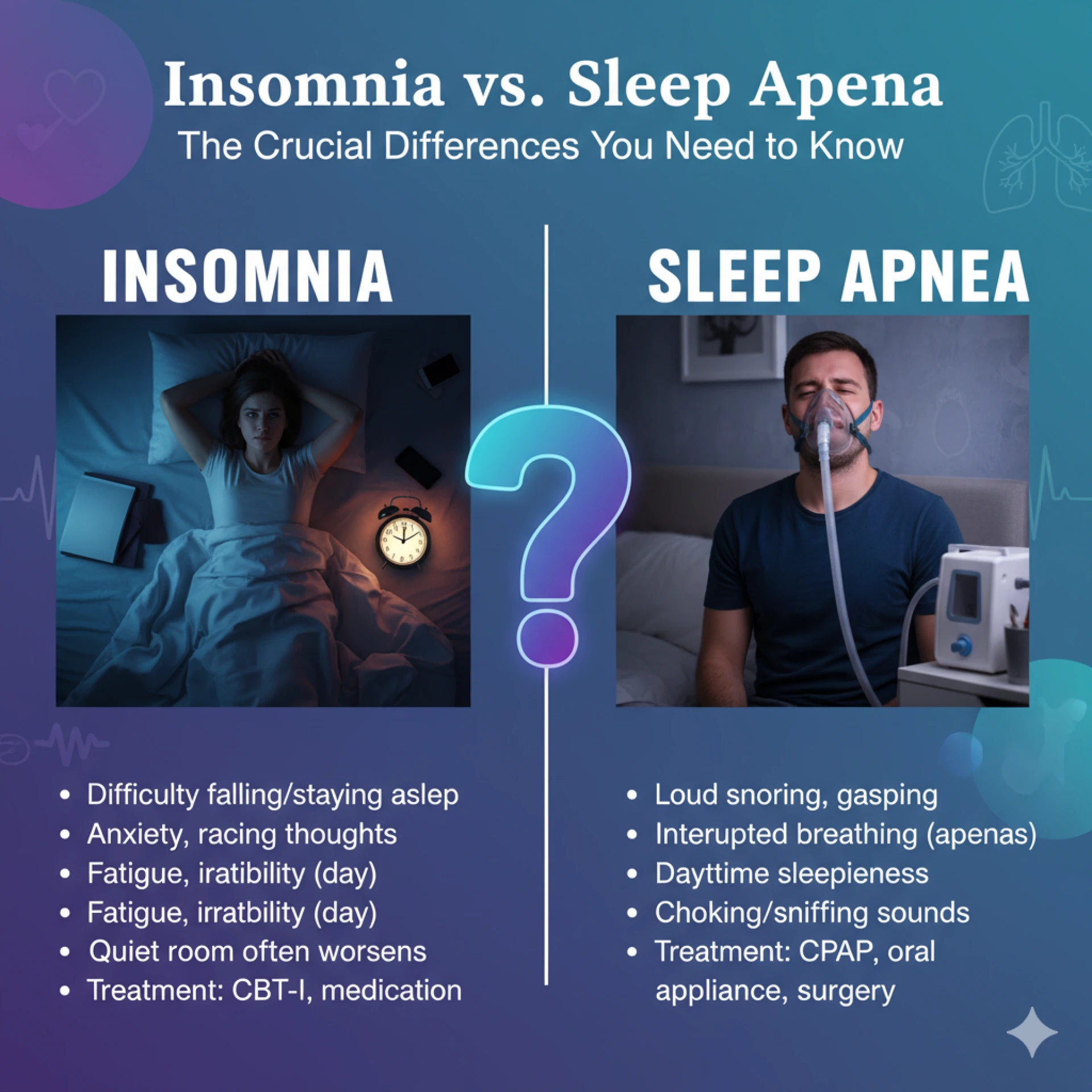
Insomnia involves a difficulty in falling asleep, staying asleep, or awakening too early and not being able to get back to sleep despite having the opportunity to sleep. It can be short-term (such as due to stress or jet-lag) or chronic (lasting more than three months).
Risk factors for insomnia include anxiety, high-stress lifestyles, poor sleep habits, some medications, and underlying medical or psychiatric issues.
Common symptoms:
- Trouble falling asleep
- Waking frequently during the night
- Early morning arousal and inability to return to sleep
- Daytime sleepiness, irritability, poor concentration
What is Sleep Apnea?
Sleep apnea is a disorder where your breathing repeatedly stops or becomes very shallow during sleep. The most common type is obstructive sleep apnea (OSA), where the upper airway collapses or becomes blocked during sleep, disrupting breathing.
Another type is central sleep apnea (CSA), where the brain fails to signal the breathing muscles properly.
Typical signs include:
- Loud snoring, often followed by choking or gasping for air
- Pauses in breathing noticed by a sleeping partner
- Waking up with a dry mouth or feeling short of breath
- Morning headache, excessive daytime drowsiness, difficulty concentrating
Why Distinguishing Them Matters
Because the cause of the sleep disturbance is different in each case, the treatments are also very different. If you treat insomnia like sleep apnea (or vice versa), you might not get relief. For example, someone with sleep apnea might also have symptoms of insomnia because the breathing interruptions fragment sleep, so both conditions can co-exist.
Treatment Approaches
For Insomnia:
- Establish good sleep hygiene: consistent bed/wake times, limiting stimulants (caffeine, nicotine) and screens before bed.
- Cognitive-behavioural therapy for insomnia (CBT-I) is considered one of the most effective long-term approaches.
- In some cases short-term use of sleep-aid medications may be prescribed (under medical supervision).
For Sleep Apnea:
- Lifestyle changes: weight loss, avoiding alcohol and smoking, sleeping on your side if back-sleeping worsens symptoms.
- The cornerstone treatment for many moderate-to-severe OSA cases is CPAP (continuous positive airway pressure) a machine that keeps the airway open during sleep.
- For milder cases or oral appliance-suitable candidates: devices to keep the jaw or tongue positioned to prevent airway collapse.
- In selected cases surgical or advanced treatments may be considered.
What If You Might Have Both?
It’s possible to experience insomnia and sleep apnea simultaneously this co-occurrence is sometimes called COMISA (co-morbid insomnia and sleep apnea). Treating one without recognising the other may lead to incomplete improvement.
If you suspect both: mention snoring or breathing pauses to your sleep-specialist, keep a sleep diary, and ask about a sleep study.
Practical Steps to Take Now
- Keep a sleep log for a week: note when you go to bed, when you wake, how many awakenings, how you feel in the morning.
- Observe for signs: snoring, choking, gasping, waking short of breath might suggest sleep apnea.
- Improve your sleep environment: cool room, dark, no screens 30 minutes before bed.
- Make lifestyle changes: maintain healthy weight, avoid late-night heavy meals or alcohol, quit smoking.
- Speak to a specialist: if daytime sleepiness, loud snoring, or breathing pauses are present ask about a sleep study.
About Remesleep
At Remesleep, we understand how debilitating poor sleep can be. Whether you’re grappling with insomnia, sleep apnea, or both, our team is committed to restoring your restful nights. With expert-led sleep assessments, personalised plans, and comfortable therapies tailored to your needs, Remesleep is here to help you reclaim the quality sleep you deserve. Because a well-rested you is a healthier you.