



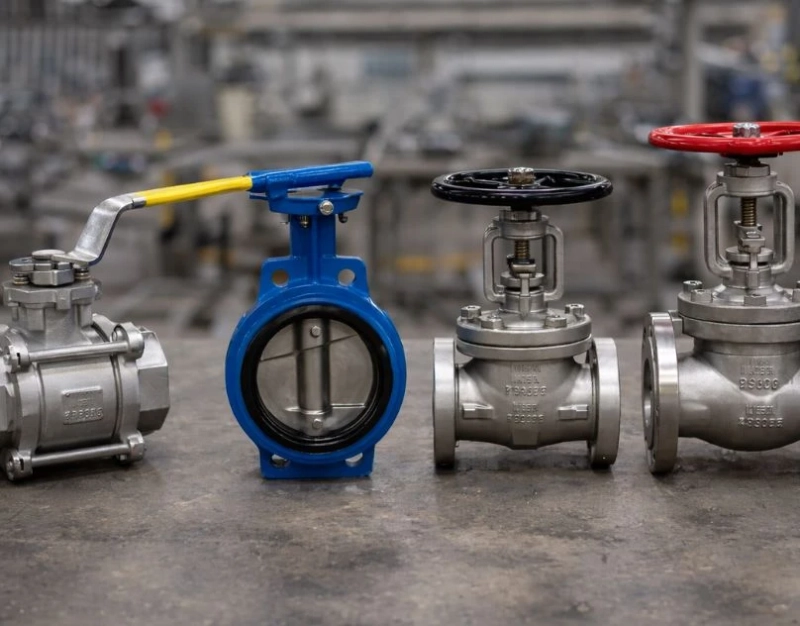
Industrial valves are essential components in piping and process systems, designed to control the flow, pressure, and direction of fluids. From a buyer’s perspective, selecting the right valve directly impacts operational efficiency, safety, and long-term maintenance costs. With multiple valve designs available, understanding their types, benefits, and practical use cases helps buyers make informed procurement decisions rather than focusing on price alone.
Why Valves Matter in Industrial Operations
Valves serve as control points in industrial systems, allowing operators to start or stop flow, regulate pressure, and isolate equipment during maintenance. Buyers must evaluate operating conditions such as temperature, pressure rating, flow characteristics, and the type of media being handled. Choosing an unsuitable valve can result in leakage, frequent replacement, downtime, and safety risks. Therefore, valve selection should always align with application requirements and industry standards.
Ball Valves: Simple Design with High Performance
Ball valves are one of the most commonly purchased valve types due to their reliable sealing and fast operation. They use a rotating ball with a bore that allows full flow when open and tight shut-off when closed. Buyers prefer ball valves for applications that require quick on-off control, such as water supply systems, gas pipelines, and chemical processing lines. Their low maintenance requirements and long service life make them a cost-effective solution for many industries.
Butterfly Valves: Cost-Effective for Large Pipelines
Butterfly valves are widely used where space and weight are critical factors. Their compact, lightweight design makes them suitable for large-diameter pipelines, especially in water treatment plants, HVAC systems, and fire protection networks. From a buyer’s viewpoint, butterfly valves offer the advantage of lower material costs while still providing efficient flow control. They are easy to install and operate, making them a practical choice for large-scale industrial projects.
Globe Valves: Precision and Flow Regulation
When accurate flow control is required, globe valves are often the preferred option. Their internal design allows precise throttling, making them ideal for regulating flow in steam systems, fuel lines, and chemical processes. Buyers value globe valves for applications where pressure control and flow adjustment are critical. Although they generally have a higher pressure drop, their ability to deliver controlled performance outweighs this limitation in many process industries.
Gate Valves: Reliable Isolation for Full Flow
Gate valves are primarily used for isolation purposes rather than flow regulation. When fully open, they provide a straight flow path with minimal pressure loss. Buyers commonly select gate valves for oil and gas pipelines, water distribution systems, and power generation facilities. Their robust construction and ability to handle high-pressure environments make them a dependable long-term investment for industrial installations.
Key Benefits Buyers Should Consider
From a procurement standpoint, each valve type offers unique benefits. Ball valves deliver quick operation and tight sealing, butterfly valves provide cost efficiency for large lines, globe valves offer precise control, and gate valves ensure minimal flow resistance. Buyers should also consider factors such as material compatibility, valve standards, ease of maintenance, and availability of spare parts. Evaluating the total cost of ownership rather than just the initial price leads to better purchasing decisions.
Conclusion
Industrial valves play a critical role in ensuring smooth and safe operations across industries. By understanding the differences between ball valves, butterfly valves, globe valves, and gate valves, buyers can select valves that meet performance needs while optimizing cost and reliability. A well-informed valve selection not only improves system efficiency but also adds long-term value to industrial operations.