


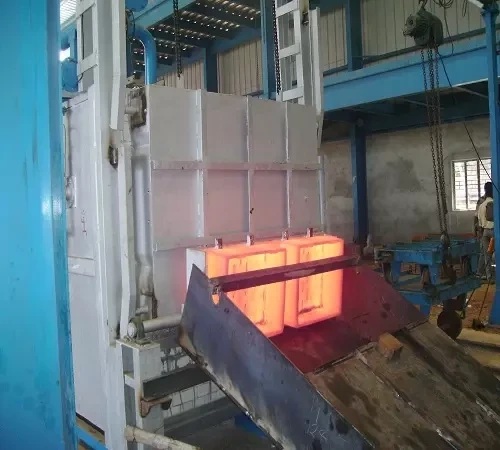
An Industrial Pre-Heating Furnace is a specialized thermal system designed to raise the temperature of raw materials, semi-finished components, or industrial workpieces before they enter the main manufacturing or heat treatment process such as forging, rolling, casting, extrusion, welding, annealing, forming, and heat treatment. Pre-heating is a critical industrial step that ensures thermal stability, process efficiency, material integrity, and consistent product quality.
Industrial pre-heating furnaces are widely used across industries including steel and metal processing, forging and foundry operations, automotive manufacturing, aerospace, railways, power generation, oil & gas, heavy engineering, shipbuilding, aluminum processing, copper industries, electrical manufacturing, and industrial fabrication plants.
What Is an Industrial Pre-Heating Furnace?
An industrial pre-heating furnace is a thermal processing unit that heats materials to a predefined temperature before they undergo further industrial processing. Unlike high-temperature process furnaces, pre-heating furnaces operate in a controlled moderate temperature range, typically between 200°C and 1,100°C, depending on the application and material type.
The main objectives of pre-heating include:
- Reducing thermal shock
- Minimizing internal stresses
- Improving material workability
- Enhancing energy efficiency of main processes
- Improving process stability
- Reducing equipment wear
- Preventing cracking and distortion
- Ensuring consistent thermal conditions
Importance of Industrial Pre-Heating Furnaces in Manufacturing
Pre-heating plays a foundational role in industrial production. Without proper pre-heating, materials can suffer from uneven heating, resulting in defects, energy loss, and production inefficiencies.
Key industrial benefits include:
- Improved metal flow during forging and forming
- Reduced tool and die wear
- Lower energy consumption in main furnaces
- Faster production cycles
- Reduced scrap and rejection
- Improved product quality
- Higher production throughput
- Enhanced mechanical properties
- Stable process performance
Industrial pre-heating furnaces optimize both process efficiency and operational cost.
Types of Industrial Pre-Heating Furnaces
Different furnace configurations are used based on industrial needs:
Billet Industrial Pre-Heating Furnace
Used in forging and rolling industries for heating metal billets.
Continuous Industrial Pre-Heating Furnace
Designed for high-volume, automated production lines.
Batch Industrial Pre-Heating Furnace
Used for flexible production and variable component sizes.
Gas-Fired Industrial Pre-Heating Furnace
High-capacity heating using natural gas, LPG, or furnace oil.
Electric Industrial Pre-Heating Furnace
Provides clean operation and precise temperature control.
Induction Industrial Pre-Heating Furnace
Rapid and energy-efficient heating using electromagnetic induction.
Conveyor-Based Pre-Heating Furnace
Automated material movement for mass production.
Working Principle of an Industrial Pre-Heating Furnace
The furnace operates through controlled thermal stages:
- Material Loading
- Raw material or components are placed inside the furnace.
- Gradual Pre-Heating
- Temperature rises steadily to prevent thermal shock.
- Soaking Stage
- Material is held at target pre-heat temperature for uniform heat penetration.
- Discharge Stage
- Pre-heated material is transferred to the next production process.
This ensures stable thermal conditions and consistent process performance.
Key Components of an Industrial Pre-Heating Furnace
A modern industrial pre-heating furnace includes:
- High-efficiency burners or electric heating elements
- Advanced refractory lining and insulation
- Multi-zone temperature control system
- Furnace casing and heavy-duty structure
- Automated material handling and transfer systems
- Temperature sensors and controllers
- PLC and HMI-based control system
- Exhaust and ventilation system
- Safety and interlock systems
Each component is engineered for industrial durability, high performance, and energy efficiency.
Applications of Industrial Pre-Heating Furnaces
Industrial pre-heating furnaces are used in:
- Forging plants
- Rolling mills
- Foundry casting operations
- Heat treatment facilities
- Welding and fabrication units
- Extrusion and forming industries
- Automotive component manufacturing
- Aerospace manufacturing
- Tube and pipe production
- Heavy engineering industries
They support a wide range of industrial processes.
Advantages of Industrial Pre-Heating Furnaces
Modern industrial pre-heating furnaces provide:
- Uniform and controlled heating
- Improved energy efficiency
- Lower operating costs
- Higher production output
- Improved product quality
- Reduced material defects
- Faster processing cycles
- Long service life
- Reduced maintenance requirements
- Stable operational performance
These benefits significantly improve industrial productivity.
Automation and Smart Manufacturing Integration
Advanced industrial pre-heating furnaces support:
- PLC-based automation
- Touchscreen HMI interfaces
- Automated temperature control
- Material handling automation
- Real-time monitoring
- Data logging and reporting
- Predictive maintenance systems
- Industry 4.0 integration
- Remote monitoring and diagnostics
Automation improves accuracy, safety, and production efficiency.
Energy Efficiency and Sustainability
Energy efficiency is a major design priority:
- High-efficiency heating systems
- Advanced insulation materials
- Optimized heating cycles
- Reduced heat loss
- Waste heat recovery systems
- Low emission operation
- Reduced carbon footprint
- Environment-friendly design
Energy-efficient pre-heating furnaces support sustainable industrial operations.
Customization and Engineering Flexibility
Industrial pre-heating furnaces can be customized for:
- Furnace size and capacity
- Temperature range
- Heating method (gas, electric, induction)
- Batch or continuous operation
- Automation level
- Material handling systems
- Integration with production lines
- Specific industrial applications
Customization ensures maximum performance and application-specific efficiency.
Maintenance and Safety Systems
Proper maintenance ensures long-term reliability:
- Routine inspection of heating systems
- Refractory lining maintenance
- Sensor calibration
- Control system testing
- Preventive maintenance schedules
Safety features include:
- Emergency shutdown systems
- Over-temperature protection
- Flame failure detection
- Gas leak detection
- Interlock systems
- Exhaust and ventilation controls
- Fire safety systems
These ensure safe and stable furnace operation.
Conclusion
An Industrial Pre-Heating Furnace is a critical thermal system that enhances process efficiency, product quality, and energy performance across industrial manufacturing sectors. By delivering controlled and uniform pre-heating, it prepares materials for subsequent processing, reduces defects, and improves operational reliability. https://www.jrfurnace.net/chamber-type-forging-furnace/