


[caption class="snax-figure" align="aligncenter" width="662"]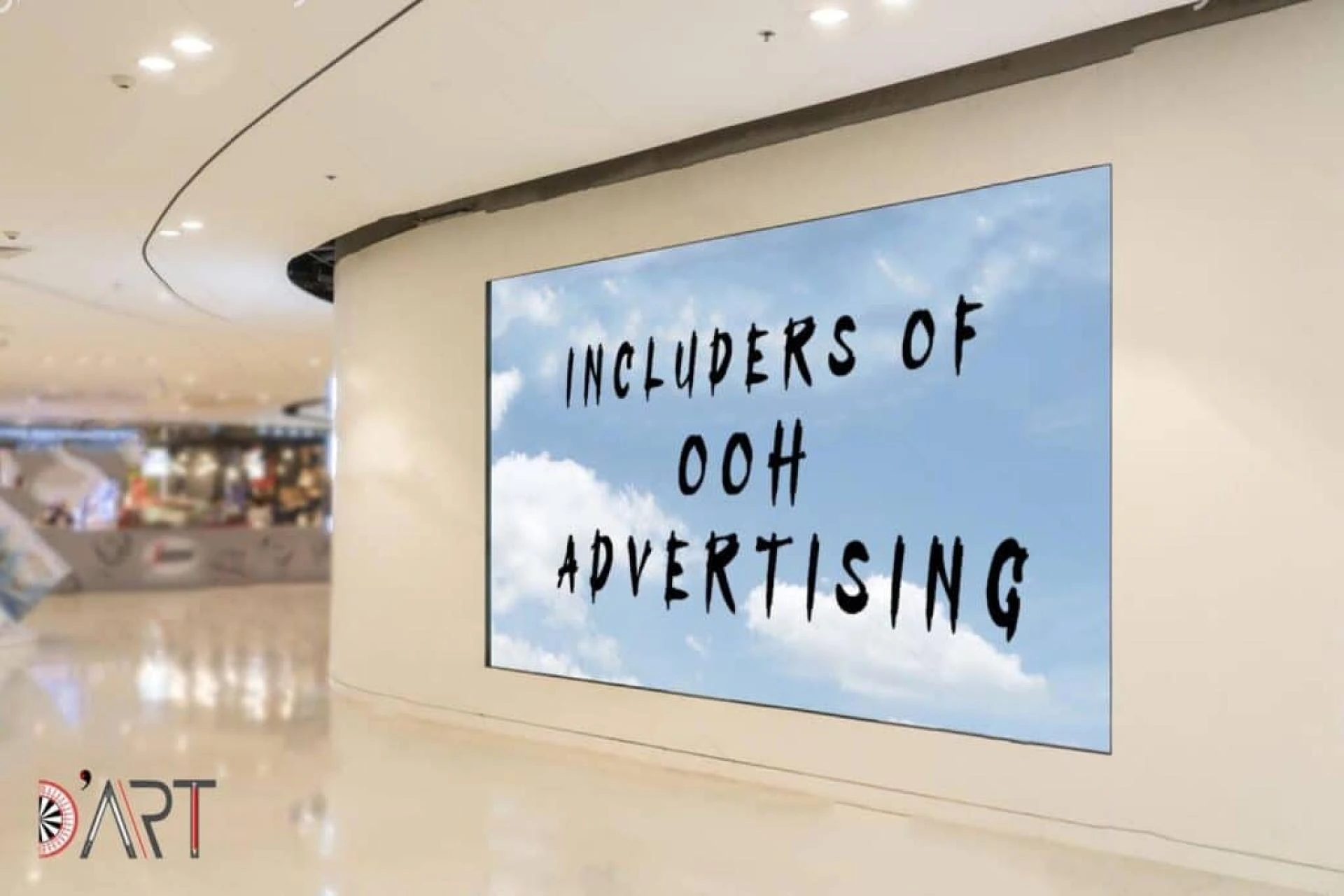 [/caption]
OOH Advertising has always been an effective advertising strategy. It acts as a bridge between the traditional and digital ways of advertising. The former and the latter include TV ads, print ads, and radio ads while digital advertising incorporates BTL Advertising. OOH Advertising or DOOH advertising (nowadays) includes a part of digital tech advancements. An advertising agency uses Out of Home Advertising as a medium to catch the eye of their clients TG when they are on the go or are not connected to the virtual world. They know that a bigger display displaying a brand will get retained in consumer’s brains. It covers a certain radius where the billboards are displayed giving a prompt to the consumers about the brand.
THE INCLUDERS
Billboard Advertising
Stylized as ‘Hoarding’ in many lands, Billboard Advertising is a process where large-scale printed advertisements are displayed on huge iron angles and pillars. Placing them at the high-traffic locations helps brands to catch higher numbers of eyeballs. Its effectiveness is not only limited to creating brand awareness but also to broadcasting businesses and brands. It is positioned at a little higher level than other marketing methods just because of its higher number of impressions.
Factors that determine OOH rating of a billboard advertisement are:
- Circulation
It is a count of people passing by the billboard each week. This information can be collected by the local transport authorities.
- Demographics
It includes different characteristics of the audience like gender, age, income, etc. that passes the billboard. Travel surveys are conducted for this purpose and the data is used while placing the billboard.
- Impressions
They are counted based on the number of people who see the billboard. The size of the billboard, its circulation, its visibility is the parameters that decide the number of impressions.
Retail design studios are hired up for designing these billboards. Moreover, they are now incorporated with technology like -
- Static Billboards
As the name suggests, billboards that are placed at a location (still) and are not moved are considered static billboards. As they use the same copy of the design for a long time, it eventually limits the marketing opportunities.
Pros -
- Less costly than digital billboards
- Doesn’t share the space with other advertisers
Cons -
- Difficult to change ads
- Subsidiary charges are always there
- End up in creating a bore that leads the audience to put their eyes off the board
- Digital Billboards
Tech-laced billboards, not only display still designs but also videos and visualizers. They catch customers’ attention much faster and make them sustain to watch the full advertisement.
Pros -
- Easier to switch ads and can run multiple ads
- No production fees
- Run for shorter terms
- More engaging
Cons -
- To share with other advertisers
- Costly than static billboards
Vehicle Advertising
Vehicle advertising is a marketing method that uses multiple strategies across the board but always includes vehicle branding differently. While company fleets of automobiles show brand names and logos over the years, it was mainly a method for identifying service professionals and was more professional than dispatching workers in unmarked cars. In recent years the potential value of vehicle advertising and new ideas for mobile marketing has been shown. In other words, placing an ad on an automobile, which is seen daily. For example, public transit buses are rolling billboards for everything from TV shows to law firms and they are quite used to the public. Even private companies and personal vehicles become publicity targets. Advertising that contains full-length Web addresses, taglines, and other branding strategies is more and more common than placing the company name or logo on one side of the vehicle. instead. There are even marketing firms that list private vehicles for companies to display those ads.
Do’s -
- Keep it simple
- Use fonts that are readable from a distance
- Run for shorter terms
- Send the right message
Dont’s -
- Don’t overload it.
- Don’t use only the sides of the vehicle.
- Don’t confuse the customers